
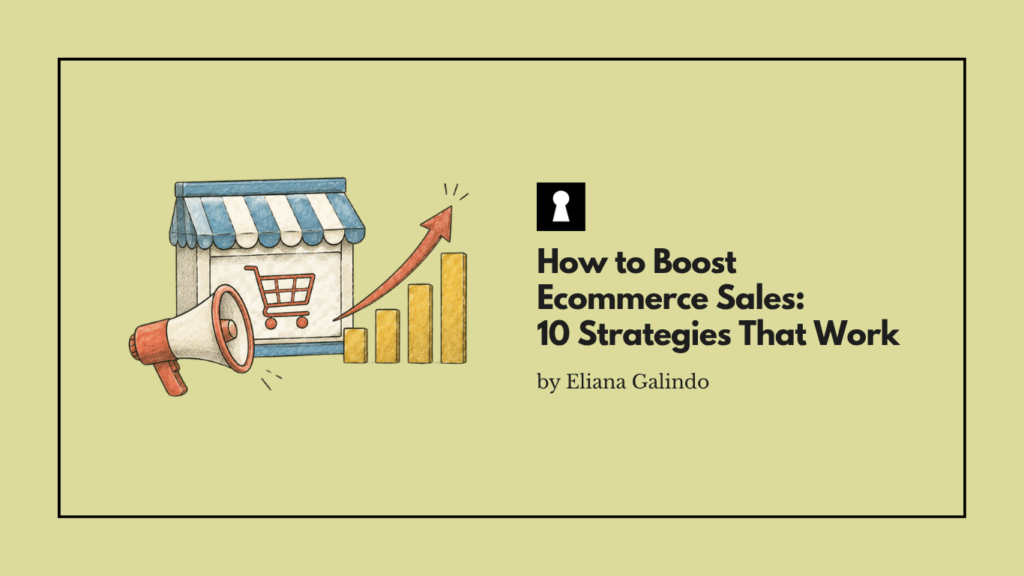
Boosting ecommerce sales requires a systematic approach that improves how visitors experience your store, how confidently they buy, and how often they return. Many ecommerce brands focus heavily on acquisition, yet growth often comes faster by improving conversion efficiency and customer lifetime value.
Global ecommerce sales exceeded 3.6 trillion in 2025, but average conversion rates still hover below 3%, according to Statista. This gap shows how much untapped revenue exists inside most ecommerce stores.
Below are 10 proven and practical strategies that explain how to boost ecommerce sales in a sustainable, scalable way.
Strategy 1: Optimize Your Ecommerce Website for Conversions
Conversion rate optimization (CRO) is one of the fastest ways to increase ecommerce revenue without increasing traffic. A high-converting website reduces confusion, friction, and hesitation during the buying process.
Effective CRO focuses on:
- Clear messaging that communicates value quickly
- Logical page structure that guides users toward action
- Consistent visual hierarchy that highlights key elements
Product pages play a central role in conversions. Each page should include:
- High-quality product images from multiple angles
- Clear pricing and availability
- Concise, benefit-driven descriptions
- Strong calls to action that stand out visually
Trust elements such as customer reviews, guarantees, and shipping clarity should appear above the fold whenever possible. Even small usability improvements can generate measurable sales increases when applied across an entire store.
Strategy 2: Improve Website Speed and Mobile Performance
Website speed has a direct and measurable effect on ecommerce sales. Slow-loading pages frustrate users and reduce engagement, particularly on mobile devices.
Google research shows that a one-second delay in mobile load time can reduce conversions by up to 20%. With mobile traffic dominating ecommerce visits, performance optimization is critical.
Key performance improvements include:
- Compressing images without quality loss
- Reducing unnecessary scripts and plugins
- Using fast hosting infrastructure
- Implementing mobile-first layouts
Mobile performance should prioritize thumb-friendly navigation, readable text, and streamlined checkout steps. Faster sites not only convert better but also benefit from improved search engine visibility.
Strategy 3: Use Data and Analytics to Increase Ecommerce Sales

Data-driven decision-making separates growing ecommerce brands from stagnant ones. Analytics reveal where users struggle, what motivates purchases, and which changes have the highest revenue impact.
Essential ecommerce metrics include:
- Conversion rate
- Cart abandonment rate
- Average order value
- Customer lifetime value
Funnel analysis helps identify where shoppers exit the buying process. These insights allow teams to prioritize improvements that remove friction instead of relying on guesswork.
Using analytics consistently helps ecommerce businesses refine pricing, layout, messaging, and promotions based on real customer behavior.
Strategy 4: Personalize the Shopping Experience
Personalization increases relevance, engagement, and purchase likelihood. Modern shoppers expect ecommerce stores to recognize their preferences and browsing behavior.
According to McKinsey, personalization strategies can deliver up to 15% revenue growth for ecommerce brands.
Effective personalization includes:
- Product recommendations based on past behavior
- Dynamic homepage content
- Personalized promotions and offers
- Targeted messaging during browsing sessions
Even basic personalization, such as recommending related products, improves average order value while making the shopping experience feel more helpful and intuitive.
Strategy 5: Leverage Email Marketing to Boost Ecommerce Sales
Email marketing remains one of the most effective revenue channels for ecommerce. It allows brands to build direct relationships with customers without relying on paid platforms.
Industry benchmarks show that ecommerce email campaigns generate an average ROI of $36 for every $1 spent.
High-performing email strategies include:
- Abandoned cart reminders that recover lost sales
- Post-purchase emails that encourage repeat orders
- Product recommendation emails based on browsing history
- Exclusive offers for subscribers
Automation enables ecommerce teams to scale communication while maintaining relevance. Well-timed emails drive conversions without increasing marketing costs.
Strategy 6: Expand Sales Through Paid Advertising and Retargeting
Paid advertising accelerates ecommerce growth when paired with strong on-site optimization. Retargeting campaigns are especially effective because they focus on users who already showed purchase intent.
Retargeted visitors convert at significantly higher rates than new visitors because familiarity reduces hesitation.
Effective paid advertising strategies include:
- Retargeting product viewers and cart abandoners
- Highlighting best-selling or high-margin products
- Segmenting ads based on user behavior
- Monitoring return on ad spend closely
The goal is not maximum traffic volume but consistent, profitable conversions that can scale over time.
Strategy 7: Increase Average Order Value With Upselling and Cross-Selling
Increasing average order value (AOV) improves revenue efficiency by generating more income per transaction. This strategy reduces dependency on constant traffic growth.
Common AOV optimization techniques include:
- Bundling complementary products
- Offering volume-based discounts
- Suggesting add-ons at checkout
- Presenting premium alternatives
Upsells should feel relevant and useful rather than aggressive. When executed properly, they enhance customer satisfaction while increasing overall revenue.
Strategy 8: Build Customer Trust to Improve Ecommerce Sales
Trust directly influences conversion rates, especially for first-time buyers. Any uncertainty about payment security, delivery, or returns increases hesitation.
Baymard Institute reports that 18% of cart abandonment happens due to trust-related concerns.
Key trust-building elements include:
- Verified customer reviews and ratings
- Transparent shipping and return policies
- Secure payment badges
- Clear contact and support information
Trust signals should be visible throughout the buying journey, not limited to checkout pages.
Strategy 9: Retain Customers and Increase Repeat Purchases

Customer retention drives long-term ecommerce growth. Retaining customers costs significantly less than acquiring new ones and generates higher lifetime value.
Repeat customers:
- Purchase more frequently
- Spend more per order
- Require less marketing investment
Retention strategies include:
- Loyalty and rewards programs
- Subscription and replenishment options
- Personalized follow-up communication
- Early access to promotions
Strong retention systems stabilize revenue and reduce reliance on paid acquisition.
Strategy 10: Optimize the Ecommerce Checkout Process
Checkout optimization is one of the highest-impact improvements an ecommerce store can make. Even motivated buyers abandon purchases when checkout feels slow or complicated.
Baymard Institute estimates the average ecommerce cart abandonment rate exceeds 69%, often due to checkout friction.
Effective checkout optimization includes:
- Offering guest checkout
- Reducing form fields
- Supporting multiple payment methods
- Displaying total costs clearly
A simple, fast, and transparent checkout experience directly improves completed purchases.
Conclusion on How to Boost Ecommerce Sales
Learning how to boost ecommerce sales requires consistent optimization across the entire customer journey. The most successful brands focus on usability, trust, personalization, and retention rather than isolated tactics.
These 10 strategies work best when implemented together and measured continuously. Incremental improvements compound over time, creating sustainable growth instead of short-term spikes.
Ecommerce success favors brands that prioritize customer experience and operational efficiency while using data to guide decisions.