The market for international express deliveries is expected to more than double over the coming years, according to a recent research report. This rapid growth is expected to be driven by both general ecommerce expansion and the growth in global trade. The report also provides regional insights from across the globe, as well as details on the specific segments within the industry.
International Express Delivery Market Expected to Skyrocket
According to research from a recently-revealed report, the international express delivery market was valued at $34.23 billion in 2025, and is projected to reach $76.42 billion by 2033. The industry is expected to grow at a compound annual growth rate (CAGR) of 10.56% over the forecast period of 2026 to 2033.
This growth is expected to be driven largely by the expansion in cross-border ecommerce. Earlier research found that cross-border ecommerce is projected to explode in the next few years, trending up from around $1.25 trillion in 2024 to more than $4.5 trillion by 2032.
As more products are shipped and delivered internationally, it makes sense that express deliveries of those products also become a more common choice.
Also, as cross-border and global ecommerce in general grow, customer demands when it comes to delivery times will also increase. People simply don’t want to wait weeks for international deliveries like they often had to in the past.
In fact, fast delivery speed is one of the most important elements of online shopping for consumers, right up there with things like reliable deliveries, secure payment methods, competitive pricing, and detailed product descriptions. As a result, many customers will choose express delivery options when buying internationally, to ensure they get what they ordered as quickly as possible.
Because of this, ecommerce brands that already ship internationally, or plan to, need to prioritize shipping speed to ensure their customers are satisfied. If not, these sellers may lose business to competitors who promise to deliver products much faster.
Regional Insights
The report also highlighted some regional insights within the international express delivery industry. First, it found that the Asia Pacific region holds the largest share in this market, at 32% as of 2025. It leads the space due to strong ecommerce development, density, and the fact that it continuously invests in cross-border logistics infrastructure.
However, the area with the fastest growth when it comes to international express deliveries is North America, as the region had a projected CAGR of 11.60% in 2025. Growth here is generally driven by increased demands for time-definite shipments, as well as the increased adoption of logistics technology.
Segment Analysis
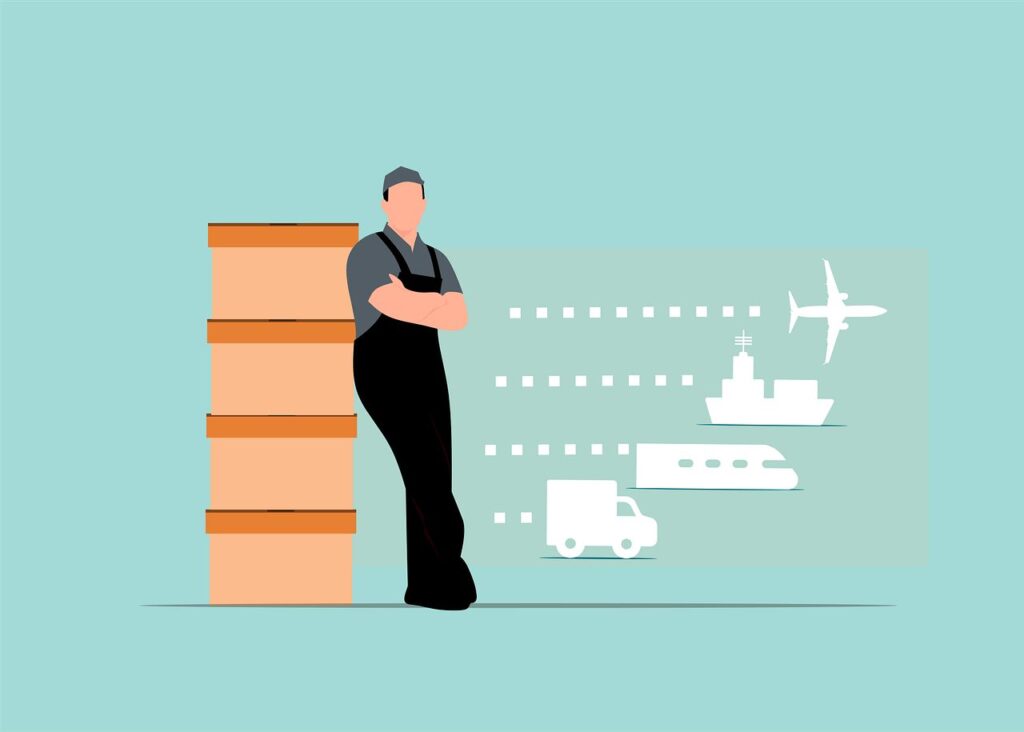
This report even broke down the industry by segments and revealed some data about each one. By mode of transport, the airways segment has the largest revenue share at 49% in 2025, which makes sense as it offers completely unmatched speed and reliability when delivering long-distance and cross-border deliveries quickly.
By service type, standard express delivery is the most popular with a 37% revenue share in 2025. However, the same-day delivery segment is growing the fastest, at a CAGR of 13.68% during the forecast period.
By industry, retail and ecommerce dominate the international express delivery space with a 35% revenue share, and electronics is expected to grow the fastest during the forecast period, with a 15.13% CAGR.
Finally, by end user, the B2B segment holds the largest revenue share by a long shot, at 63% in 2025, largely due to massive commercial transactions. However, it’s the B2C market that is expected to grow the fastest over the forecast period, with a CAGR of 12.83%.
Final Thoughts
While there are no guarantees that the international express delivery market will reach the heights that this report projects, I believe it certainly has a chance. As customer demands rise, and companies compete with one another to satisfy these growing demands, it will only speed up international shipments and increase the popularity of express deliveries.
Sure, some international buyers may still go with standard delivery options, especially if they’re free or very cheap, but many others are willing to pay a little more if it means items getting to them much faster.