
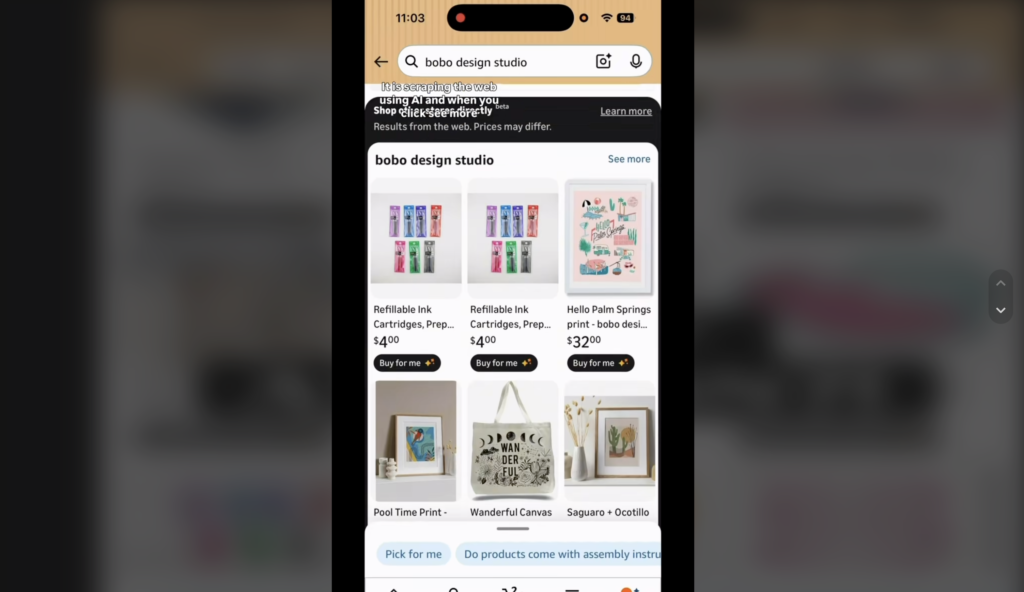
A new wave of tension is boiling over between independent brands and Amazon. What started as a whisper in founder circles has turned into a viral outcry: Amazon is reportedly pulling independent online store listings into its own ecosystem without the explicit permission of the business owners.
The controversy gained significant traction following a TikTok post from Angie, the founder of Bobo Design Studio, who discovered her products were being integrated into Amazon’s interface in a way she never authorized. The sentiment among Direct-to-Consumer (DTC) founders is clear: they feel violated.
Update January 6th: we have interviewed Angie from Bobo Design Studio and here is what she had to say.
The “Ghost Listing” Problem
For years, DTC brands have treated their independent sites as a “safe haven” where they own the customer data, branding, and relationship. However, founders are now finding their products appearing within Amazon’s search results or being funneled through Amazon’s new “Buy for me” logic even when they haven’t signed up for the service.
In her viral video, the founder of Bobo Design Studio expressed the collective frustration of the community. She noted that her site, along with countless others, is being scraped for Amazon’s app. Her specific grievances highlight the chaos this unauthorized integration causes:
- Outdated Inventory: Products she fully deleted from her backend are being sold under Amazon’s “shop stores directly” section.
- AI Fabrication: Amazon is allegedly using AI-generated images for items that are not hers.
- Unauthorized Orders: Amazon is authorizing orders to her site for items that are out of stock.
“I did not opt in to this nor is there an easy way to opt out,” the brand stated. “How did this happen and what is Shopify doing to rectify this?!”
Another brand owner shared a similar sentiment: “I just searched for my brand on Amazon and saw almost my entire catalogue is on there. That makes me so angry. I have intentionally kept our product off Amazon because our entire business is based around small batch manufacturing… which Amazon is the total opposite [of].”
The Engine Behind the Controversy: Amazon’s “Buy for Me”

The feature powering this aggressive expansion is called “Buy for me.” Amazon officially announced the feature on April 3, 2025.
According to Amazon’s official release, the feature uses “agentic AI” to allow customers to buy products from other brands’ sites directly through the Amazon Shopping app. When a user finds a product Amazon doesn’t sell, they can tap “Buy for me.” Amazon then acts as an agent, securely using the customer’s stored payment and address details to complete the checkout on the external brand’s website.
Amazon claims this gives brands “increased exposure and seamless conversion,” but for many founders, the lack of consent makes it feel like a hijack of their digital storefronts.
The “Agentic” Double Standard
The outrage highlights a glaring contradiction in Amazon’s current strategy. Amazon has aggressively updated its policies to block other AI scrapers and recently sued Perplexity for building automated buying tools on top of Amazon’s data.
Critics point out that Amazon is now doing exactly what it sued others for: scraping external websites to power its own “agentic commerce” tools without permission. While Amazon builds walls to protect its own data, it is simultaneously tearing down the walls of independent retailers to feed its AI assistant, Rufus.
The New Reality for E-commerce
To founders, this is an infringement on their digital property. To Amazon, this appears to be the next step in becoming the infrastructure for the entire internet. As Amazon indexes the independent web to ensure its AI can “find” and “buy” products everywhere, the “safe haven” of an independent store is becoming harder to defend against the world’s largest retailer.
———-
We will continue to follow this story as it develops. If you have spotted your store on Amazon without your permission, email us at [email protected].