
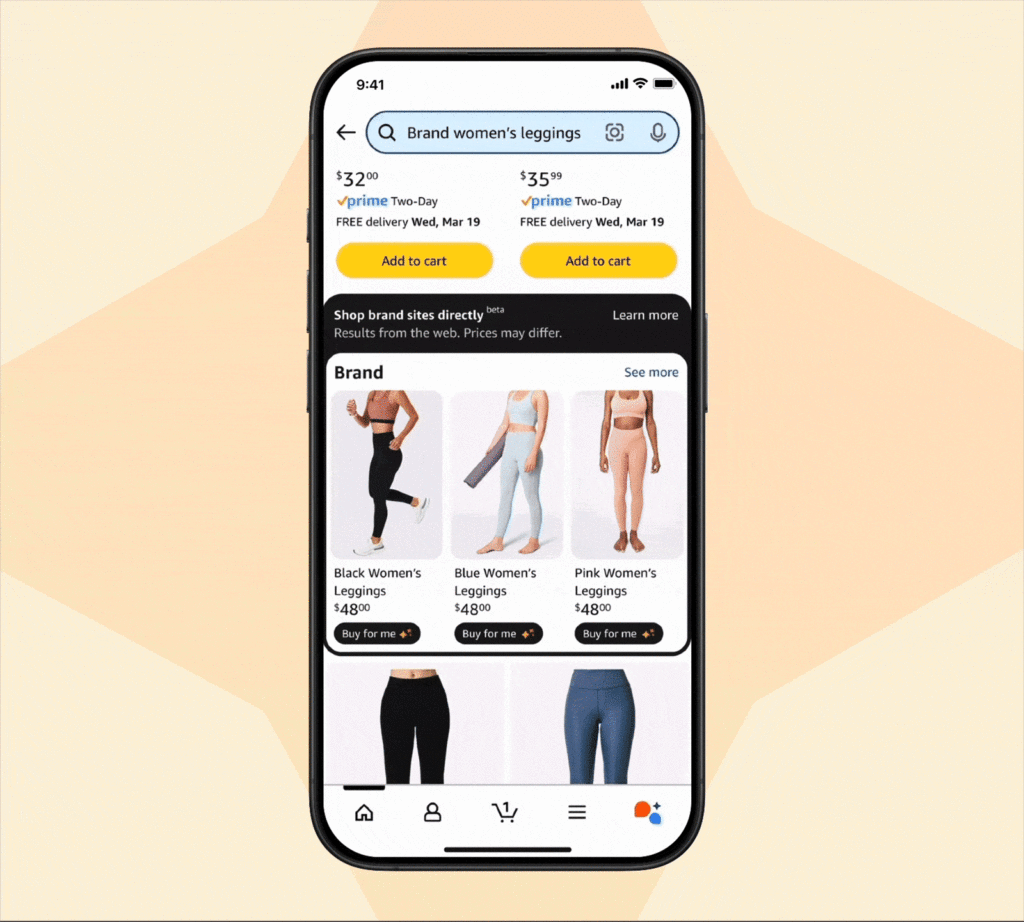
Tensions have emerged between independent retailers and Amazon following the rollout of a new feature called “Buy for me.” While Amazon describes the tool as a way to offer customers greater selection and provide brands with increased exposure, some business owners report that their products were listed without their consent, creating significant operational challenges.
One of the most vocal critics is Angie Chua, founder of Bobo Design Studio. Following a viral TikTok video in which she detailed her experience, I spoke with Chua to understand how the integration affected her business and why she ultimately chose to opt out.
Discovery and “Ghost” Inventory
Angie states she did not sign up for the program and was unaware her products were listed on Amazon until a customer brought it to her attention.
“A longtime customer of mine forwarded me a post from another brand who saw this happening,” Chua said. “I went and searched the Amazon app and found our shop on there.”
Upon investigation on December 28th, Angie connected the listing to a series of unusual orders on her Shopify backend. She reports that the Amazon listings did not accurately reflect her current inventory, effectively creating “ghost” listings for items she no longer sold.
“They sold items we don’t have anymore – completely deleted off our site on the backend,” Chua explained. Additionally, she noted discrepancies in how her products were presented. “They used AI images of product listings we did have, and then altered the copy of our product titles and descriptions.”
Angie expressed concern that these alterations could be used for data gathering. “It was almost as if it was an SEO manipulation to gather data on clicks, or pit our listings against theirs,” she said.
Operational Impact of “Buy for Me”
According to Chua, the orders generated by the feature were difficult to identify and manage. They appeared in her system with masked email addresses, which she described as looking like “a scrambled Apple ID” ending in @buy4me.amazon.
The purchasing behavior also differed significantly from her typical customer base. While Bobo Design Studio usually processes larger orders for bundles of items, the Amazon-generated orders were often for single, low-margin products. This included orders for out-of-stock items, which forced Chua to cancel transactions.
“We cancelled orders… and have not gotten an email back,” Chua noted, adding that the masked emails likely prevented the actual customers from receiving cancellation notifications in a timely manner.
The Opt-Out Process
Amazon has stated that the program is optional and that brands can choose to remove their listings. However, Chua described the opt-out process as confusing and difficult to navigate.
She initially encountered a request for a “Seller Number,” which she did not possess as she is not a registered Amazon seller. “I was like, ‘Well, I don’t have a seller number because I don’t sell there,'” she said.
After her public posts gained traction, Chua was directed to file a claim through Amazon’s Brand Registry. Although Amazon eventually removed the products, Chua says she was asked to provide a reason for opting out – a question she found frustrating given she never opted in.
“I thought that was hilarious,” she remarked. “Where do I even begin? I did not opt in.”
Angie also reported that even after the removal process began, she observed what she described as “keyword manipulation,” where a “shell” of her listings remained visible with rewritten descriptions for several days before finally disappearing.
Questions of Data and Industry Standards
Angie pointed out what she perceives as a double standard in Amazon’s approach to data usage. She noted that Amazon is currently pursuing legal action against other companies for scraping its data, while simultaneously using similar methods to populate its own “Buy for me” catalog.
“The hypocrisy is insane to me,” Angie Chua said. “They have also always had a stance that they don’t want drop-shippers using their platform. Yet they have forced us to be drop-shippers for them without our consent.”
Economic Concerns for Independent Retail
Beyond the immediate logistical issues, Chua argues that this model threatens the economic viability of independent brands. She emphasizes that small businesses often rely on higher margins to support ethical labor practices and community initiatives – a model that conflicts with Amazon’s focus on competitive pricing.
“The assumption that we need an $11 or $4 order from them to survive… is insulting,” Chua stated. She argues that these sales do not cover the tangible costs of goods and labor, nor the intangible cost of losing direct ownership of the customer relationship.
“For Amazon to come in and just be like, ‘We’re going to use this AI slop and do it our way’… it is completely destroying the consumer experience,” she said.
Pending Response from Amazon
Ecomwatch has reached out to Amazon’s press team for comment regarding the default opt-in nature of the program, mechanisms for ensuring data accuracy, and their stance on web scraping in light of recent litigation. We are awaiting their response.
For now, Angie’s stance remains firm.
“I hope this is not the norm,” she concluded. “We choose not to be on Amazon.”
We will continue to update this story as more information becomes available. If you are a retailer who has been affected by this feature, please contact us.