A report has projected that the material handling equipment market, made up of things like forklifts, cranes, conveyor systems, trucks, and others, will grow steadily over the next few years. This expected growth is driven by rising demand for automation systems, the surge in ecommerce around the globe, and the need for better logistics operations in general.
Material Handling Equipment Market Expected to Rise Rapidly
According to the report, the material handling equipment market is valued at around $280.5 billion in 2026, but is projected to climb all the way up to $424.6 billion by 2033. This growth equates to a compound annual growth rate (CAGR) of 6.1% during the forecast period.
This market is made up of forklifts, conveyor systems, trucks, mobile robots, cranes, and other items that make up a company’s material handling system.
Core Drivers of the Projected Growth
There are several key drivers that the report believes are going to be responsible for this rapid growth. First, the surge in global ecommerce in general should lead to growth in this market.
As ecommerce grows, brands, retailers, and third-party logistics providers will need additional storage space and/or fulfillment centers, as well as the material handling equipment that is generally used inside them, to satisfy growing customer demands.
Speaking of customer demand, consumers want their items quickly when they buy online, so many companies are investing in advanced centers capable of same-day or rapid delivery. This often requires sophisticated systems of robots, conveyors, and other material handling equipment to ensure the location can sort through and process huge amounts of orders quickly.
In addition to making fulfillment centers more automated and advanced, many companies are using more than one for their operations. For example, 44% of brands are planning to increase the number of fulfillment centers they ship from. This means a lot more fulfillment centers are being used, which all require material handling equipment for optimal efficiency.
The report also says that the adoption of Industry 4.0 concepts is also transforming distribution environments, with connected material handling systems at the core of these smart factory and warehouse initiatives. Many types of popular material handling equipment and systems can now be automated and integrated with AI, sensors, predictive analytics, and more.
Key Regional and Segmentation Insights
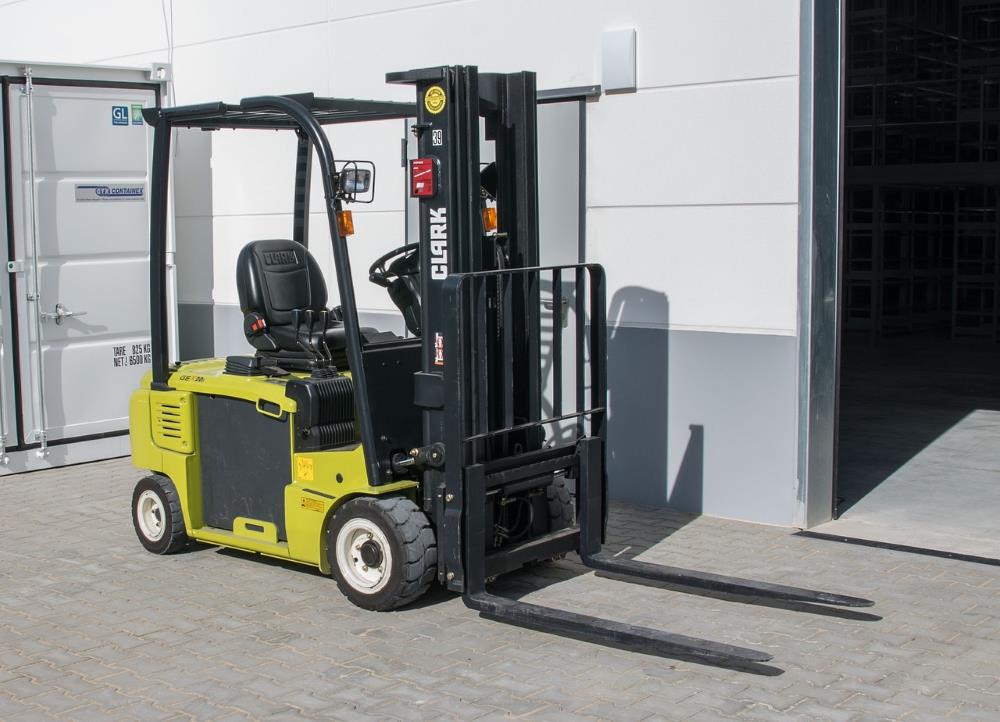
The report also touches on some of the key segments of the industry, as well as some regional insights. In terms of segments, forklifts hold the leading position with around 27% market share. However, the fastest-growing segment is autonomous mobile robots (AMRs) and automated guided vehicles (AGVs), which are expected to grow at a 9.6% CAGR through 2033.
For regions, North America is expected to steadily expand at a 5.3% CAGR, thanks to strong ecommerce infrastructure and rapid warehouse automation deployment. The USA leads in regional performance, driven by the major retailers in the country, as well as many logistics providers scaling automated fulfillment centers.
However, the largest region for material handling equipment is the Asia Pacific region, which holds around 32% of the market share. The region is fueled by both expansive manufacturing ecosystems and logistics modernization.
China dominates the market due to large-scale industrial output and vast ecommerce networks, Japan has high-precision automation through integrating robots, and India is the fastest-growing economy in the region, thanks to infrastructure upgrades and manufacturing expansion.
While the material handling equipment market may not get as much attention as the general ecommerce market or even the ecommerce software or technology markets, it’s still critical for ecommerce brands to think about.
As ecommerce logistics becomes more advanced and automated, choosing the right materials handling equipment, systems, and strategies will be important for meeting growing customer demands, reducing errors, and handling large amounts of orders efficiently.