

Ecommerce pick and pack is a core fulfillment process that determines how efficiently customer orders move from inventory to shipment. As delivery speed and order accuracy become key competitive factors, ecommerce businesses must optimize how products are picked and packed inside the warehouse.
Even minor inefficiencies can increase costs, delay deliveries, and hurt customer satisfaction. With fulfillment issues responsible for over 67% of ecommerce customer complaints, pick and pack performance directly impacts brand reputation and long-term growth.
What Is Ecommerce Pick and Pack?
Ecommerce pick and pack is a fulfillment process that begins once a customer places an order. The “pick” phase involves locating and collecting the correct items from warehouse inventory, while the “pack” phase focuses on preparing those items for shipment using appropriate packaging, labeling, and documentation.
Unlike traditional retail fulfillment, ecommerce pick and pack handles individual customer orders rather than bulk shipments to stores. This makes accuracy and efficiency more critical, as every order may contain a unique combination of products, quantities, and packaging requirements. A single picking error can lead to reshipments, refunds, and negative reviews.
Pick and pack differs from broader fulfillment activities such as inventory procurement or last-mile delivery. It represents the operational bridge between inventory storage and shipping.
For ecommerce brands with growing order volumes, this process often determines how well the business can scale without sacrificing customer experience or margins.
How the Ecommerce Pick and Pack Process Works
The ecommerce pick and pack workflow follows a structured sequence designed to minimize errors and processing time.
The process starts when an order is received through an ecommerce platform and confirmed in the fulfillment system. Inventory availability is checked automatically to prevent overselling. Once validated, the order is sent to the warehouse management system, which assigns picking tasks based on item location and priority.
During the picking stage, warehouse staff or automated systems retrieve items from designated storage locations. Products are typically scanned to confirm accuracy and update inventory levels in real time. This step is critical, as incorrect picks can ripple through the entire fulfillment operation.
After items are picked, they move to the packing station. Here, products are inspected, packed using suitable materials, and labeled with shipping information. Packing may include inserts, branded materials, or protective packaging depending on product type and brand standards.
The final step involves staging the order for carrier pickup or internal shipping. Once shipped, tracking information is shared with the customer, completing the pick and pack cycle.
Types of Picking Methods in Ecommerce Warehouses

Choosing the right picking method improves productivity, reduces errors, and supports scalable growth. Ecommerce warehouses often use one or more of the following approaches.
Single-Order Picking
Each picker handles one order at a time. This method is simple and easy to manage, making it suitable for low-volume operations or businesses with limited SKU counts. As order volume grows, travel time increases and efficiency declines.
Batch Picking
Batch picking allows workers to collect items for multiple orders in one trip. Orders are later sorted during packing. This method reduces warehouse travel time and is widely used in high-volume ecommerce operations.
Zone Picking
The warehouse is divided into zones, with pickers assigned to specific areas. Orders move through zones until all items are collected. Zone picking improves speed and reduces congestion, especially in warehouses with large product catalogs.
Wave Picking
Wave picking schedules picking activities based on shipping deadlines, carrier cutoffs, or order priority. This method improves coordination between picking, packing, and shipping, particularly during peak demand periods.
Many ecommerce businesses combine these methods to balance speed, accuracy, and labor efficiency.
Packing Strategies for Ecommerce Orders
Packing plays a major role in cost control, product protection, and customer perception. Effective packing strategies align operational efficiency with brand standards.
Standardized Packing
Standard box sizes and materials streamline operations and simplify inventory management for packaging supplies. This approach speeds up packing and supports consistent shipping costs.
Custom and Right-Sized Packing
Custom packing adjusts box size and materials based on product dimensions. Right-sizing reduces wasted space, lowers dimensional shipping costs, and improves sustainability.
Protective Packing
Protective materials such as cushioning, inserts, and reinforced boxes reduce damage during transit. Preventing damaged shipments lowers return rates and replacement expenses.
Branded and Experience-Focused Packing
Branded packaging, inserts, and messaging enhance the unboxing experience and reinforce brand identity. While branding adds cost, it can increase customer loyalty and perceived value.
Sustainable Packing Practices
Eco-friendly materials, recyclable packaging, and reduced filler usage appeal to environmentally conscious consumers and support sustainability goals without compromising product safety.
Ecommerce Pick and Pack Models
Ecommerce businesses choose different pick and pack models based on operational capacity, order volume, and growth strategy.
In-House Pick and Pack
Managing pick and pack internally provides full control over inventory, staffing, and quality standards. This model suits smaller operations or brands with specialized handling needs but requires ongoing investment in space, labor, and systems.
Third-Party Logistics (3PL) Pick and Pack
Outsourcing pick and pack to a fulfillment provider allows ecommerce businesses to scale quickly without building warehouse infrastructure. 3PLs offer established systems, nationwide distribution, and flexible capacity, typically charging per order or per item.
Hybrid Fulfillment Models
Hybrid models combine in-house fulfillment with outsourced pick and pack. Businesses often use this approach to manage seasonal spikes, regional expansion, or specific product lines while maintaining control over core operations.
Pick and Pack vs Dropshipping
Pick and pack offers greater control over inventory accuracy, shipping speed, and packaging quality compared to dropshipping. While dropshipping reduces upfront costs, it limits brand consistency and fulfillment reliability.
Technology Used in Ecommerce Pick and Pack
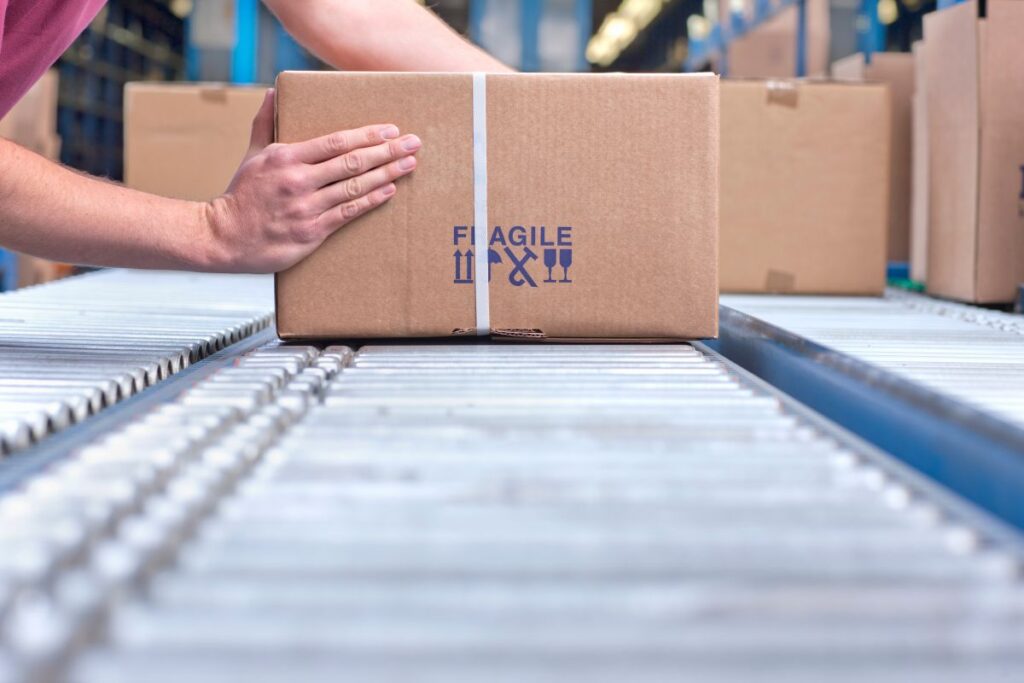
Technology plays a crucial role in modern pick and pack operations. Manual processes struggle to keep pace with ecommerce demand, making automation and software integration essential.
Warehouse Management Systems coordinate picking tasks, inventory locations, and packing workflows. A WMS provides real-time visibility into stock levels and order status, reducing errors and delays.
Barcode scanning ensures item accuracy during picking and packing. Each scan verifies that the correct product is selected and updates inventory records instantly.
Automation technologies such as conveyor systems, pick-to-light solutions, and robotics increase throughput and reduce reliance on manual labor. According to logistics research, warehouses that adopt automation can improve picking productivity by up to 30%, especially during peak demand periods.
Integration with ecommerce platforms allows orders to flow seamlessly into fulfillment systems, eliminating manual data entry and reducing processing time.
Pick and Pack Costs Explained
Pick and pack costs represent a significant portion of ecommerce fulfillment expenses. Understanding these costs helps businesses price products accurately and protect profit margins.
| Cost Component | Description | Cost Impact |
|---|---|---|
| Labor Costs | Wages for pickers, packers, supervisors, and quality control staff | High |
| Packaging Materials | Boxes, mailers, void fill, tape, labels, inserts | Medium |
| Storage Costs | Warehouse rent, shelving, utilities, equipment | Medium |
| Technology Costs | Warehouse Management System, scanners, automation tools | Medium |
| Error & Returns Costs | Reshipping, refunds, customer support handling | Variable |
| Overhead Costs | Insurance, maintenance, training, compliance | Low to Medium |
Pick and pack pricing models vary. Some operations charge per item, while others use per-order or tiered pricing structures. Businesses must evaluate how order size, SKU count, and seasonality affect overall fulfillment costs.
Common Pick and Pack Challenges for Ecommerce Stores
Ecommerce businesses frequently face the following pick and pack challenges:
- Order picking errors and mis-shipments
- Inventory discrepancies and stock visibility issues
- High labor costs and workforce turnover
- Slower fulfillment during peak seasons
- Inefficient warehouse layouts and excessive travel time
- Packaging waste and rising shipping costs
- Difficulty scaling operations as order volume increases
Addressing these challenges requires process optimization, technology adoption, and continuous performance monitoring.
Conclusion
Ecommerce pick and pack is a foundational process that directly impacts order accuracy, delivery speed, and customer satisfaction. As online competition intensifies, businesses can no longer treat fulfillment as a secondary function.
By understanding how pick and pack works, selecting appropriate picking methods, investing in technology, and managing costs effectively, ecommerce stores can build fulfillment operations that scale sustainably.
For ecommerce businesses focused on growth, refining the pick and pack process is not optional. It is a critical step toward delivering reliable, professional, and profitable customer experiences at scale.