
TikTok Shop is generating real commercial outcomes for a meaningful range of sellers in 2026. We’ve covered the Poppy Rose Print Company $40,000 TikTok LIVE night this week, and Ulta Beauty’s TikTok Shop driving more than 100 million impressions since launch. The platform works. The managed services pilot is TikTok’s attempt to capture more of the revenue that brands generate on it, not just the platform commission, but a meaningful share of total sales.
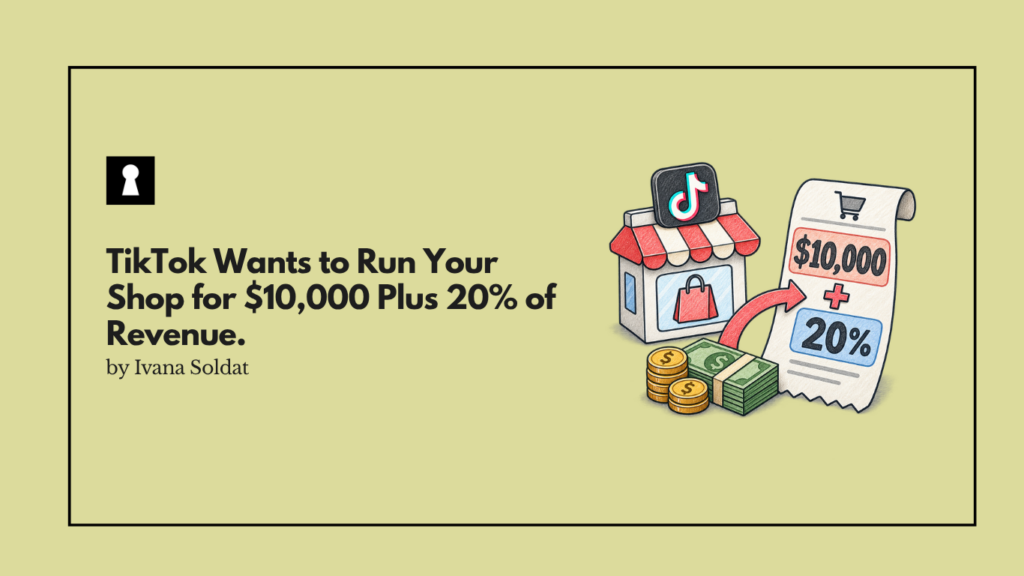
The terms: a $10,000 flat fee paid upfront, plus a 10% to 20% revenue share on sales generated during the programme period. In return, TikTok’s team manages GMV Max campaign execution, creator recruitment and affiliate management, product listing optimisation, and AI-generated video content production using Symphony AI.
The Cost Stack That Changes the Maths
The programme’s unit economics only make sense after building the full cost stack, which the pitch does not do for you.
TikTok Shop already charges platform commissions on each sale, typically in the 5% to 8% range for most categories. Layer the managed service’s 10% to 20% revenue share on top. Add the $10,000 flat fee amortised across the programme period. GMV Max ad spend in the programme comes from the seller’s own budget, not included in the flat fee, meaning the ad cost is additive.
That is three to four layers of cost before product, fulfilment, and returns. For a beauty brand with a 40% gross margin selling at an average order value of £35: platform commission at 6% (£2.10), managed service revenue share at 15% (£5.25), ad spend at 7% (£2.45). That is 28% of revenue committed to platform-related costs before touching product cost, fulfilment, or customer service. For a brand with 40% gross margins, 12 points remain to cover everything else.
The maths works only if TikTok generates enough incremental volume that the margin compression is offset by scale. If the managed service generates sales the brand would not have made otherwise, the incremental margin calculation is different from the blended margin calculation. But if TikTok is largely capturing sales the brand would have made through its own creator programme, the managed service is an expensive way to maintain existing performance.
What the Programme Is Actually Selling
The programme’s genuine value proposition is not campaign management, which any capable agency can provide. It is creator recruitment and content production at a scale most brands cannot build independently.
TikTok Shop affiliate creator content drives the majority of platform GMV, according to TikTok for Business data. Finding, contracting, and managing creators across categories is operationally intensive. TikTok has direct creator relationships, category-level conversion data, and the capacity to generate AI-produced video assets at volume.
For brands with no functioning creator sourcing operation who have been leaving TikTok Shop performance on the table because of that gap, the managed service addresses a real problem. For brands with a functioning affiliate creator programme already in place, the revenue share is a steep price for infrastructure they built.
The AI Voice Ban Compliance Point
TikTok introduced stricter quality rules in May 2026 banning AI-generated voices and prerecorded audio from promotional livestreams. The managed services content reportedly uses Symphony AI for pre-production, which the platform still permits for video creation.
But if any content produced under the managed service programme runs against those rules during a live session, the compliance exposure sits with the seller, not with TikTok.
The Institutional Knowledge Problem
The most important operational risk, and the one most underappreciated in coverage of the programme, is what happens when the programme ends.
If TikTok manages GMV Max campaign structure, creator relationships, listing optimisation, and ad creative simultaneously, the brand loses the institutional knowledge of what is actually working. Which creators convert best for your specific products. Which GMV Max targeting configurations drive profitable volume. When the programme ends or TikTok’s priorities shift, the brand starts over with none of that learning documented internally.
Amazon’s managed programmes have handed this lesson to enough DTC brands to make it a documented pattern. Outsourcing execution is often smart. Outsourcing your understanding of your own platform performance is expensive regardless of how much revenue the managed service generates while you are enrolled.
The questions worth asking before agreeing to terms: what performance data does the brand get back during and after the programme, how are creator relationships documented and whether they are transferable, and whether the brand retains access to the GMV Max campaign structure after the engagement ends.
Our Take
TikTok Wants a Piece of Your Revenue. Make Sure the Piece It Takes Is Worth What It Brings.
The TikTok Shop managed services pilot is not a scam and it is not a gift. It is a commercial arrangement with clear terms and a cost structure that works for some brands and not for others.
The brands it works for are those with proven TikTok Shop demand, no internal creator sourcing capacity, and margins wide enough to absorb 10% to 20% additional revenue share without going negative. The institutional knowledge risk is the one most brands will not ask about until the programme ends and they realise they cannot replicate what TikTok was doing internally. Ask about it before you sign.
The performance data, the creator relationships, and the campaign architecture that TikTok builds during the programme are yours by right of the revenue share you are paying. Make sure the contract says so.