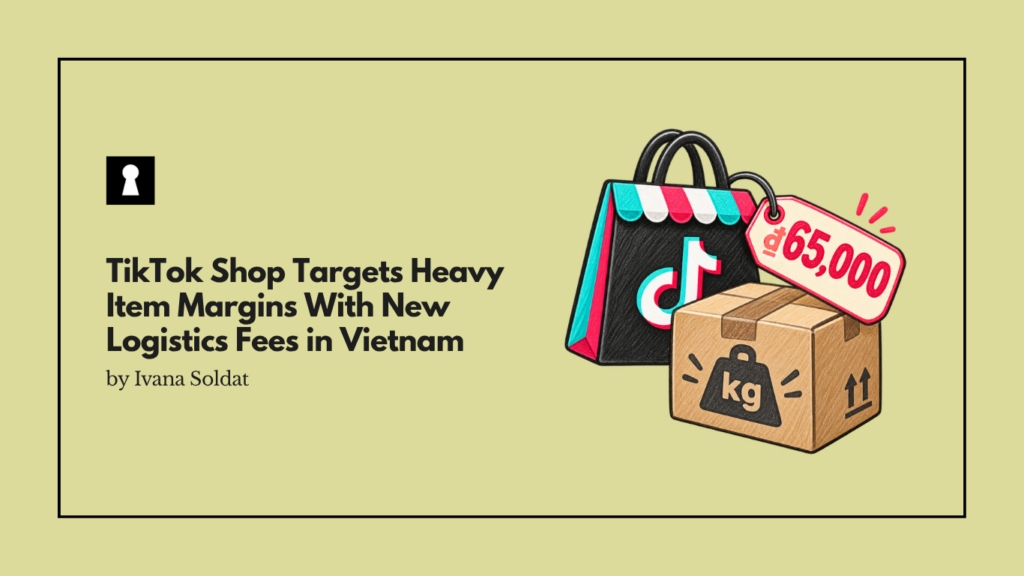
Social commerce platforms are systematically shifting the financial burden of logistical friction onto their merchant base. TikTok Shop announced a new logistics operation fee targeting bulky shipments, a policy that takes effect on October 12, 2026.
The Platform Shields Buyers While Quietly Compressing Seller Margins
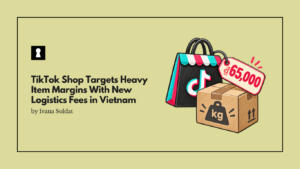
The new fee applies only to orders with package weights exceeding 10kg, starting at a base rate of 3,000 VND and scaling to a maximum of 65,000 VND per package based on weight tiers.
Crucially, buyers will not see this charge on their invoices. The cost is deducted directly from the seller’s settlement amount. This creates a facade of price stability for the consumer while silently eroding the unit economics of the merchant.
Platforms have learned that transparent price hikes at checkout kill conversion rates, so they simply extract the revenue further down the supply chain where the buyer cannot see it.
Heavy Item Logistics Are No Longer A Subsidized Afterthought
For years, social commerce platforms subsidized heavy item shipping to drive rapid gross merchandise volume growth. That era is ending. By isolating packages over 10kg, TikTok Shop is explicitly signaling that the economics of bulky goods must now stand on their own.
Sellers moving furniture, large appliances, or bulk consumables can no longer rely on platform subsidies to make their pricing competitive against established logistics giants. This policy effectively taxes sellers for the physical reality of their products, forcing them to either raise prices or accept lower net margins.
Return Policies Weaponize The New Fee Against Merchant Profitability
The most punitive aspect of this policy lies in its interaction with returns. TikTok Shop explicitly clarified that the logistics fee will not be refunded to sellers if an order is successfully delivered but later returned or refunded by the buyer.
This means a merchant can lose the product, pay for the outbound heavy logistics, pay for the return logistics, and still forfeit the initial operation fee. It transforms a standard return from a manageable operational cost into a total margin wipeout, placing all the risk of buyer remorse squarely on the seller.
Category Specific Commission Cuts Mask A Broader Fee Creep
This fee introduction must be viewed alongside the July 2026 announcement, which lowered commission rates by 1 to 3 percent for essential goods like food, beverages, and personal care items. Platforms are not uniformly raising prices.
They are surgically restructuring their fee schedules to incentivize high-velocity, lightweight categories while extracting rent from complex, heavy, or low-margin verticals.
Sellers must audit their entire catalog to determine which SKUs are now mathematically unviable on the platform. What looks like a localized policy in Vietnam is often a testing ground for global operational shifts.
Our Take
Frictionless Consumer Experiences are Now Being Funded Entirely by Merchant Margin Compression
TikTok Shop’s latest fee structure is a masterclass in asymmetric platform governance. The company gets to advertise stable consumer pricing while quietly siphoning profitability from the very sellers who supply its inventory.
Merchants who blindly absorb these new logistical penalties will find their businesses slowly bled dry by opaque settlement deductions.
If you cannot pass these costs onto the consumer or renegotiate your supplier terms, you must immediately delist heavy items from the platform before they become a liability.