

The ecommerce industry continues to evolve and grow at a rapid pace, thanks to new trends, emerging technologies, and changes in consumer behavior and preferences. For businesses that want to succeed and stay ahead of the competition, it’s crucial to be aware of the latest data and facts in the space.
With that in mind, this guide goes over some of the most important ecommerce stats you need to be aware of, and why they matter for ecommerce brands.
General Ecommerce Statistics
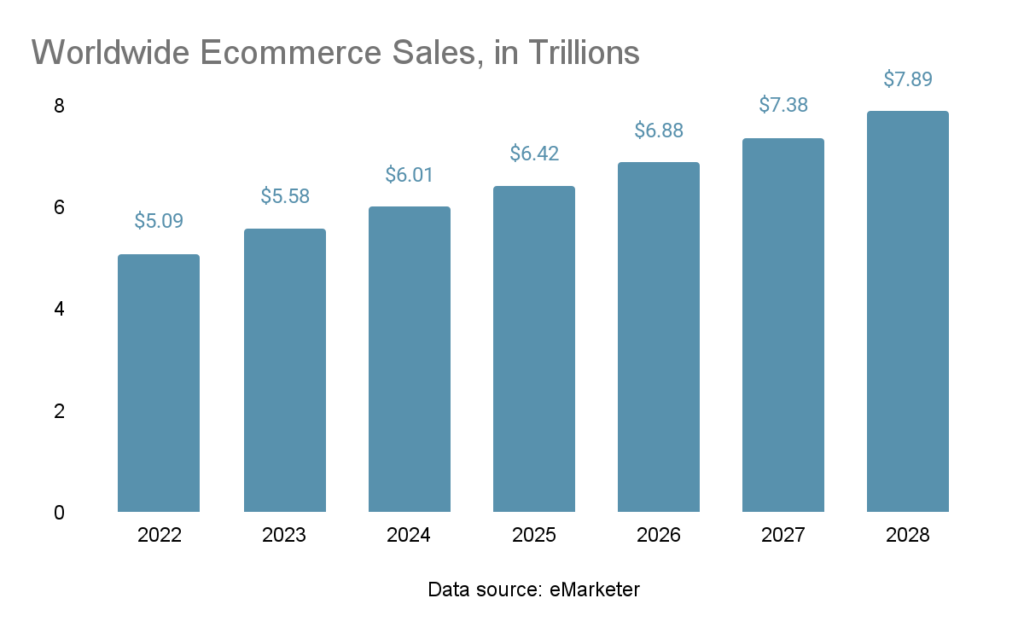
- Global ecommerce sales in 2025 reached $6.42 trillion in 2025, which represents 20.5% of all retail sales.
- The ecommerce industry has experienced massive growth over the past few years, and this is expected to continue. Retail ecommerce sales in 2022 were around $5.1 trillion, and this figure is expected to skyrocket to approximately $7.9 trillion by 2028.
- Amazon is the world’s largest ecommerce platform by gross merchandise value (GMV), as it had $790 billion in GMV in 2024. Not only that, but Amazon is also the most-visited ecommerce website as it attracts around 2.84 billion average monthly visits.
- But while Amazon may be the largest, it’s far from the only one. In fact, according to Built With data, there are over 25 million ecommerce sites on the internet. Over half of them are from the USA, while other popular regions include the UK, Germany, Brazil, Australia, France, and Canada.
- Shopify is the most popular platform for these sites and is used by 27.2% of ecommerce sites. The next most popular is Wix Stores (18%), followed by WooCommerce Checkout (14%), and Squarespace Add to Cart (11.1%).
- According to research, 2.77 billion people shop online as of 2025. This is up from 2.37 billion in 2020, and it’s projected that the number will reach 2.96 billion by 2030.
What These Stats Mean
These stats show that not only is the ecommerce industry healthy in 2025 in terms of revenue, but it’s expected to grow even larger over the coming years. However, while the industry is growing and more customers are flocking to online stores and marketplaces, this growth brings additional competition.
As a result, it’s crucial for ecommerce brands to find ways to differentiate themselves from others and identify some kind of competitive advantage. This may be better pricing, quicker and more personalized customer support, better shipping policies, a superior product, or even incredibly strong branding.
Social Commerce Statistics
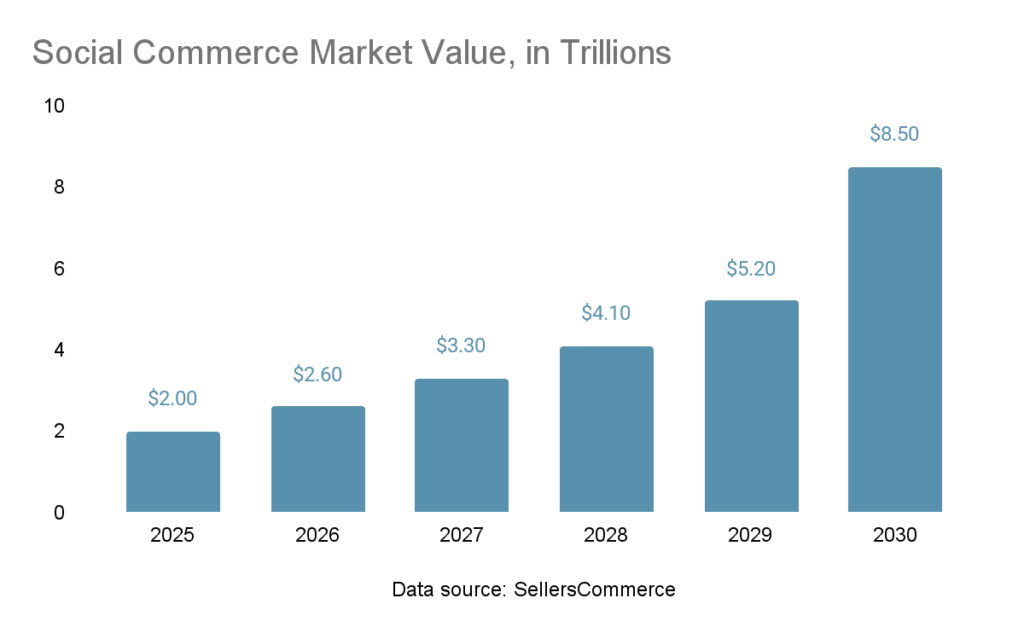
- As of 2025, the social commerce market is valued at around $2 trillion, but this is projected to rise dramatically over the coming years, reaching around $8.5 trillion by 2030.
- Research shows that as of 2025, there are around 104 million US social media shoppers. This figure is expected to rise to nearly 125 million by 2030.
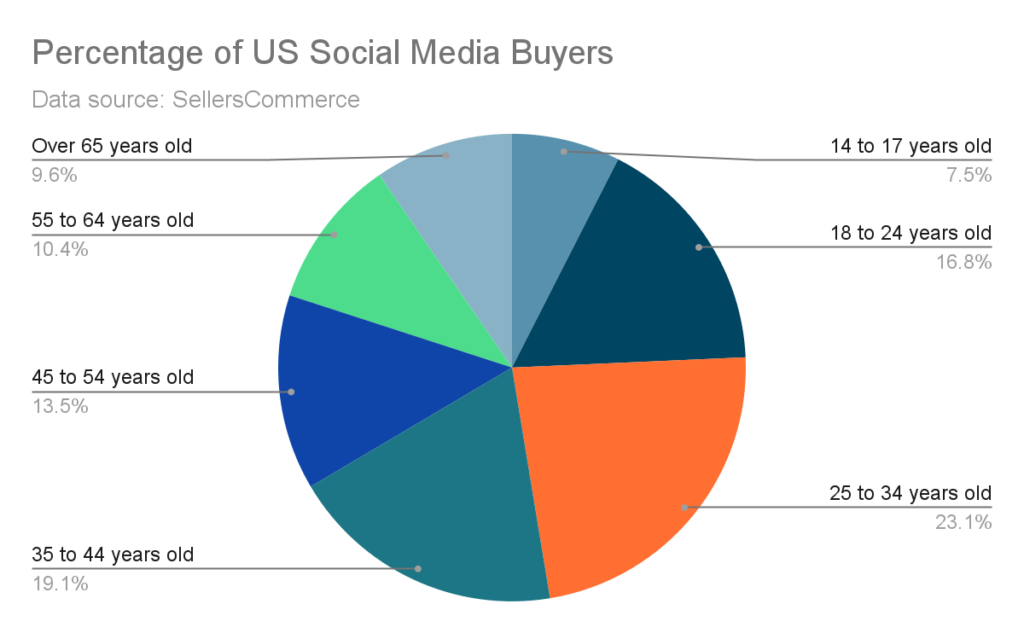
- All age groups participate in social shopping, but the 25 to 34 year old age group makes up the highest percentage of US social media buyers at 23.1%, while the 14 to 17 year old makes up the lowest percentage at 7.5%.
- While there are many social media platforms you can shop on, four of them dominated the industry in 2025. Facebook is the most popular platform, as 69.4 million Americans shopped on the site. Instagram is the next popular at 47.5 million shoppers, followed by TikTok at 37.8 million and Pinterest at 18.1 million.
- Social commerce sales are growing across the board, but few platforms are experiencing the monumental growth that TikTok is seeing. TikTok Shop sales rose from $1.5 billion in 2023, up to nearly $16 billion in 2025. Also, forecasts state that more than half of US social buyers will shop on TikTok in 2026.
What These Stats Mean
These statistics show that more people than ever are using social media not only to connect with others and keep up with the news, but also to make purchases directly.
While Facebook and Instagram are still unquestionably at the top, TikTok growing so rapidly is interesting and it’s possible it eventually takes the top spot. Also, while it’s not surprising to see younger generations shop on social platforms frequently, I was surprised to see that around 20% of all social shoppers in the US are over the age of 55.
As a result, no matter who your target audience is and what age they are, you need to have a strong social strategy in place for your site and store, and make an effort to ensure your brand is present on the platforms that matter the most to your potential buyers.
Mobile Commerce Statistics
- Mobile devices made up 70% of online retail website visits and orders in 2025, making it the most popular medium for shopping online.
- The mobile ecommerce market was valued at just over $2.2 trillion in 2025, and this is expected to increase to a little over $2.4 trillion by 2026. This growth is expected to continue, as the market is expected to be worth over $5 trillion by 2034.
- There are around 1.65 billion global mobile shoppers, which is around 30% of the digital population.
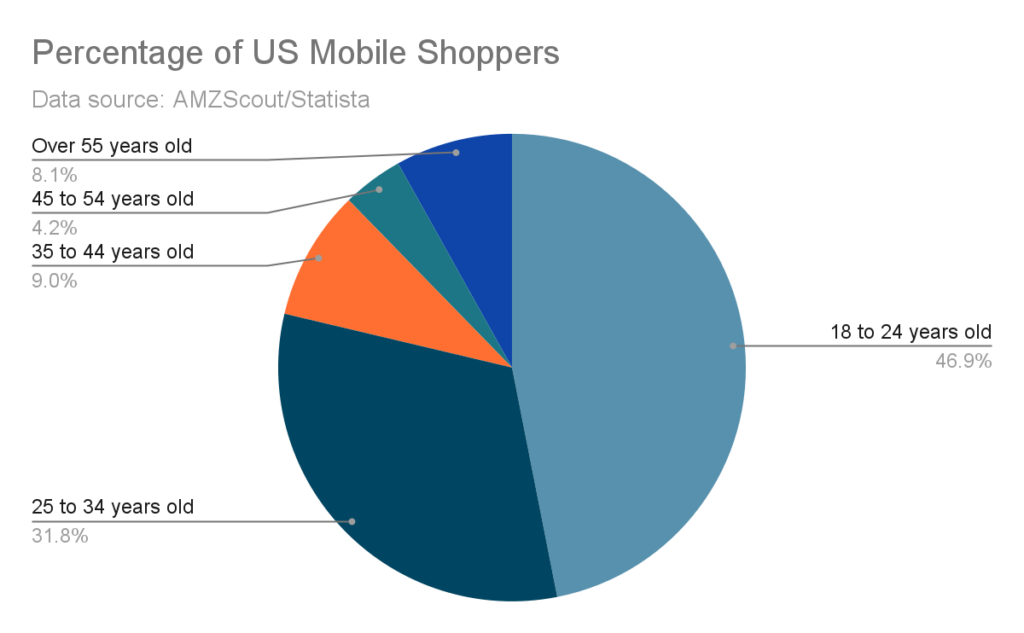
- It’s much more common for younger generations to make purchases on mobile devices, as nearly 80% of US mobile shoppers are 34 years old or younger. Breaking it down even further than that, nearly half of all mobile shoppers are between 18 and 24 years old.
What These Stats Mean
These stats show that phones, tablets, and other mobile devices are becoming incredibly important shopping tools. As a result, ecommerce brands need to ensure their store or website offers a high-quality mobile experience for shoppers.
This includes ensuring the videos and photos are optimized, designing “thumb-friendly” pages, having large navigation and menu buttons to reduce misclicks, and ensuring you test your site on a variety of devices before making any changes, to make sure it’s mobile-friendly.
AI-Driven Ecommerce Statistics
- Agentic commerce, which is when AI handles the entire shopping journey for a customer, may make up 15 to 25% of total US ecommerce sales by 2030, according to forecasts. The same forecasts also state that the US agentic commerce market could be worth between $300 billion and $500 billion by 2030.
- A survey in early 2025 found that 39% of US consumers have used generative AI for online shopping, with 53% saying they were planning on doing so at some point in 2025.
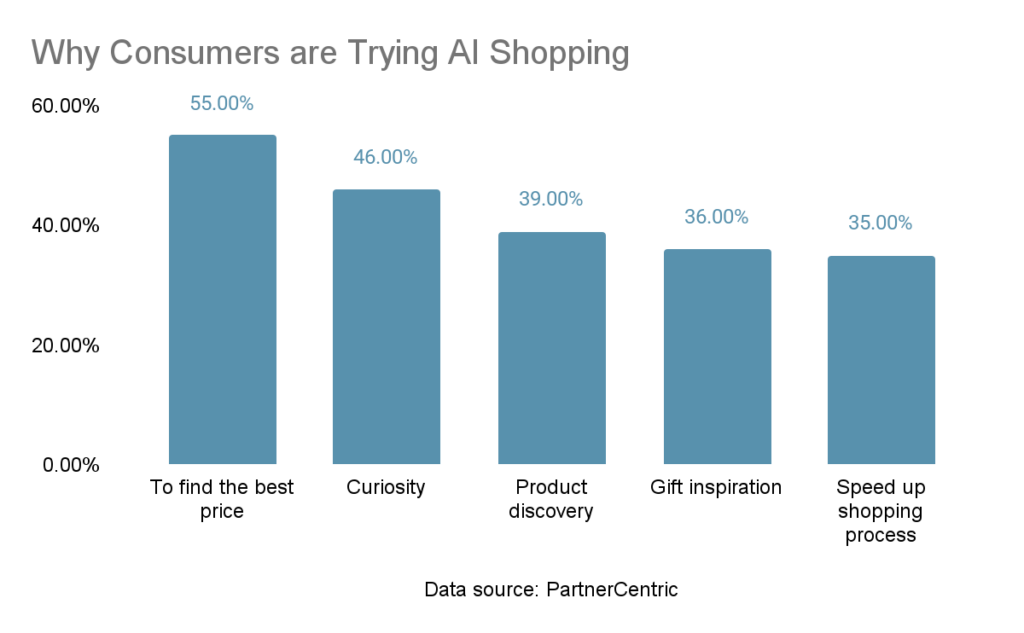
- While there are many reasons why people try AI shopping, the most common reason, according to a survey of 1,000 consumers, is to find the best price (55% of respondents).
- In addition to many consumers using it, AI use amongst organizations is rising dramatically, as well. Latest surveys find that 78% of companies use AI in at least one business function. This is up from 72% in early 2024, and only 55% a year earlier.
- Shopping searches are growing more than any other type of search on ChatGPT. While searches like messaging and coding prompts are still more common, shopping prompts went from 7.84% of all prompts in December 2024, up to 9.8% of all prompts in June 2025. This represents a massive 25% category gain in only around half a year.
What These Stats Mean
A key takeaway for ecommerce brands is that you need to do all you can to ensure your site, store, or product appears in AI results. As more and more people shop via AI, if your items aren’t showing up there, you’re losing potential clients.
While there’s no foolproof way to boost visibility in AI searches for your products, consider using natural language within product descriptions and listings, providing plenty of detail about the features and benefits of your items, answering common questions, and keeping item availability and pricing information updated.
Consumer Behavior Statistics
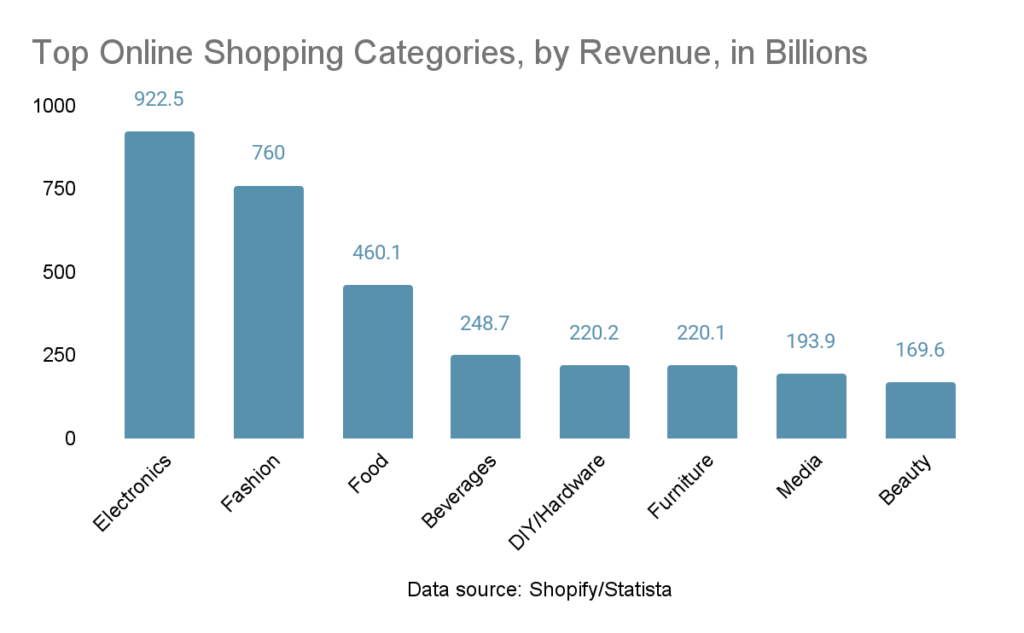
- While you can buy almost anything online today, the most popular online shopping category is electronics, with a spend of over $922 billion. Other categories with high popularity include fashion, food, and DIY/hardware items.
- Eco-friendliness and sustainability are important to many online shoppers, so much so that 80% of them are willing to pay more for sustainably-sourced or produced goods. The premium they’re willing to pay is also quite substantial, as consumers are open to paying 9.7% more on average for items that are environmentally-friendly.
- When shopping online, the average person buys 3.88 items per transaction, highlighting that many people bundle purchases together, often to reach free shipping thresholds or in response to cross-selling efforts by ecommerce merchants.
- A study found that the most important elements in online shopping for consumers include fast and reliable shipping/delivery (58% of respondents), secure payments/multiple payment methods (48%), competitive pricing/available discounts (46.8%), detailed product descriptions and/or photos (36.4%), and ease of refunds/returns (24.8%).
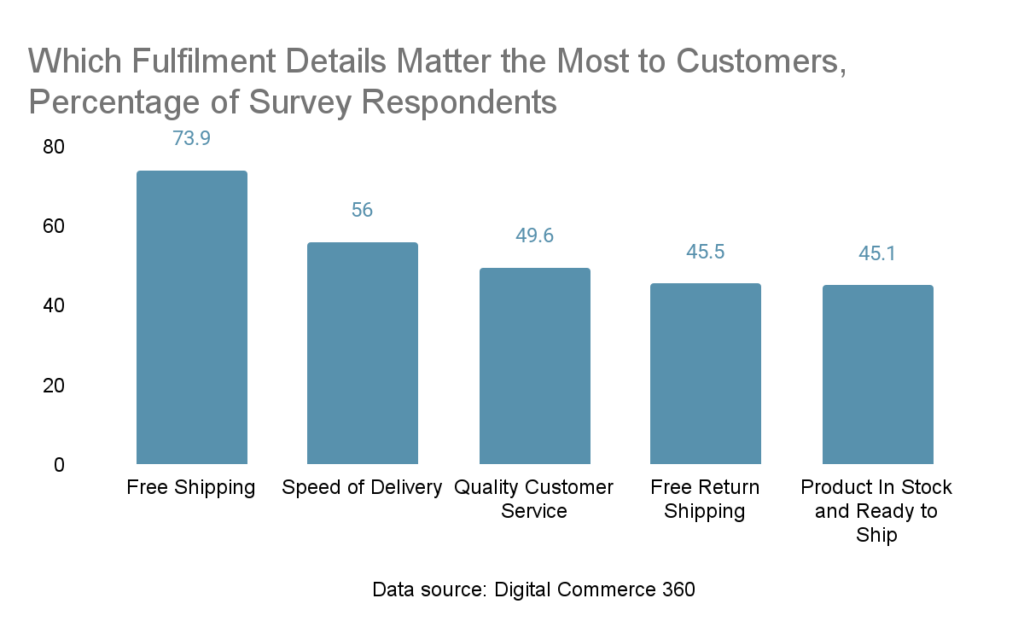
- A recent survey about the fulfillment details that customers care about the most found that the most important factor was free shipping (73.9% of respondents), followed by speed of delivery, quality of customer service, and other factors.
What These Stats Mean
As the stats show, customers were adamant about sustainability in 2025 (a trend which likely continues), and know what they’re looking for, and will prioritize stores that offer it.
These facts and stats about customer behavior are crucial for ecommerce brands to be aware of, as they give an inside look at what customers are thinking about when deciding where to shop. The more you know about how your customers behave online and their thoughts, the better suited you are to tailor your offerings and/or marketing efforts for them.
Without these types of stats at your disposal, many of your decisions and moves as an ecommerce brand will be based on guesswork, as opposed to data. While it’s tough to keep up with ever-changing customer behavior and evolving preferences, it’s important not to ignore them.
Ecommerce Challenges Statistics
- Abandoned carts are a major concern for ecommerce companies, as the cart abandonment rate in the industry is around 70.2%.
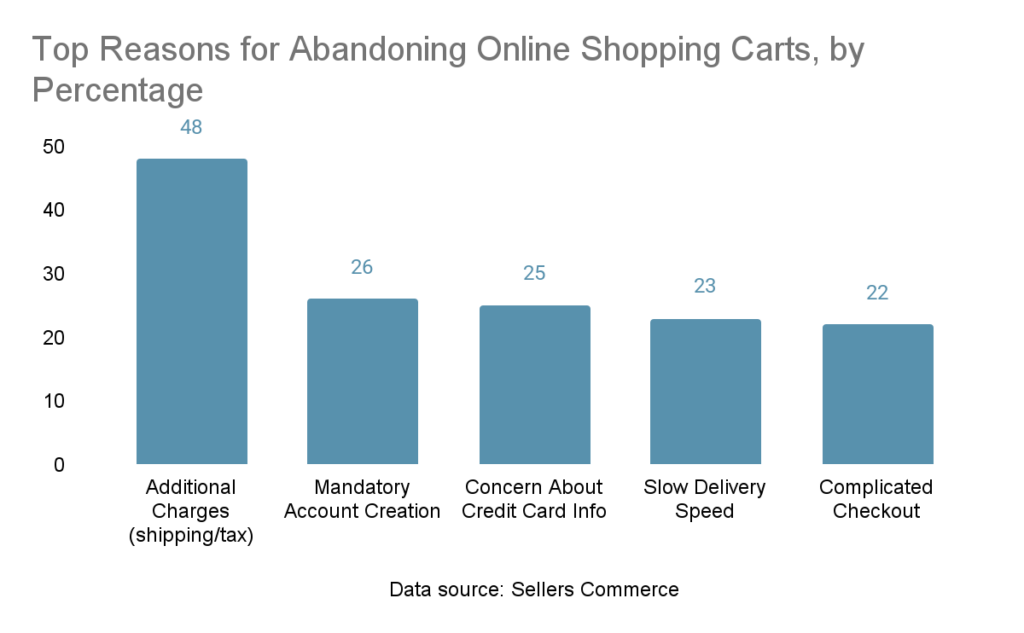
- There are a variety of reasons why people may abandon their carts, with reasons like additional charges, mandatory account creation, or concerns about credit card information being at the top of the list.
- Ecommerce fraud is a growing challenge for ecommerce brands, as 79% of organizations fall victim to payment fraud attacks or attempts. Losses to online payment fraud are expected to increase over time, and may surpass $100 billion by 2029.
- While many customers desire cheaper and faster shipping, shipping costs for ecommerce brands are actually increasing. For example, FedEx recently announced that US, US Import, and US Export standard list rates are rising by an average of 5.9%, and the United States Postal Service (USPS) announced the following changes:
- 6.6% price increase for Priority Mail service
- 5.1% price increase for Priority Mail Express service
- 7.8% price increase for USPS Ground Advantage
- 6% price increase for Parcel Select
What These Stats Mean
While the ecommerce industry is growing rapidly, and there are plenty of impressive highlights to mention, it’s also important for ecommerce brands to be aware of potential challenges. If not, these issues can sneak up on you and hold your business back from reaching its full potential.
The more you know about the challenges that many ecommerce companies face, the better equipped you’ll be to handle them. For example, if you’re aware of how large a problem ecommerce fraud is becoming, you’ll know to use verification systems, monitor and analyze customer behavior, and set clear policies.
I hope that this comprehensive look at ecommerce statistics has helped you gain a better understanding of the industry in 2025, and what the future may hold. The rapid growth across the industry has led to plenty of opportunities for companies, but it’s important to use this data to your advantage and stay on top of the latest trends to help your business stand out from the pack and find success.