If you’re searching for an enterprise ecommerce platform to manage your operation, you’ve likely heard about both Adobe Commerce and Commercetools. Both are well-respected leaders in the space, but which is right for you?
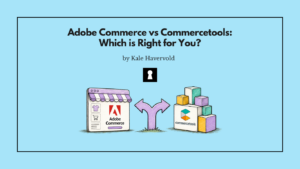
While they both have useful features and functionalities, they’re actually quite different from one another and do different things. To help you decide which is right for your business, this guide takes a closer look at Adobe Commerce vs Commercetools, and goes over what they are, what they do, and compares their scalability, pricing, ease of use, and more.
What is Adobe Commerce?
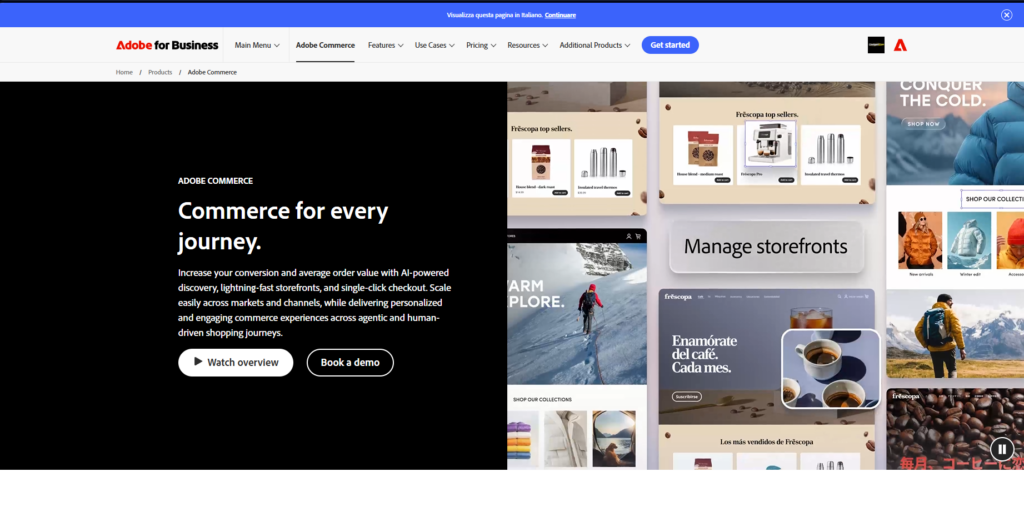
Adobe Commerce is a robust all-in-one ecommerce platform that’s all about delivering personalized customer experiences, and ships with a variety of built-in features and components to help boost product visibility, launch your site quicker, increase site traffic, and much more.
While it offers support for “headless” commerce (which is when the customer-facing front end is completely separate from the ecommerce engine in the back end), it generally has a more monolithic architecture that tightly integrates numerous solutions within one system and is ready-to-use out of the box.
This comprehensive solution not only offers deep capabilities from the start, but also has a large app marketplace to extend what it can do. It’s also part of the Adobe ecosystem, which includes several other useful platforms and systems, such as the new Adobe CX Enterprise system.
Some well-known companies that use Adobe Commerce include Nike, HP, Coca-Cola, and Asus.
What is Commercetools?

Commercetools is an AI-first and cloud-based ecommerce platform built for enterprise growth. Instead of being an all-in-one platform like Adobe Commerce, Commercetools has a headless and API-driven architecture that lets brands build a custom and flexible backend shopping experience for customers.
The platform gives developers plenty of control and flexibility to swap out different features and functions as needed, without having to worry about it impacting the rest of their site. While it doesn’t have as many out-of-the-box features, it gives companies the ability to build and/or connect tools that expand its capabilities.
Many large and familiar companies use Commercetools, including BMW, Danone, L.L. Bean, PetSmart, and others.
Adobe Commerce vs Commercetools: In-Depth Comparison
Now that you’re a little more familiar with each platform and what it does, let’s go through a detailed comparison of how they stack up against each other.
Pricing
Adobe Commerce doesn’t provide public pricing tiers and instead opts to use a custom quote model to determine what you pay. The company’s customized licensing model uses things like your gross merchandise value (GMV) and order volume to determine what you pay, as well as the extra features or functionalities you may need.
The fees you pay often scale directly with your success as a business. So the more you sell and the more orders you get, the more you’ll generally pay for the platform. Also, Adobe also offers Magento Open Source, which is free to use, but you’ll need to handle and pay for your own hosting, development, maintenance, and security.
Commercetools uses a usage and order-based pricing model, so you’ll only pay for the resources and services you use. The company offers three plans for companies to choose from, which include:
- Core Commerce Edition, which is meant for mature organizations that want easy access to Commercetools’ APIs.
- Foundry Edition, which is designed for manufacturers and retailers who want a fast time to value.
- Premium Edition, which is for enterprises looking for peace of mind as they scale.
The exact prices you pay for these plans vary on your usage and orders, so estimating a monthly cost isn’t the easiest.
Ease of Use
Adobe Commerce is generally quite user-friendly, as it offers plenty of built-in features to help ecommerce companies manage product catalogs, handle marketing, view customer information, track inventory, and more. It also has a dashboard and admin panel, which are easy to navigate and use, even if you’re not overly technical.
Commercetools, on the other hand, has a steeper learning curve due to being API-first. There’s no option to plug-and-play, and both the front end and back end need to be built by your development team or a third-party developer. While some teams are certainly capable of this, non-technical teams may struggle with the complexity of the platform.
Scalability
While both platforms offer scalability, they go about it in different ways. To scale with Adobe Commerce, it often requires plenty of manual effort and performance tuning to manage the changes and ensure the infrastructure is still optimized. As your company grows and scales more frequently, it may be more challenging and intensive.
However, Commercetools offers nearly effortless scaling as every function is an independent API, which you can scale and adjust as you need, without negatively impacting the other aspects of your site or system.
Security
Thankfully, both Adobe Commerce and Commercetools offer enterprise-grade security. Adobe Commerce provides PCI certification, automated threat scanning, and safeguards your site with SSLs, DDoS protection, and a web application firewall.
Commercetools also takes security seriously and meets several security standards, including ISO 27001, SOC II, GDPR, HIPAA, and others. It also protects cloud traffic, encrypts communication, and the platform requires that all employees sign confidentiality agreements and go through regular security and privacy training.
Security is important as suffering through a data breach can not only ruin your brand reputation and cost you financially, but also land you in legal trouble. As a result, make sure to always evaluate the security and privacy features of a platform before trusting it with your (or your customers’) data.
Community Support
Thankfully, companies and developers using both platforms have access to plenty of community support.
The scale of the Adobe Commerce community is massive due to the sheer number of developers and businesses that use the platform. No matter the issue you’re having or the question you’re curious about, surely someone has also experienced it before and has a helpful answer for you.
Even if you don’t want to reach out to a specific developer or post a question, there are plenty of blogs, guides, and other resources written to help deal with common errors or issues.
While the scale of the Commercetools community doesn’t come close to Adobe Commerce, it’s certainly growing, and there are still dedicated developers within the community willing to help. Many of the developers in this community are highly specialized and incredibly knowledgeable about headless architecture, as well.
Quick Head-to-Head Comparison
The following table offers a quick head-to-head comparison between the two platforms.
| Adobe Commerce | Commercetols | |
| Pricing | A customized licensing fee, which is largely based on GMV and order volume. | An order and usage-based model where you only pay for what you use. |
| Ease of Use | Relatively user-friendly thanks to several built-in and native features and tools. | API-first design, which has a much steeper learning curve and requires more technical knowledge to use and master. |
| Scalability | Scalable, but requires more manual effort and work. | Effortlessly scalable, as every function and service is independent. |
| Security | PCI certification, automated threat scanning, DDoS protection, and more. | Complies with several security standards, encrypts communication, protects cloud traffic, and more. |
| Community Support | Massive community of developers, and plenty of ways to get help with common issues. | A smaller community, but incredibly dedicated and knowledgeable. |
Which Platform is Right For You?
So with all that being said, which is the right platform for you? Well, that depends mainly on your needs. If you’re looking for a comprehensive list of features right away, prefer built-in capabilities, and want to use an app store to expand functionality without having to code, choose Adobe Commerce.
But if you’re on the hunt for a truly flexible and customizable solution, which is capable of keeping up with continuous innovation with minimal disruptions, choose Commercetools. Of course, if you want to take the “start from scratch” approach with Commercetools, make sure you have a highly skilled development team capable of building out your tech stack.