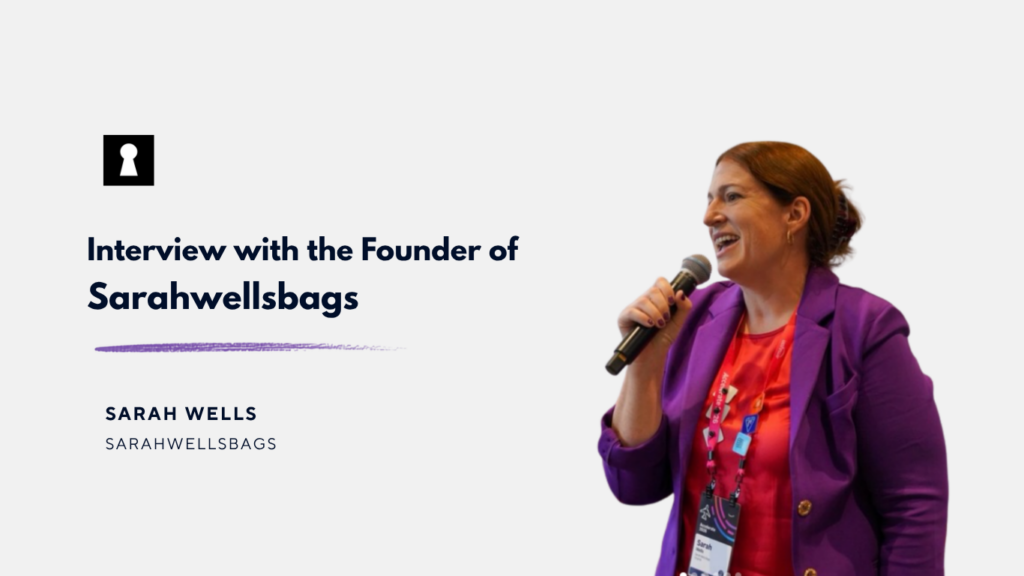
When Sarah Wells looks back at 14 years of entrepreneurship, she does not describe one continuous growth story.
She sees chapters.
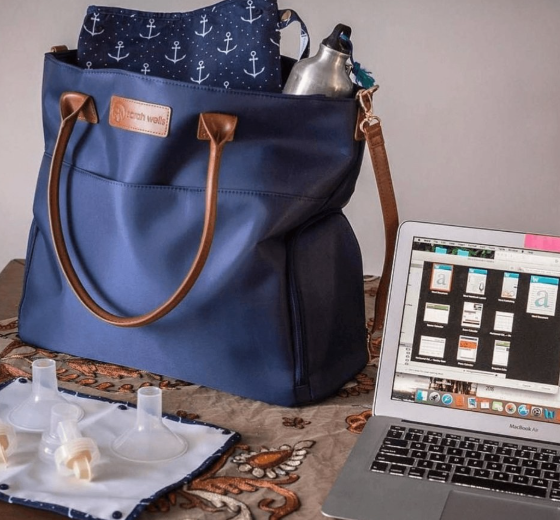
The first began in 2013, when she launched Sarah Wells Bags from her living room after returning to work with a breast pump and laptop, and realizing there was no bag designed to properly carry both.
Then came 2018.
That was the year, Wells says, she first understood that running an ecommerce company could mean having to understand government policy almost as well as product development.
“When the U.S. government added a new tax on products made in China, including bags like mine,” she recalls, “that was the first time I understood trade policy was going to be part of running a bag company.”
Then the pandemic arrived.
Sarah Wells Bags temporarily pivoted its supply chain away from handbags to help source critical PPE for healthcare workers while continuing to support mothers working on the front lines.
But for Wells, the most difficult chapter began in 2025.
“In the earlier chapters, the rules changed once and then held still, so I could adjust my prices, my suppliers, or my plans and move forward,” she says. “Since 2025, the tariff rates have changed repeatedly, sometimes with days of notice, sometimes while my products were already on a ship.”
Her conclusion is simple:
“You cannot plan around a cost that keeps changing after you have already committed the money.”
When a successful-looking business is fighting to survive
From the outside, 2025 looked like a high-profile year for Wells.
She testified before Congress. She appeared on CNN. She stood outside the Supreme Court on the day a major tariff case was argued.
Behind those appearances, however, her company was under extraordinary financial pressure.
“What people did not see was how stressful it was to be the business owner behind all of that,” Wells says.
The tariff bill on an incoming shipment had increased to a level the company could not absorb while keeping its entire team employed.
“I laid off American employees so I could afford to bring my own inventory into the country,” she says. “I was speaking publicly about small businesses struggling while living it in real time.”
For Wells, the experience changed how she thinks about the popular entrepreneurial advice to simply keep pushing through hard periods.
Not every difficult situation can be solved with better execution.
“A difficult season is a problem you can fix by doing your own job better,” she explains. “A marketing campaign flops, so you learn from it and run a better one. A product does not sell, so you listen to customers and redesign it.”
A structural problem is different.
“A signal is when the numbers stop working no matter how well you run the business.”
That was what happened with tariffs.
“I could have run the most efficient company in America and it would not have mattered, because the tax on bringing my products into the country was more than the profit I made selling them,” she says. “No amount of pushing through fixes that.”
The solution was drastic: Sarah Wells Bags moved manufacturing from China to Cambodia.
“That saved the company,” Wells says.
It also cost approximately $500,000.
Building a business where customers eventually leave
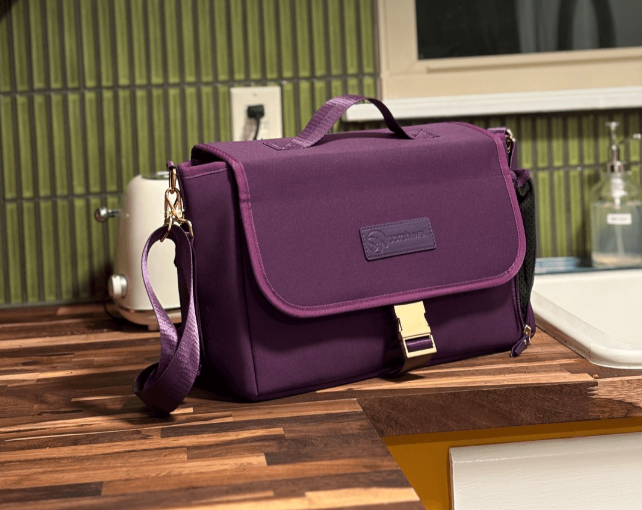
Sarah Wells Bags faces an unusual ecommerce retention problem: success often means a customer eventually stops needing its core product.
“A mom needs a pump bag for about a year, and then she is done with it, either forever or until her next breastfeeding journey,” Wells says.
That means the company cannot build its entire model around selling the same product repeatedly to an established customer base.
“I have to find new ones every single year, which keeps you honest about whether your product is still good.”
But there is an advantage.
A mother going through that stage of life tends to know other mothers going through it too.
“A mom in that season talks to every other mom she knows,” Wells says, “and she remembers who helped her when it was hard.”
That distinction — between selling a product and helping a customer through a specific period of her life — has shaped the company.
Sarah Wells Bags has a lactation provider on its team and tracks pumping laws across every U.S. state so customers can understand their workplace rights.
“The bag is the product,” Wells says. “Getting her through her breastfeeding journey with real support is the mission.”
The jobs Sarah Wells will, and won’t, give to AI
Today, the Sarah Wells Bags team consists of just four people.
Artificial intelligence has allowed that small team to perform work that once would have required considerably more staff.
Wells is enthusiastic about using it for certain jobs.
“Research, first drafts, data analysis, and reading through hundreds of pages of government trade notices to find the three paragraphs that apply to us,” she says. “That used to eat whole days.”
But there are areas she refuses to automate.
“What I would never hand over is the customer conversation.”
She points to the messages that arrive from customers in intensely personal moments.
“When a mom writes us at 2 a.m. because her bag arrived and she cried a little because someone finally built something for her, a real person on our team, usually a fellow mom, answers that.”
Product decisions are another boundary.
“The decision about what we make next,” she says, “still comes from listening to customers, not from a prompt.”
AI, in other words, can make a small business much more capable. But Wells is wary of interpreting that productivity purely as a win.
Asked whether a four-person business can now genuinely compete with a 40-person company, she answers:
“Both are true.”
“The tools are real, and my four-person team today can do things I could not have done with fifteen people in 2016,” she says. “It is also true that those four people are now expected to cover the work that fifteen used to do, and nobody lowered the expectations when the headcount went down.”
Founders hire marketing too early — and mentors too late
After more than a decade of building a brand, Wells has strong views about where early-stage founders should spend their limited resources.
One function is frequently hired too soon.
“Too early: marketing,” she says. “You need to know what actually sells and why before you pay someone to shout about it.”
Something else tends to come much too late.
“A mentor.”
Wells argues that founders need somebody outside their immediate circle who is willing to challenge their decisions.
“Not friends, not family, because they love you and they will tell you what you want to hear.”
Early in her own journey, Wells worked with a mentor through SCORE, the small-business mentoring program supported by the U.S. Small Business Administration.
She still maintains that relationship.
“Some of my best decisions came out of those conversations.”
Her broader advice follows the same philosophy: before outsourcing the fundamentals of a company, learn how they work yourself.
Wells learned how to manage marketplace accounts, run advertising, work on graphic design, build a website, oversee finances and deal with import paperwork.
“At the time it felt like the only option, because there was no one else to do it,” she says.
But the skills proved invaluable later.
“In a pinch, during the high-pressure financial years, I can pick any of it back up myself.”
It also makes it harder for anyone around her to hide behind complexity.
“Nobody can tell me something is impossible or too expensive when I know exactly what it takes to do it.”
The thing that threatens your company may have nothing to do with your competitors
One of entrepreneurship’s biggest lessons, Wells says, is how little control founders sometimes have over the risks that matter most.
“The thing that threatens your business usually is not a competitor.”
Instead, it might be “a tariff announcement, a pandemic, a change in how a marketplace ranks your products, a shift in what customers can afford.”
“Those come from outside your business entirely,” she says, “and they arrive faster than you can react.”
The experience has changed her definition of growth.
In the early years, growth meant what it means for most founders: more revenue and more products.
“Now it means keeping my team employed through a year I cannot predict, and using whatever reach this business has earned to make things better for the moms and the small businesses it serves.”
“Some of that growth is bags,” she says. “Some of it is policy work. Both count.”
Resilience should not mean accepting chaos
The startup world loves the idea of resilient founders.
Wells has become more skeptical of how that word is used.
“They think it means surviving,” she says.
Her definition is different.
“To me, resilience is holding onto your core values and your mission when the market tells you to drop them.”
She has been advised to remove initiatives that do not contribute directly to sales.
“I have been told to cut the lactation support because it does not directly sell bags,” she says. “I have been told to stop talking about policy because it might alienate customers.”
She chose not to.
“Resilience is staying the company you set out to be while everything around you says it would be easier not to.”
But even that idea has limits.
“We celebrate scrappy founders in this country, and we should,” she says. “But when the rules change while your goods are already on a ship, resilience is not a personality trait, it is a survival requirement, and it takes a real toll.”
Behind every company are people dealing with those consequences.
“Founders are people. We have families, mortgages, kids in school, employees who depend on us.”
Her preferred solution is not to demand ever-greater resilience from entrepreneurs.
“I would love for ‘resilience’ to stop being the expectation and for stable, predictable rules to be the expectation instead.”
From ecommerce founder to policy advocate
Those experiences eventually pushed Wells into a second venture: the Center for Modern Commerce Policy, which she calls Modern Commerce.
The nonprofit trade association represents small and mid-sized online sellers in Washington.
The idea came from watching business owners repeatedly encounter the same problem.
“Sellers finding out about a rule change from a surprise bill when their shipment arrived at port,” Wells says.
“The information exists. It just never reaches small importers, and that gap is where the damage happens.”
Large corporations can employ government-affairs teams specifically to monitor regulatory and policy changes.
“Small sellers have Google and each other.”
Wells wanted someone in Washington who understood how those businesses actually operate.
Policymakers, she argues, often misunderstand two things about modern ecommerce companies: their size and their timing.
“I pay the tariff months before a customer buys anything, so a rate announced this morning lands on inventory I committed to a year ago.”
And much of the policymaking framework still imagines companies at either end of the scale.
“Most of the people writing commerce rules picture either a Main Street storefront or a large corporation.”
But between the two sits an enormous category of companies like hers.
“There is a whole economy of businesses like mine, small companies selling primarily online, shipping nationwide, importing from overseas, that fits neither picture,” she says, “and the rules were not written with us in mind.”
Two missions with the same underlying idea
At first glance, advocating for breastfeeding mothers and advocating for ecommerce entrepreneurs might look like two separate missions.
Wells does not see them that way.
“Same thread.”
She believes small businesses sit “at the intersection of every part of a community.”
“Working moms, families, jobs, economic growth, the local charity drive, the workforce, the school fundraiser, the neighborhood’s sense of safety and stability,” she says. “Pull on a small business and all of that moves.”
Working mothers occupy a similar position.
“Both carry an enormous share of the economy and both are largely missing from the data policymakers look at when they write rules.”
Wells wrote a book, Go Ask Your Mothers, about one group.
She built a trade association for the other.
“The job is the same,” she says: “make the people doing the work visible to the people making the rules.”
For Wells, Modern Commerce also feels less like abandoning entrepreneurship and more like returning to where she started.
Before Sarah Wells Bags, she worked in policy.
In fact, it was returning to that policy career as a new mother — and pumping during a work trip with no appropriate bag — that ultimately inspired the company.
“Fourteen years of running a small business taught me things about the economy I never could have learned from the policy side,” she says. “Now I get to bring both together.”
Mission is not a cost of doing business
One of Wells’ views has changed significantly since she launched the company.
Before becoming an entrepreneur, she questioned whether a for-profit company could remain genuinely mission-driven once money entered the equation.
“I worried that the moment money came into it, the mission would get watered down.”
Fourteen years later, she has reached the opposite conclusion.
Sarah Wells Bags employs a lactation provider. It tracks pumping rights around the country. It supports customers in ways that cannot always be tied directly to a transaction.
“We have showed up for moms in ways that never directly sold a bag,” Wells says, “and the business is stronger for it.”
“The mission is not a cost of doing business. It is the reason the business works.”
If she started again, she would still build one customer at a time
If Wells had to relaunch the business today without an audience, reputation or distribution, surprisingly little would change.
“I would build it exactly the way I did.”
That means starting small.
“One mom at a time, listening to what she needed, and growing by word of mouth and reputation,” she says. “That is still how we grow.”
There is one area she would approach differently: inventory.
For all the unpredictable external challenges the business has faced, inventory planning remains one of the hardest operational problems after 14 years.
“Either I ordered too much and paid to store product I could not sell, or I ordered too little and lost sales because we were out of stock,” Wells says. “I have done both more times than I would like to admit.”
The challenge is particularly difficult when orders must be placed with factories months before consumers actually purchase the products.
“I have to guess right.”
Recent volatility has made historical comparisons increasingly unreliable.
“Add in the tariff changes and I cannot commit to a factory, a price, or a hire without knowing what tax my shipment will be charged when it lands.”
What she would tell a founder with twelve months of runway
Suppose a founder came to Wells today with a strong product, a small team and enough cash to survive for twelve months.
Her first advice?
“Go for it.”
But she would attach an important warning.
“Do not spend that money on outside partners who make big promises.”
Instead, Wells would use that first year to understand as much of the company as possible firsthand.
“Learn the inside of your business: how the product is made, how it ships, what customers say when they are unhappy, how the money moves.”
Being scrappy is not only a way to reduce costs in the beginning.
“Being scrappy and being able to do every job is how you survive the hard years,” Wells says. “It is also how you teach your team, as you grow, what your standards are and what the brand stands for.”
“You cannot hold someone to an expectation you never met yourself.”
Fourteen years later, the mission is still enough
After more than a decade, the novelty of calling herself a founder has long disappeared.
What keeps Wells going is something much simpler.
“My team, and the moms who write to tell me the bag got them through going back to work.”
Those messages have not lost their impact.
“Fourteen years in, a message like that still lands the same way it did the first time.”
And despite everything that has changed around the company — tariffs, marketplaces, technology, supply chains and the size of the team — Wells says the fundamental reason for building has remained remarkably stable.
“The mission has not changed.”
“A mom deserves to go back to work with what she needs, and small businesses deserve a fair shot.”
“As long as those two things are still true, I still have work to do.”
You can check out more about Sarah Wells Bags on: