
The world of online shopping is very competitive, which means merchants are under pressure to provide faster sites, more personalized shopping experiences, and more flexible shopping channels. In effect, this has driven the e-commerce industry to shift from all-in-one platforms to headless e-commerce.
What was once a niche concept is quickly becoming an essential trend, especially since it is backed by research, enterprise adoption, and strong endorsements from companies like BigCommerce, Shopware, and Shero.
But what exactly is headless e-commerce, and why is it changing how we shop online? Here’s a deep dive into the trend, its rise, and what it means for retailers and customers alike.
What is Headless E-Commerce?
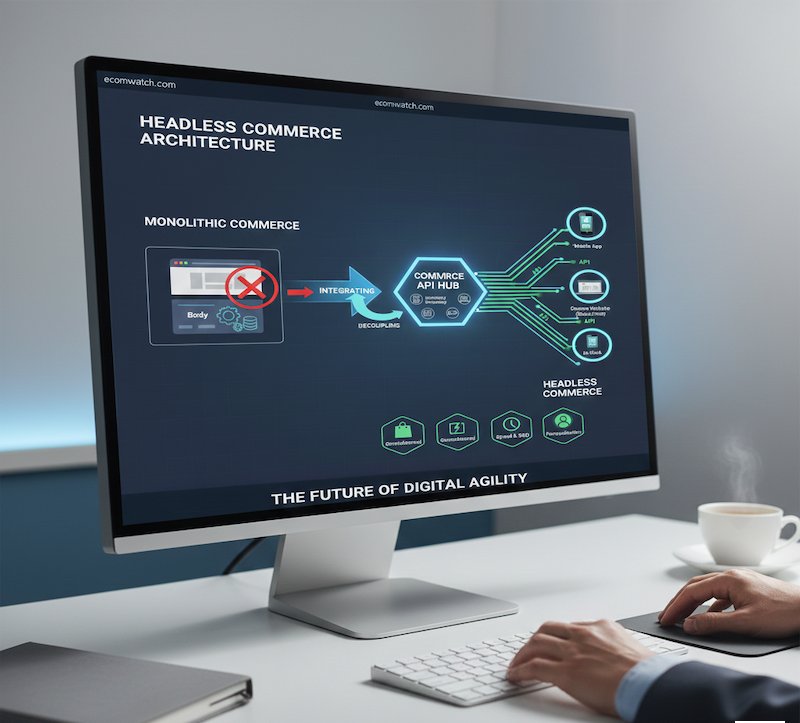
To understand headless commerce, it helps to understand monolithic commerce, which is the traditional approach. In monolithic commerce, the front-end or the visual storefront is combined with the back-end, which manages pricing, product data, inventory, checkout, and more.
Headless e-commerce, on the other hand, is a type of architecture where the front-end is separated from the back-end. Instead of relying on one system to manage everything, merchants use Application Programming Interfaces (APIs) to connect their visual layer with their e-commerce engine.
This allows retailers to mix and match the best tools for speed, customization, and performance, without impacting the customer shopping experience.
Why is Headless Commerce Growing so Quickly?
Headless e-commerce has seen a huge surge in popularity among e-commerce platforms. Here’s why it is rapidly being adopted in the industry:
1. Customer expectations make omnichannel essential
Online shopping is no longer a single, unified experience where customers rely solely on e-commerce platforms. They browse on social media, shop via mobile apps, check stock on in-store kiosks, and even purchase through virtual or voice assistants or games.
A traditional platform struggles to push content consistently across all these channels. Headless commerce architecture enables merchants to pull product, pricing, and inventory data from a central system and display it seamlessly on any new channel.
2. Customers expect faster and smoother shopping
SEO is a core feature of the e-commerce industry. Platforms like BigCommerce and Shopware have proven that milliseconds matter. Page load speed is critical for both conversions and search engine rankings.
Monolithic platforms often have heavy codebases that slow down loading times, especially during high traffic. Using a headless architecture, platforms can optimize storefronts for peak performance, resulting in faster page loads, which boosts conversions and sales.
3. The push for personalization
Both retailers and customers want personalized e-commerce experiences. Customers, for example, prefer shopping based on their interests and history. Retailers want to tailor their brands for uniqueness. Headless commerce allows retailers to meet these expectations by designing personalized storefronts, building mobile apps that rely on the same backend data, and creating multi-region or multi-language shopping environments.
An often-overlooked benefit of headless e-commerce is that merchants and design teams can work independently. As a result, merchants can implement new design features without disrupting the system or breaking customer immersion.
Real-world use cases
Headless commerce is not just a theoretical upgrade or reserved for large enterprises. It has practical applications for any brand where content and experience influence purchasing decisions.
- Content-driven commerce: Brands that rely heavily on storytelling, social engagement, blogging, or rich imagery use headless commerce to seamlessly integrate complex visual content and call-to-action prompts without compromising customer experience.
- High-traffic commerce: Brands facing weather/climate spikes, flash sales, holiday surges, or other high-traffic situations need infrastructure that remains operational under load. Headless ensures the storefront stays functional regardless of traffic.
- Global e-commerce: Merchants selling across multiple regions can use headless commerce to customize languages, currencies, and checkout flows without overhauling entire systems. It is also ideal for multi-vendor applications.
Pros and Cons of Headless Commerce
While headless commerce is very effective, it should be adopted thoughtfully, with an understanding of its advantages and disadvantages.
Pros
- The decoupled architecture handles high traffic better, offering unmatched scalability and customization.
- Headless architecture is optimized for omnichannel use, enhancing developer experience and technical flexibility.
- Front-end and back-end teams can work and deploy changes independently. Marketing teams can launch campaigns without needing developer approval, reducing time-to-market.
- You can replace a legacy system without costly re-platforming, protecting your core investment.
Cons
- Managing multiple systems via APIs is complex and requires extensive technical expertise.
- Initial development costs are higher, and maintenance for multiple systems is also more expensive.
- Headless architecture demands more oversight from developers and merchants, unlike monolithic systems, where features like security and hosting are integrated.
- Small stores with simple catalogs or low operational costs might find traditional e-commerce more suitable.
The Future of E-Commerce Architecture
Headless e-commerce offers brands the freedom, speed, customization, and agility to compete in a world where customer expectations are more complex and demanding than ever.
However, it’s not a one-size-fits-all solution. Merchants should carefully analyze their business models to decide if adopting headless commerce makes sense financially.