Poshmark has begun hosting live shopping events under its official @Poshshows account, a move that puts the platform in direct competition with its own third-party sellers. The shift has received heavy criticism from Poshmark sellers, as the platform began as a neutral peer-to-peer resale marketplace that connected sellers directly with consumers.
Why Poshmark Sellers Are Outraged
In one post on the r/poshmark subreddit that now has 150 replies, many sellers argued that the move gives Poshmark an unfair advantage, especially over smaller sellers on the platform.
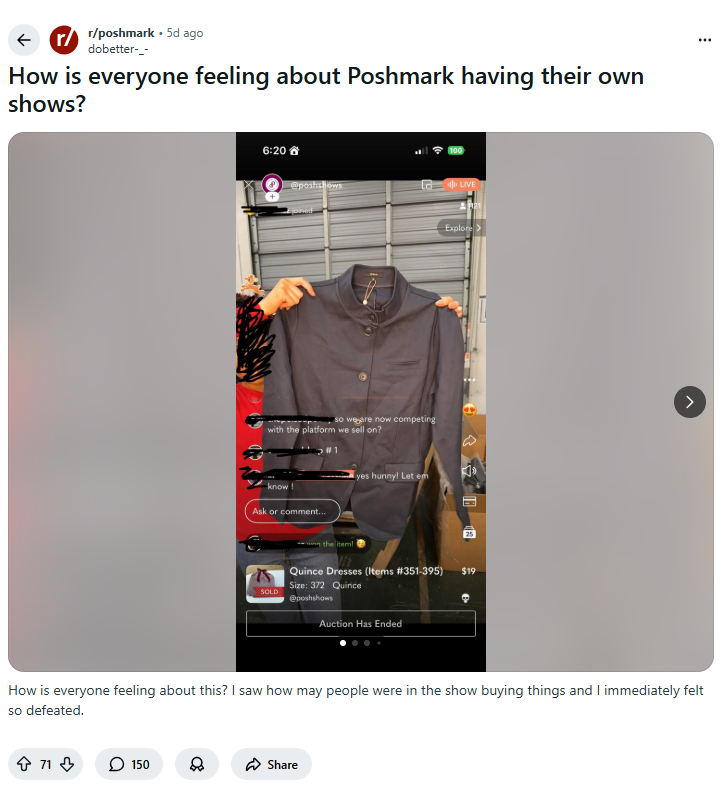
”It’s definitely kinda sus that they’re selling on their own platform and can market their show to a severe advantage over everyone else.”
”Full-time seller here, and I have no outside financial support- all of my money comes from selling. I just saw someone pay $38 for an item that retails for $40. The person doing the show is putting in next to no effort to move these products. There are 600+ people in that show.”
”The fact that most things I had seen were selling for basically retail prices while I have similar items heavily discounted is discouraging. Why are so many people buying on there??”
Naver’s Prior Controversies
This isn’t the first time Naver (Poshmark’s parent company) has been embroiled in controversy over unfair trade practices. The company, headquartered in South Korea, has faced multiple lawsuits and penalties in its home country for similar reasons.
In October 2020, the Korea Fair Trade Commission (KFTC) discovered that Naver had abused its dominant position as South Korea’s most popular search engine to favor Naver-owned marketplaces in search results over competitors.
The KFTC ruled that the company engaged in unfair self-preferencing that thwarted competition, resulting in a hefty fine of about 26.7 billion KRW (~$18 million USD) and corrective actions.
However, the Supreme Court of Korea reversed the decision in October 2025, ruling that the KFTC failed to demonstrate a causal relationship between Naver’s algorithmic choices and anticompetitive effect. As a result, there was no violation of competition law.
What Next for Poshmark Sellers?
Sellers based in the US worried about Poshmark’s growing self-preferencing and anticompetitive conduct can submit a complaint on the Federal Trade Commission (FTC) report fraud page.
When submitting the report, aggrieved sellers should provide data on visibility, sales trends, and algorithmic bias to strengthen their cases.
Alternatively, disgruntled US-based sellers can also contact their State Attorney General’s office if they believe Poshmark’s actions are harming their business. Visit the National Association of Attorneys General (NAAG) website’s contact page to find your state’s office.
Regardless of whether you choose to report the issue to the FTC or your State Attorney General’s office, keep these tips in mind:
- Be detailed: Provide comprehensive information about how the changes will impact your business to bolster your argument.
- Choose a suitable category: Pick the best fit when reporting the issue on the FTC website or select ”Something else” if unsure.
Provide contact details: Submit your contact information (phone or email) so the FTC or your state AGs can get in touch with you for more information. If you fear retaliation, you can also choose to submit your report anonymously.