
While some people may think that ecommerce downtime is just a slight technical inconvenience, that couldn’t be further from the truth. Downtime comes with significant costs, both financial and otherwise, and is a major issue for companies across the world.
As a result, ecommerce brands need to do all they can to not only be aware of the causes of this downtime, but also what they can do to reduce the chances of it happening.
What is Ecommerce Downtime?
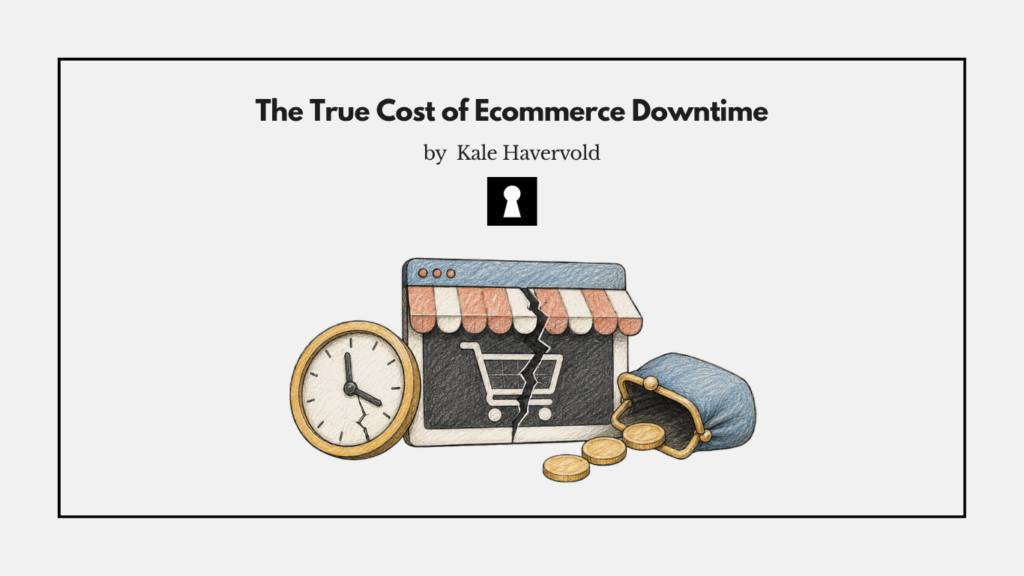
Ecommerce downtime is when an online store isn’t functioning properly, or when some parts of it are inaccessible to visitors. In general, there are two types of ecommerce downtime, which are hard downtime and soft downtime.
Hard downtime occurs when the store is completely unavailable to visitors, while soft downtime refers to a situation where a store remains online but experiences significant issues, such as slow loading speeds, cart-related problems, or non-functional features.
Hard downtime is generally incredibly noticeable and obvious, while soft downtime may be harder to detect, as it may only impact a small portion of your site. That being said, soft downtime can still be incredibly damaging to a business.
Downtime is Incredibly Common
Unfortunately for companies, downtime is quite common. According to a report that surveyed 300 global IT leaders to learn the impact of downtime on businesses, 96% of respondents experienced at least one outage over the last three years.
While many hosting providers and cloud services offer 99.9% uptime or better, there’s still a good chance you’ll experience some form of downtime periodically.
For example, even if you achieve that 99.9% uptime, that means you’ll still experience just shy of nine hours of downtime annually, on average. While this may be split up or take place at times when you aren’t generating many sales, if it all occurs at once, or on an important date like Black Friday or Cyber Monday, the impact may be devastating for your business.
Common Causes of Downtime
While there are many potential reasons for ecommerce downtime, here are a few of the most common that ecommerce brands need to be aware of:
- Problems with your hosting, whether it be overloaded servers or issues with your provider.
- Unexpected amounts of high traffic that your site can’t handle.
- Tech-related issues like bugs in your code, failed updates, or software compatibility problems.
- Cyberattacks, like a distributed denial-of-service (DDoS) attack, can also lead to downtime. A DDoS attack sends a huge volume of traffic to your site, which consumes the available bandwidth and overwhelms its capabilities.
- Human error, either by making coding-related errors, mistyping a command, making mistakes when managing or upgrading systems, or accidentally deleting things.
The Costs of Downtime
Downtime comes with various costs and drawbacks for ecommerce brands, and many of these costs are things many companies don’t even consider.
Financial costs
On the financial side, downtime leads to significant losses. While it varies from store to store, and due to the size of your operation, these costs can be substantial. In fact, according to research, the average cost for a single hour of downtime for over 90% of mid-size and large enterprises is $300,000.
While small businesses may not see numbers quite as high, 57% of small and medium-sized businesses (between 20 and 100 employees) said that an hour of downtime costs up to $100,000.
In addition to lost sales, you’ll likely need to pay recovery costs such as extra IT hours to diagnose and fix the issue, or potentially even emergency vendor fees if you need outside help to repair the problem.
Damage to Reputation and Other Non-Financial Costs
But outside of financial costs, downtime can also lead to major damage to your brand and reputation. When customers visit an online store, they expect a clear and streamlined experience, from searching for products to checking out.
If your site isn’t loading well or something isn’t working as it should, it gives off an unprofessional and unreliable image to customers. This may instantly drive them away and cause them to potentially never come back, as they’ve lost trust in your brand.
For example, even a site with slow page load speed can drive customers away, as 70% of consumers admit that page speed influences how willing they are to buy from an online retailer. If your issue is more severe than slow loading speeds, there’s a good chance it’ll drive customers away, as well.
In addition to people who visit your site being disappointed, many will also leave online reviews or tell their friends about their poor experience. So not only are the people who couldn’t use your site due to downtime upset, but they may share these negative experiences with others, drastically expanding the reach and impact of the downtime.
While direct financial losses and reputational damage are likely the highest costs of downtime, it can also lead to a loss of productivity, SEO penalties, and a waste of marketing spend.
Ways to Minimize and Reduce Downtime
As you can see, experiencing downtime can spell disaster for your ecommerce brand and ruin your finances and reputation in mere hours. Thankfully, there are several things ecommerce companies can do to minimize the likelihood of experiencing downtime, including:
- Choosing a reliable and high-quality hosting solution with high uptime guarantees and scalable infrastructure.
- Using 24/7 performance monitoring, you’re instantly aware when potential issues arise, such as a decrease in store speed, so you can hopefully deal with them before they become a major problem.
- Performing thorough testing on new features or code before it goes live, to ensure it won’t cause any issues.
- Scheduling site maintenance during hours when your traffic is lowest, and making sure to communicate publicly about your plans and when the maintenance is taking place.
- Having a recovery plan in place so everyone on your team knows what to do if downtime occurs. This helps you keep any downtime you experience to a minimum, as opposed to having your store down for multiple hours while your team scrambles to figure out the issue.
However, while these methods can help reduce the chances of dealing with downtime, there’s no foolproof way to fully prevent it.