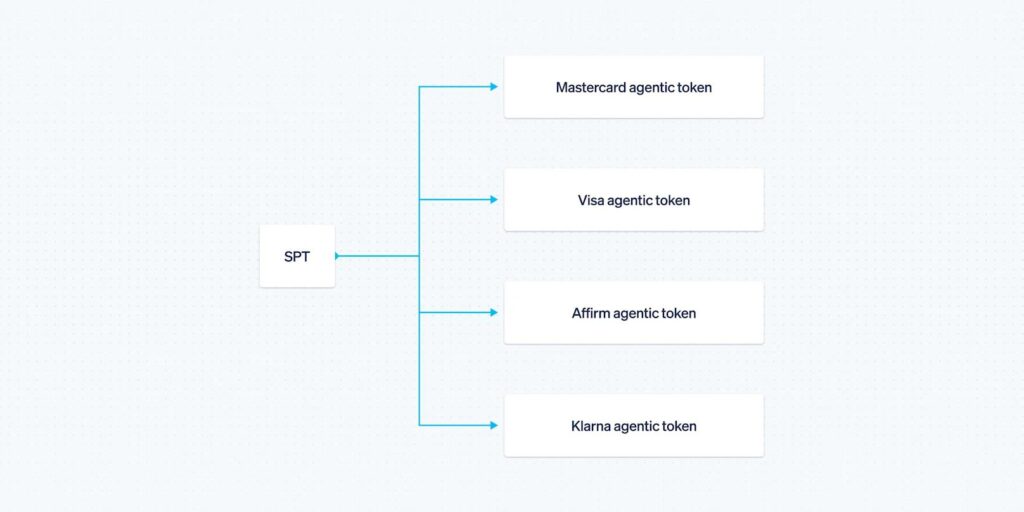
Stripe has announced that the company is expanding the support for its Shared Payment Tokens (SPTs). In particular, it now enables both network-led agentic payments with Visa and Mastercard, as well as buy-now-pay-later (BNPL) payments through Klarna and Affirm. The company is also planning to expand SPT support to even more payment methods in the future.
Stripe Expanding SPT Support
According to a recent blog post by Stripe, the company is expanding SPT support to allow broader access to agentic payment capabilities. For those unfamiliar, SPTs are a payment primitive for agentic commerce, and they let agents initiate payments on behalf of customers, using their preferred payment methods, but without exposing their credentials.
The company launched them last year, and since their release, Stripe has said many sellers have asked for them to expand access to more of the most popular payment methods, and it seems the company has listened.
For sellers, the experience is straightforward, as you only interact with SPTs, while Stripe itself handles the complex behind-the-scenes actions. Also, any seller already processing payments with Stripe will automatically get support for these new agentic payment methods.
While agentic commerce is still relatively new, it’s expected to grow rapidly, and even projected to take a major share of online sales by 2030.
Some customers are still unsure about it, but many are warming up to the idea. In fact, over 75% of consumers are open to certain agentic features, a number which could rise over time as agentic commerce becomes more common.
Network-Led Agentic Payments With Visa and Mastercard
Agentic network tokens, which are built by Visa and Mastercard and deployed with Stripe, are secure digital credentials that let authorized AI agents initiate payments on behalf of customers, while keeping card details hidden.
The way this process works is fairly straightforward. When a customer authorizes an agent to make a purchase, Mastercard or Visa provides Stripe with an agentic network token that’s scoped to customer intent, and then the token gets shared with the agent.
Next, the agent uses the tokens across any seller accepting agentic payments and anywhere that accepts Visa or Mastercard payments. The networks handle the secure credential translation, as well as things like verification and authorization.
Accepting Klarna and Affirm Payments
Stripe is also bringing support for Klarna and Affirm, which are two of the most popular BNPL payment methods. This helps agents provide more flexible payment options, in hopes of increasing checkout conversion rates.
BNPL payments are growing more popular in general and account for hundreds of billions worth of transactions worldwide. Stripe says that businesses on the platform can see up to a 14% increase in revenue on BNPL-eligible sessions.
How this works is also quite simple. When a customer chooses a BNPL option, Stripe shows the BNPL confirmation page on the agent’s UI and sends the necessary credentials to the BNPL provider. As a result, the customer experience remains the same, as Striple handles the heavy lifting.
The company says it plans to expand SPT support even further in the future, to help make agentic payments possible for more consumers.
For ecommerce brands, this news is positive, as it gives sellers using Stripe the option to offer additional payment methods, which is never a bad thing. The more options you can give customers at checkout, the better your chances of achieving higher checkout completion rates and reducing cart abandonment.