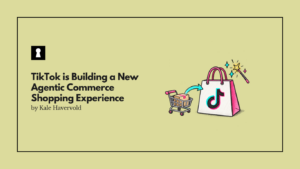

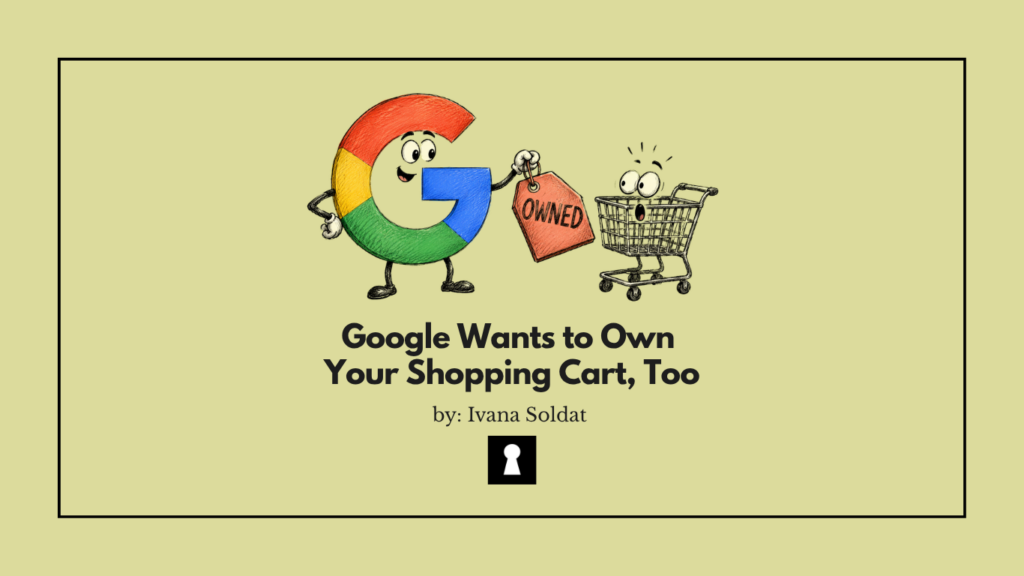
The Universal Cart promises to let you shop across Nike, Target, Wayfair and more in a single checkout. Whether you asked for that or not.
Google has unveiled its Universal Cart, a unified shopping tool that lets users add products from multiple retailers into a single checkout experience across Search, Gemini, YouTube and Gmail. The announcement came at Google I/O on May 19, buried between AI model updates and the kind of demo videos that make everything look frictionless.
The pitch is straightforward: stop hopping between websites and let Google handle the whole thing. Convenient, yes. Entirely on-brand for a company that has historically preferred to be the last stop on every consumer journey.
One Cart to Rule Them All
Universal Cart sits on top of Google’s Universal Commerce Protocol, a payments infrastructure layer the company co-developed with Shopify that allows AI agents to execute transactions on a shopper’s behalf. Merchants already confirmed as early participants include Nike, Sephora, Target, Ulta Beauty, Walmart, Wayfair, and Shopify merchants such as Fenty and Steve Madden.
The cart is expected to roll out in Google Search and the Gemini app in the US this summer, with YouTube and Gmail integrations to follow later in the year.
“The moment you add a product to your cart, it gets to work in the background — finding deals and price drops, giving you insights on price history and alerting you when an item is back in stock.”
That quote comes from Vidhya Srinivasan, VP and GM for ads and commerce at Google, who described the tool in a blog post accompanying the announcement. The AI powering the cart runs on Gemini models, which Google says will improve the cart’s recommendations over time.
Smarter Than Your Average Cart
Universal Cart is not just a place to store items. According to Google, once a product is added, the system monitors for price drops, flags when things go out of stock, and checks compatibility between items. Srinivasan cited the example of flagging incompatible computer components before checkout.
The cart also pulls in data from Google Wallet, including payment method perks, loyalty points and merchant offers, to inform its purchase recommendations. Google Wallet knowing your payment methods is not new. Google Wallet knowing your payment methods and also deciding what to buy is a slightly different proposition.
The Context You Were Not Quite Asking For
It is worth noting that Universal Cart arrives while Google is still dealing with the legal aftermath of being found, in August 2024, to have illegally maintained a monopoly in general search. A federal court judge ruled that Google had violated the Sherman Antitrust Act by paying billions to device manufacturers and browsers to be the default search engine, locking rivals out of the market for years.
The September 2025 remedies ruling stopped short of forcing Google to divest Chrome or break up its business. The Department of Justice is appealing, with the case expected to reach the D.C. Circuit Court of Appeals in late 2026 or early 2027. The judge himself noted that the rise of generative AI had changed the picture significantly, softening what many had expected to be far harsher penalties.
So, a company found guilty of monopolising the gateway to the internet is now building a universal gateway to commerce. Timing, as they say, is everything.
What It Means for Retailers
For merchants, the calculus is familiar. Being inside Universal Cart means visibility and reach. Being outside it, when it becomes a default part of how hundreds of millions of people search and browse, means the opposite.
The Universal Commerce Protocol is positioned as an open standard, which softens that concern somewhat. But Google co-wrote it with Shopify and announced the cart at its own developer conference, which tells you something about whose hands are on the steering wheel.
Whether this reshapes online retail or simply adds another Google layer between consumers and the brands they think they are buying from directly remains to be seen. The cart rolls out this summer. Retailers have until then to decide which side of that equation they want to be on.