
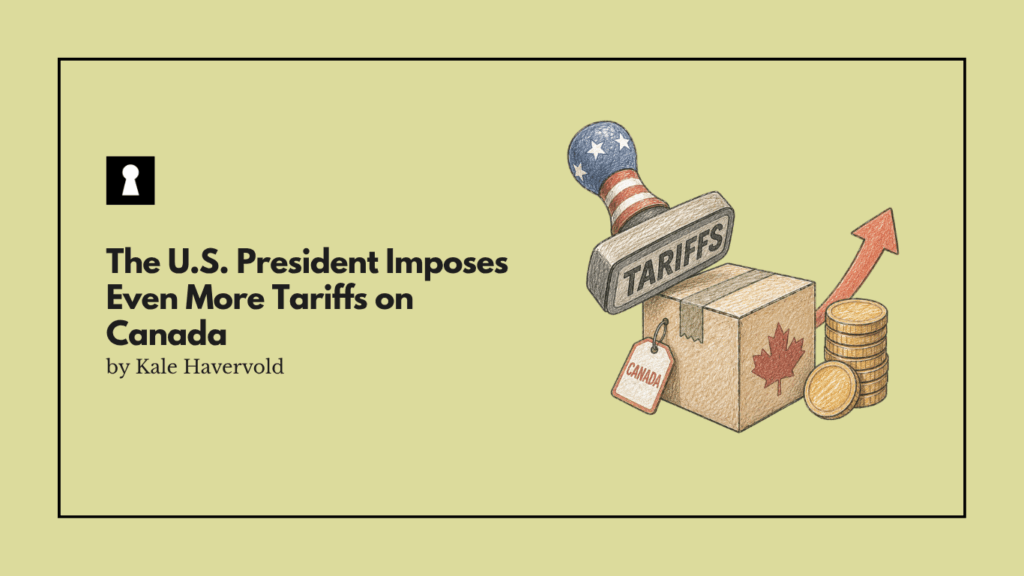
Despite being one of its biggest trade partners, the USA has just imposed a new 50% tariff on Canada, claiming discriminatory treatment by its neighbor to the north. The tariff is sweeping and will apply to a variety of different goods, including wine, cement, and several others.
Canada is still deciding how to respond to the new tariffs, but the Canadian Prime Minister warned that all options are on the table.
The USA Imposes New 50% Tariffs on Canada
Adding to the ongoing trade war between the USA and Canada that has been going on for over a year, the U.S. President has imposed a new 50% tariff on a variety of Canadian goods. This includes wine, cement, hockey sticks, furniture, dairy, seeds, and many other items.
However, these latest tariffs won’t apply to items like oil, gas, potash, and other items already subject to specific tariffs. In total, the tariffs will apply to around $20 billion worth of imports from Canada. These new 50% tariffs are expected to start taking effect on August 19th, 2026.
The Trump administration also added that these new tariffs would apply even if the product is included under the existing free trade agreement between the USA, Canada, and Mexico.
The move comes less than a month after the U.S. President threatened a 100% tariff on countries that impose a digital services tax on the USA. He has also recently threatened tariffs on Canada due to the smoke from Canadian wildfires reaching parts of the USA.
This decision by the President is also the first recorded use of Section 338 of the Tariff Act of 1930 since it was brought into existence, which lets a President impose punitive tariffs up to 50% against trading partners that have discriminated against U.S. goods.
The U.S. Claims Discriminatory Treatment
As for why these new tariffs were imposed, the White House claimed discriminatory treatment by Canada against U.S. products like alcohol, automobiles, and dairy. In general, these new tariffs aim to hold Canada accountable for what the U.S. believes is discrimination and retaliation.
In his statement, US Trade Representative Jamieson Greer said that “Canada has taken US alcohol products off Canadian shelves, given better market access to dairy products from the European Union, and has put a cap on US vehicle exports to Canada from companies reshoring to the United States,”.
Canada’s Reaction and Response
As for what Canada has to say about these new tariffs, Canadian Prime Minister Mark Carney has said that the tariffs are “the latest in a series of unilateral US trade actions” and mentioned that they go against the trade agreement that the USA, Canada, and Mexico have together.
He also added that Canada has tried several times to resolve the dispute with discussions aimed at modernizing the trade agreement, and states that the country is ready to intensify these discussions going forward.
As for retaliatory tariffs to this new 50% tariff, Canada hasn’t officially announced anything right now. However, Carney has said that all options are on the table for how Canada responds, which certainly leaves the door open for Canada to hit the USA with tariffs of its own.
Our Take
Dealing With the Tariff as an Ecommerce Seller, While Still Respecting Customers
Having to absorb a new 50% tariff can quickly destroy profit margins for companies shipping from Canada to the USA. As a result, these brands need to find ways to mitigate the cost, either by increasing prices, changing to localized fulfillment, or pivoting their marketing dollars to regions where it’s not as expensive to ship.
While raising prices is logical to protect your margins, it’s important to think of your customers during these times. If you simply change prices without a second thought, it may drive people away.
Instead, be transparent about the changes, detail why they’re happening, and consider highlighting anything you sell that isn’t prone to these new tariffs. Also, if your margins allow it, consider absorbing some or all of the higher tariff-related costs if you want to keep conversions high and ensure customers are happy.