
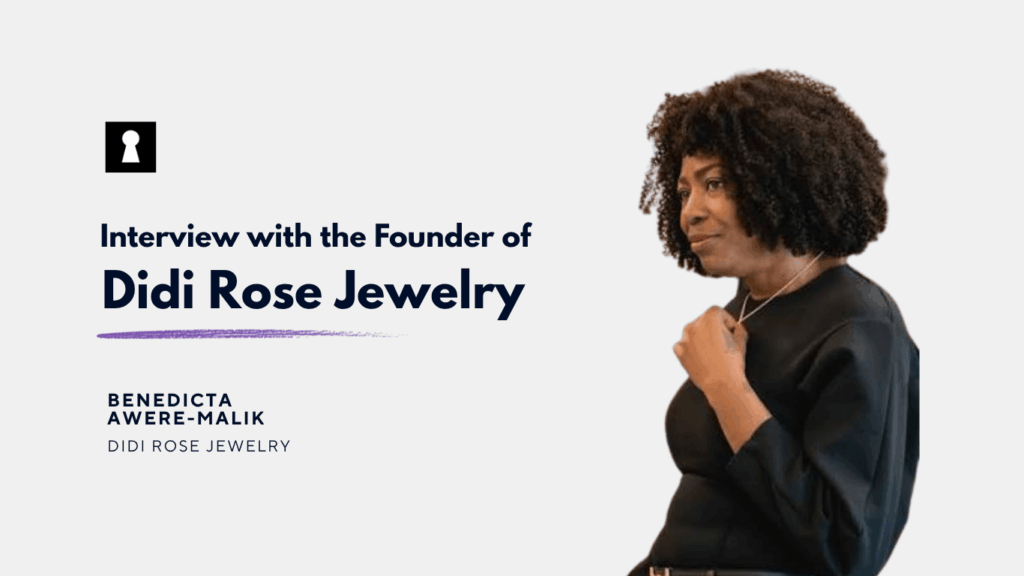
Today I sat down with Benedicta Awere-Malik from Didi Rose Jewelry.
For more than two decades, Benedicta Awere-Malik has turned gold, gemstones and family memories into jewelry. Her hardest business problems, however, have had less to do with design than with cash flow, customer acquisition and the physical limits of making everything by hand.
Awere-Malik is the founder of Didi Rose Jewelry, an Atlanta based company producing handmade chains, geometric hoops, gemstone pendants and one-of-a-kind pieces in precious metals.
Building a Voice in a Crowded Market
Tauras (Chief Editor of EcomWatch): Jewelry is a crowded ecommerce category. Some would say it has a low barrier to entry, since even the simplest beaded bracelet counts as jewelry. How did you stand out?
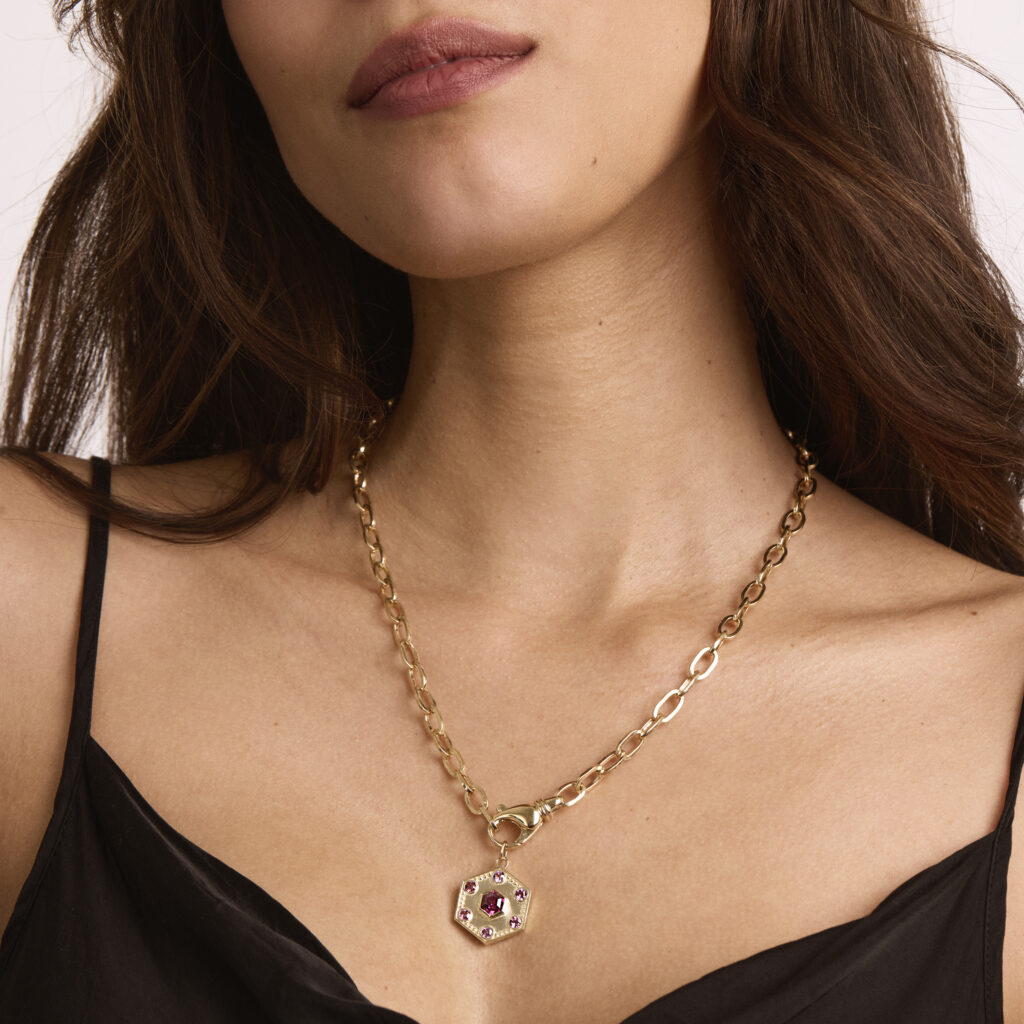
Benedicta (Founder of Didi Rose Jewelry): Having a voice is very important. When you’re starting out, it’s mostly testing the waters, trying different things to see what you like. Over time you develop a voice. The moment you have a product people can recognize as yours, that changes everything. Someone told me that early on, and I remember telling her I didn’t know how to do that. She said, don’t worry, patience, you’ll get there. Eventually I realized colored stones are my thing. Give me a slab of metal and a pile of sapphires in every color and I’ll go create something spectacular.
Having a recognizable product means that if someone sees it somewhere else, they’ll tag you and ask if you made it, or if someone’s stealing your design. That’s how you stand out. And you have to be good at what you do. A great design with terrible quality won’t get you far, because then people say the pieces are beautiful but they don’t hold up. The customers who believe in you are the ones who end up pushing you forward. Some of my customers became friends. They’re the ones tagging me in videos, telling people about Didi Rose. It happens naturally over time, but only if you have a voice. Otherwise you get lost in the noise.
The DM That Never Goes Unanswered
Tauras: Once you have the talent, the voice, the Shopify store and the stock, how did you actually grow it? Which channels worked, Instagram, search, press?
Benedicta: I do not ignore a single DM. Sometimes I’m chatting with 20 or 30 people at the same time and they have no idea I’m doing that. That personal touch on Instagram is what’s helped me grow. I respond to everyone. I don’t use automated responses, ever, the kind where someone sends a DM and a canned reply pops up. Never done that. It’s always personal, because that’s how people know you’re there and you’re going to listen.
Even the chat box on my website, if someone asks a real question, not something already in the description, I respond. Unless it’s someone trying to sell me something, I ignore those. But a genuine customer question always gets an answer. That’s actually how I started talking to a woman who later posted about my work on TikTok. It blew up. She bought a necklace, shared it, and other people picked it up from there. That happened in 2023, when things were in dire straits for the business. That one post helped a lot. There’s an element of luck in it too. I never used to think of myself as a lucky person, but 2023 changed that.
Tauras: I’d call it persistence more than luck. It took 20 years to get that kind of break.
Benedicta: So true. Persistence and hard work, of course.
A Price Range From $100 to $15,000
Tauras: Your products range from around $100 to over $15,000. How do you communicate value across that spread?
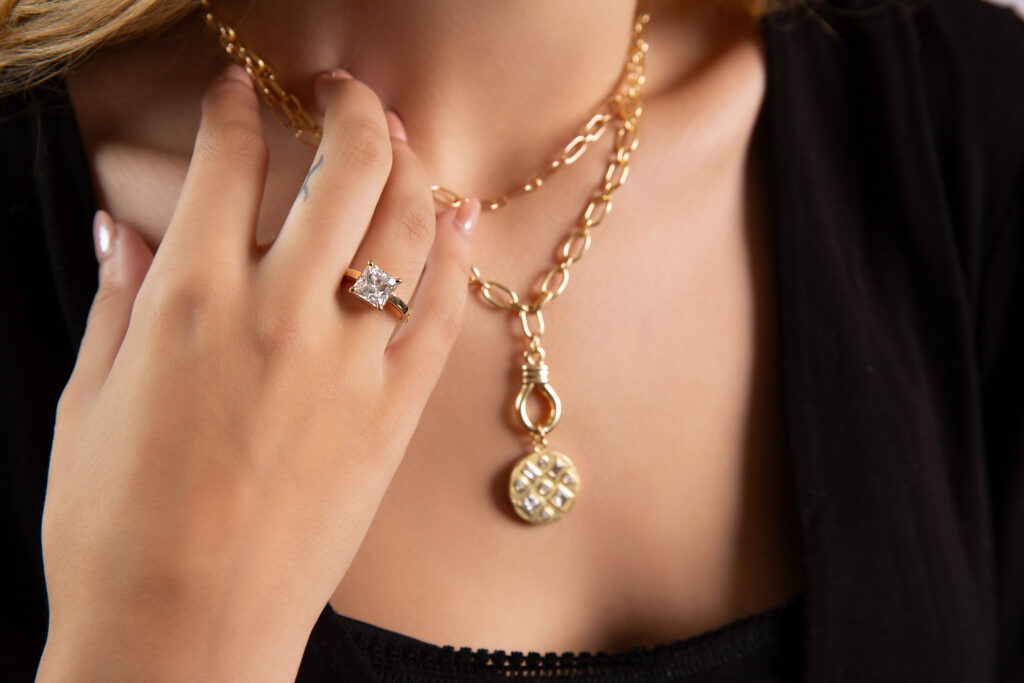
Benedicta: It really is materials. I always tell people to read the descriptions, because that’s what determines the price. The lower-priced items are usually add-ons, an extra inch on a chain, an extra clasp, things I started listing because I kept getting emails asking for them. The higher the cost of the material, the higher the price. That’s basically the whole formula. I have shifted away from silver almost entirely. I have one silver piece left listed, and once it sells, that’s it.
Part of that shift is about my body. I came face to face with my biggest fear a couple of nights ago when my hands just stopped working. They wouldn’t move. I’m getting older, and I can’t keep working at the pace I have been for all these years. So I have to be more careful about the stress I put on my body, and that’s pushing me toward pieces that better support the time it takes to make them.
Cash Flow, Cash Flow, Cash Flow
Tauras: What’s been the hardest part of scaling this business?
Benedicta: Cash flow. When you work with fine materials, you end up carrying inventory even if you don’t have a physical store, because people get upset if their order doesn’t ship on time. You can’t run everything as made-to-order. So you’re carrying inventory through the ups and downs of the precious metal market, on top of everything else you have to buy. Getting to a point where you can access real funding, without it being capped in a way that doesn’t actually solve the problem, is hard. If you need $200,000 to scale and a lender looks at your history and offers $75,000, that $75,000 won’t do what you need it to do. But when you’re desperate, you take it anyway.
It’s especially hard without a backer, when it’s just you. To scale, you need constant cash flow, because there are a lot of moving parts. And even if you have the cash flow, if you’re not willing to put in the work, you’ll end up in a hole. A lot of it runs on autopay, so you have to watch it closely. Even with an accountant, you have to be your own accountant too.
Learning to Delegate
Tauras: How do you manage everything as a mostly one-person operation?
Benedicta: I realized I can’t do everything, so I’ve learned to delegate. I have a company I’ve assigned to handle site management, so if a customer flags a bug, I send them a message and they fix it. Uploading products still takes me a while because of photography, but I found a workaround. I take pictures in a gem light box on my phone, upload them quickly as placeholders, and then swap in professional photos later, once I’ve had the pieces shot properly. Over time I’ve learned that asking for help is essential if you want to be successful at anything.
The Biggest Mistake New Brands Make
Tauras: You’ve given a lot of good advice already, about building a voice, about social media. What other mistakes do you see beginner entrepreneurs in the jewelry space making?
Benedicta: Blasting other brands. Bringing other people down to push yourself forward. It’s the biggest mistake someone just starting out can make, and it will come back to bite you down the line. After 23 years in this, I know things change. You might believe something strongly today, and once you experience it firsthand yourself, you realize the thing you were criticizing wasn’t so bad after all.
It’s important to practice discernment about what you share on social media. It’s more useful to focus on your own work and explain why people should choose it, instead of saying yours is better than someone else’s. At the end of the day, talking about another brand is free advertising for them. You’re introducing your audience to a name they might not have known, and sending a potential customer off to go look at someone else. Focus on your own brand. If you have an opinion, you don’t have to share it. Once something is online, it’s there forever, even if you delete it, because someone’s already taken a screenshot.
What’s Next for Didi Rose
Tauras: What’s next?
Benedicta: We’re working on acquiring a space in a luxury mall in Atlanta. It was supposed to close in June, but that didn’t happen, so now we’re pushing for August. I brought someone else onto the project to help move it forward, because, again, asking for help. I already have the plans for the new space. The goal is to streamline things in a way that’s easier on myself and my body as I get older. This is my retirement plan. I don’t have any other. And to keep growing, hopefully, and keep making more pretty things.
Conclusion
What stands out most from talking to Benedicta is the consistency. Answer the DM yourself. Let materials set your prices. Treat cash flow as the real growth constraint, delegate the parts that don’t need your hands. And resist the urge to build your brand by tearing down someone else’s.
It’s just advice that takes 23 years of showing up to actually prove out. Didi Rose sells gold and gemstones, but the deeper product is continuity: a business built to keep going, and now, with a move into a luxury retail space, one built to outlast the pace that got it here.
Congratulations to Benedicta on 23 years of building Didi Rose Jewelry, and thank you for sharing your story with us.
You can also find out more about Didi Rose Jewelry on:
https://www.didirosejewelry.com
https://www.tiktok.com/@didirosejewelry
https://www.instagram.com/didirosejewelry
https://www.facebook.com/didirosejewelry
If you’re building an ecommerce brand and want more stories like this one, subscribe to EcomWatch newsletter for weekly reporting and founder interviews from across the industry.