
The blueprint for this expansion originated from Project Aurelian, a contingency plan designed to ensure Amazon could continue serving customers if a new United States Postal Service contract fell apart.
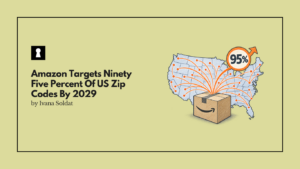
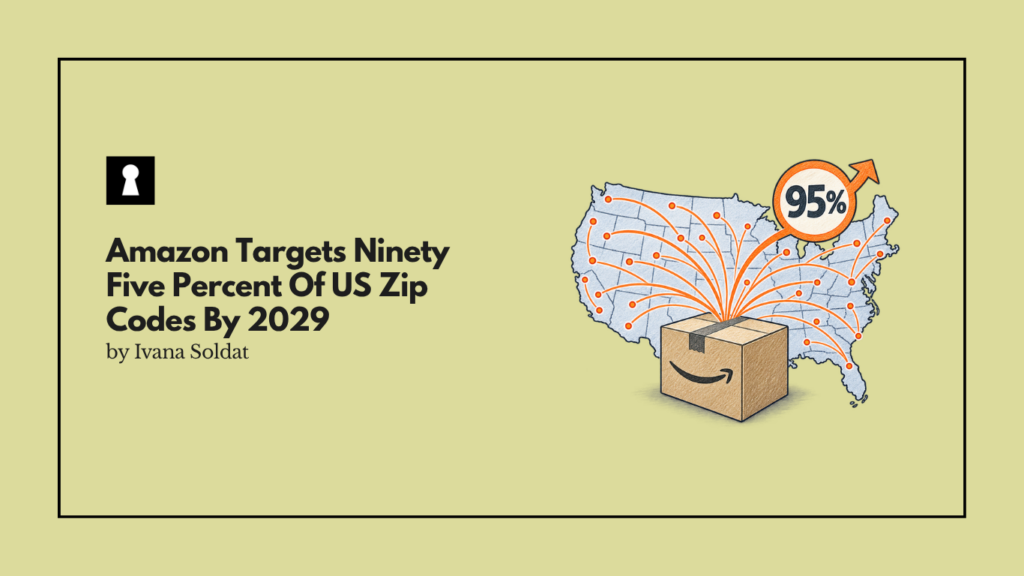
Although Amazon and the USPS ultimately reached a deal in April, the planning exercise permanently reshaped the company’s future delivery strategy. The e-commerce giant now aims to expand its network to about 39,400 US ZIP codes by 2029, representing roughly 95 percent of total ZIP codes.
Under this new dual coverage approach, Amazon wants every addressable ZIP code served by both its own delivery network and at least one third-party carrier, giving it absolute leverage and continuity of service regardless of external disruptions.
Hub Delivery And Zero Minimums Solve The Rural Economics Problem
Reaching the final five percent of the country has historically been a margin-destroying endeavor for private logistics networks. Amazon’s plan to bridge this gap rests on three main pillars.
First, the company plans to open 165 core delivery stations between 2027 and 2029, including 50 in entirely new areas, which will add roughly 3,300 ZIP codes for dedicated van delivery.
Second, Amazon is scaling its Hub Delivery program, which pays local businesses, particularly in rural areas, to deliver packages. The company expects this initiative to add roughly 4,500 ZIP codes with minimal new capital spending.
Lastly, Amazon plans to lower the minimum number of packages a ZIP code must generate before it will offer its own delivery service there, dropping from 50 a day to eventually zero. This allows existing delivery stations to absorb nearby, low-volume areas without the burden of constructing new facilities.
First Party Delivery Will Dominate Eighty Eight Percent Of Volume By 2029
This physical expansion is directly tied to Amazon’s internal volume forecasts. The company’s own network is expected to carry a vastly larger share of its total shipments in the coming years. Internal projections indicate that first-party delivery will rise to 88.7 percent of US packages by 2029.
For context, the USPS reports there are roughly 41,600 ZIP codes nationwide, meaning Amazon’s target of 39,400 addressable ZIP codes will bring its proprietary footprint to near parity with the national postal service.
An Amazon spokesperson noted that these projections are preliminary and reflect the views of a limited group, but emphasized that building redundancy into the logistics network is a standard operational priority.
The Threat To Legacy Carriers Is An Existential Margin Squeeze
By systematically lowering the barrier to entry for its own delivery services and crowdsourcing the final mile to local businesses, Amazon is actively starving legacy carriers of profitable volume.
Third-party carriers rely on density and volume to maintain viable unit economics. As Amazon siphons off the high-density urban routes for its own vans and delegates the rural routes to localized Hub Delivery partners, traditional carriers are left with an increasingly fragmented and unprofitable residual network.
This dynamic grants Amazon unprecedented leverage in future rate negotiations, as carriers will be desperate to retain whatever volume Amazon is willing to spare.
Our Take
Logistical Independence is the Ultimate Weapon in Retail, and Amazon is Forging it in Real Time.
Amazon’s roadmap to 39,400 ZIP codes is not merely about improving delivery speeds; it is a calculated campaign to achieve total supply chain sovereignty.
By eliminating minimum volume thresholds and crowdsourcing rural delivery, Amazon is systematically dismantling the economic arguments that once protected third-party carriers.
For independent sellers and competing logistics firms, the writing is on the wall. Amazon is building a closed-loop ecosystem where it controls the marketplace, the fulfillment, and the final mile, leaving external partners with shrinking margins and diminishing relevance.