
For many ecommerce founders, growth means more products, more employees and more revenue.
Can to Candle takes a different approach.
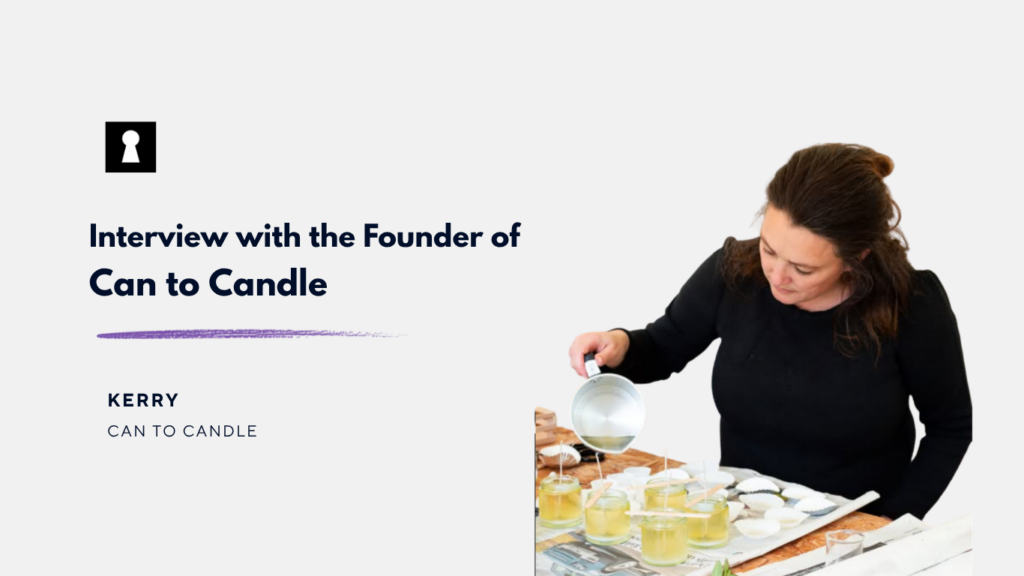
Kerry started the Edinburgh-based candle business around 12 years ago after looking for work that could fit around raising her children. What began at the kitchen table has since moved into a workshop at the bottom of her garden, but the business itself has remained deliberately small.
Today, Kerry runs Can to Candle largely herself, with help from her husband during busy periods. She says the business operates at around a 60% profit margin and estimates that roughly 70–80% of customers are repeat buyers.
That retention-first approach shapes much of how she runs the company.
Instead of trying to compete with large candle brands, Kerry focuses on creating a good core product, finding creative variations of products she already makes, keeping costs under control and giving existing customers reasons to return.
Alongside ecommerce, Can to Candle has also developed candle-making workshops, business mentoring, personalised products, refills and physical retail channels.
We spoke with Kerry about surviving in an increasingly crowded candle market, why she is cautious about scaling, how she gets customers to buy candles they cannot smell online, and why new ecommerce founders should stop waiting for everything to be perfect.
From the Kitchen Table to 12 Years in Business
Tauras (Chief Editor of EcomWatch): Could you introduce yourself and tell us how Can to Candle started?
Kerry (Founder of Can to Candle): I’m Kerry, and the business is called Can to Candle. I started it around 12 years ago.
I needed to get back to work but also needed something that could work around the kids, so I started from the kitchen table. Now we have a workshop at the bottom of the garden.
A friend of mine used to make candles and decided to give it up. She gave me all of her equipment, and I thought I would give it a go.
Twelve years later, we’re still here.
“I’m Never Going to Compete With the Big Boys”
Tauras: The candle market is considerably more crowded now. How do you make Can to Candle stand out?
Kerry: When I started, it wasn’t as crowded. There weren’t that many people making candles where I was.
That has definitely changed over the years.
Because I started so long ago, I have quite a lot of long-term customers. My focus is on making a decent candle and giving people a reason to come back.
I also try to think outside the box.
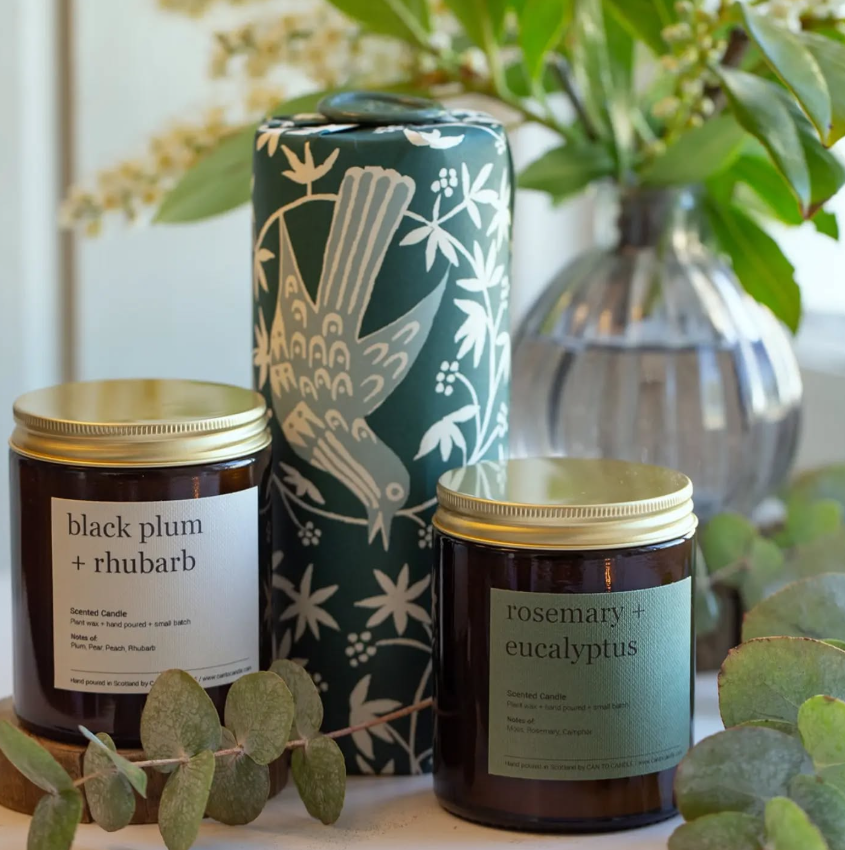
I do a lot of personalised candles, for example. Sometimes I can take the same basic product and vary it rather than constantly creating completely new products, testing them and spending a lot of money on research and development.
I try to keep things tighter: less work, more reward, without unnecessary spending.
I’m never going to compete with the big boys, so I don’t try to.
I focus on what I’m doing, look after the customers I already have and keep thinking of new ideas.
Finding New Ways to Sell the Same Core Product
Tauras: What does “thinking outside the box” look like in practice?
Kerry: I’m always thinking about things we can do differently.
One product I’m working on is based around children’s drawings. Kids are always creating pictures and giving them to their parents, so I’ve been looking at putting those drawings onto candle labels. I’m calling it the Little Artist Candle.
I’ve had some customers send me their children’s drawings already, and I’ve been working out how to translate those onto the labels.
Refills are another area.
We have large Christmas bauble candles, for example. The jar is relatively expensive, and customers probably only want to buy that jar once. So I created a refill so they can keep the original container and use it again.
Then there are smaller ideas. For International Dog Day, I’ve made wax melts shaped like dog bones.
Being a small business helps because I can pivot very quickly. Bigger companies can’t necessarily do that.
Why Can to Candle Has Stayed Small
Tauras: How big is the business today?
Kerry: It’s mainly just me, with my husband helping when we get busy.
I keep it tight.
For me, that makes the business more profitable and sustainable because I don’t have the expense of employing a larger team.
My profit margin is around 60%, so it’s a model that works well for me.
There’s a delicate balance with scaling. Sometimes you reach a point where you have to scale significantly, and I’ve seen product businesses struggle because the scaling hasn’t gone as expected.
You need the right product for that.
For me, repeat purchase is key to having a good business. You want something people use, finish and want to buy again.
Tauras: How much of your customer base is returning?
Kerry: Probably around 70–80%.
I’m very lucky.
But that’s the key, looking after the customers you already have.
It’s easier to keep the ones you have than to constantly try to find new ones, especially now.
When I first started, Instagram was amazing. You still need it today, but it’s nothing like it used to be.
How Do You Sell a Scent Online?
Candles present an obvious ecommerce problem: fragrance is one of the biggest reasons to buy one, yet it is impossible to smell a product through a screen.
Tauras: How do you convince a first-time customer to take a chance on a candle they haven’t smelled?
Kerry: Markets are really important for me because customers can actually smell the products there.
Some people will also discover us because they’ve been in somebody else’s house, smelled one of our candles and asked where it came from.
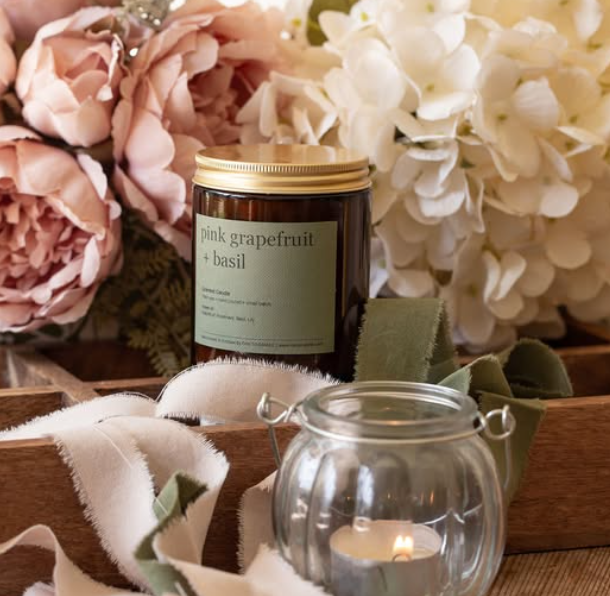
For first-time online customers, I’ll sometimes include a free tealight or scent samples from the rest of the range. That gives them an opportunity to discover other fragrances and potentially come back.
I’m also in a couple of independent retailers where I rent shelf space, so customers can find us there and smell the candles in person.
Candles are difficult because people do want to smell them before they buy. Markets and physical locations help solve that.
Upselling Without Constantly Creating New Products
Tauras: What has worked for increasing average order value?
Kerry: I look for opportunities to upsell around the products we already have.
Gift sets work well, and we offer gift wrapping as an additional option.
I also run candle-making workshops, and customers can add a kit to their purchase.
With our bauble candles, when someone buys the candle for the first time, we can ask whether they also want to add a refill.
It’s about thinking of ways to upsell around existing products: gift wrapping, kits, refills and gift sets.
They all work together.
Customer Acquisition Beyond Instagram
Tauras: Where are new customers coming from today?
Kerry: Markets are important, and so is my newsletter.
Collaborations can work well. I go to networking events, and I’ve found customers through Facebook groups where people are asking for gift recommendations.
The independent retailers help too.
Word of mouth is really important. Existing customers will burn one of our candles when they have people at their house, somebody asks where it came from, and then they find us.
Google has also worked. I rank highly for some personalised candle searches.
So there isn’t necessarily one channel. There are several different avenues bringing customers in.
Why Workshops Became a Major Part of the Business
Can to Candle’s workshops started as a customer-acquisition experiment.
They later became a business line of their own.
Tauras: You’ve been running candle-making workshops for around 11 years. How did that part of the business develop?
Kerry: When I first had the website, nobody could find it.
I was thinking, “How am I going to sell candles? People need to smell them.”
Then I thought about doing a workshop.
The original plan was to get customers into the house. The workshops had good margins, and I could also have products available for people to buy.
Customers would come to the workshop, receive a discount and often purchase products as well.
That’s how I found a lot of customers in the early days, and some of those people are still customers today.
Then the business-focused workshops grew from there.
I teach people who want to start their own candle businesses and mentor them. The basic candle-making workshop wasn’t enough for someone thinking seriously about starting a company because they needed to understand things like legislation as well.
So I developed business workshops around that.
It has become a big part of Can to Candle alongside the online business.
The Biggest Mistake New Candle Brands Make
Tauras: You work with people who want to start their own candle businesses. What mistakes do you see most often?
Kerry: Waiting for perfection.
People spend too long waiting for everything to be perfect, but it’s never going to be perfect. You have to put something out there and test it.
Another mistake is spending too much on branding and packaging too early.
With candles, you need to make a decent product first.
Your packaging at the beginning might not be the packaging you use forever. Mine certainly isn’t. The business evolved.
I wanted to get something out there, take it to a market and test whether people actually wanted it.
You can also be smart about things like labels. Instead of ordering huge quantities of different labels for every fragrance, you can design something flexible and add the individual scent.
That matters because suppliers may require minimum order quantities. If a scent doesn’t sell and you’ve invested heavily in packaging for it, you can be left with a lot of waste.
I also see new businesses launching too many scents.
Start with four good scents. You don’t need eight or ten.
Master one thing really well and then add to it.
Once customers start coming back, that tells you something. If they’re not coming back, you need to look at why.
Tauras: Were your first products perfect?
Kerry: Absolutely not.
I remember going to a market and somebody telling me his wife couldn’t smell the candle properly.
My first ones weren’t great.
But I got out there and did it.
Since then, I’ve won two awards.
It wasn’t perfect at the beginning. I just started.
Why Can to Candle Uses WooCommerce
Tauras: What does your ecommerce setup look like?
Kerry: I use WooCommerce with WordPress.
For me, it has been a very cost-effective option.
My brother built the website for me, but he told me that if he was going to do it, I needed to teach myself how to use it.
So I learned through YouTube.
I’ve found it easy to manage, and I can add and remove products myself.
For my business, having that control and keeping the costs economical has worked really well.
Tauras: Is there any particular ecommerce integration that has been especially useful?
Kerry: The Mailchimp integration with WooCommerce has been very useful.
I can see customer information, which products are selling through newsletters, purchase histories and who has or hasn’t opened emails.
It also lets me segment customers.
For example, I can identify people who previously bought our bauble candles and communicate specifically with those customers.
Having that data connected has been brilliant.
“Turnover Is Vanity, Profit Is Reality and Cash Is Sanity”
Tauras: What is one lesson other ecommerce founders could learn from the way you run Can to Candle?
Kerry: Know your numbers.
There’s that saying: “Turnover is vanity, profit is reality and cash is sanity.”
You need to understand your finances.
Before I even properly test a new product, I cost it out. I look at how much it is going to cost to produce and then ask whether somebody would realistically pay the price I need to charge.
If there isn’t enough margin, I’m not going to spend my time, money and resources developing it.
Research and development costs money.
If the product isn’t going to make enough, don’t waste that money.
You have to understand your pricing and know your numbers.
What’s Next for Can to Candle?
Tauras: Where do you want to take the business next?
Kerry: I want to do more corporate workshops.
I already run some, but I’d like to expand that side and look more at wellbeing, including going into offices and running sessions there.
There will be new products down the line too, and maybe a subscription service.
But the main focus is growing the corporate side of the workshops and getting more workshops running again.
It’s one of the most profitable parts of the business because you don’t need large amounts of materials or supplies.
That’s where I see a lot of opportunity.
Growth Doesn’t Always Mean Getting Bigger
Can to Candle’s story challenges one of the assumptions that often surrounds ecommerce entrepreneurship: that a healthy business should always be trying to become a much larger one.
Kerry has instead built around retention, margin and flexibility.
She keeps the team small. She costs products before investing in development. She finds ways to increase the value of products she already sells through personalisation, refills, gift wrapping and bundles. She uses markets to solve the sensory problem of selling fragrance online and workshops to generate both revenue and long-term customers.
And rather than measuring success purely through turnover, she pays close attention to whether the economics of an idea actually work.
That approach appears particularly relevant when she talks about the 70–80% of customers she estimates are repeat buyers.
For Can to Candle, growth is not simply about acquiring as many new customers as possible.
It is about giving the customers already there enough reasons to keep coming back.
And perhaps the most practical lesson for early-stage ecommerce founders is also the simplest:
Don’t spend months trying to make the first version perfect. Make the product good, understand the numbers, get it in front of customers and learn what happens next.
You can learn more about Can to Candle here: