
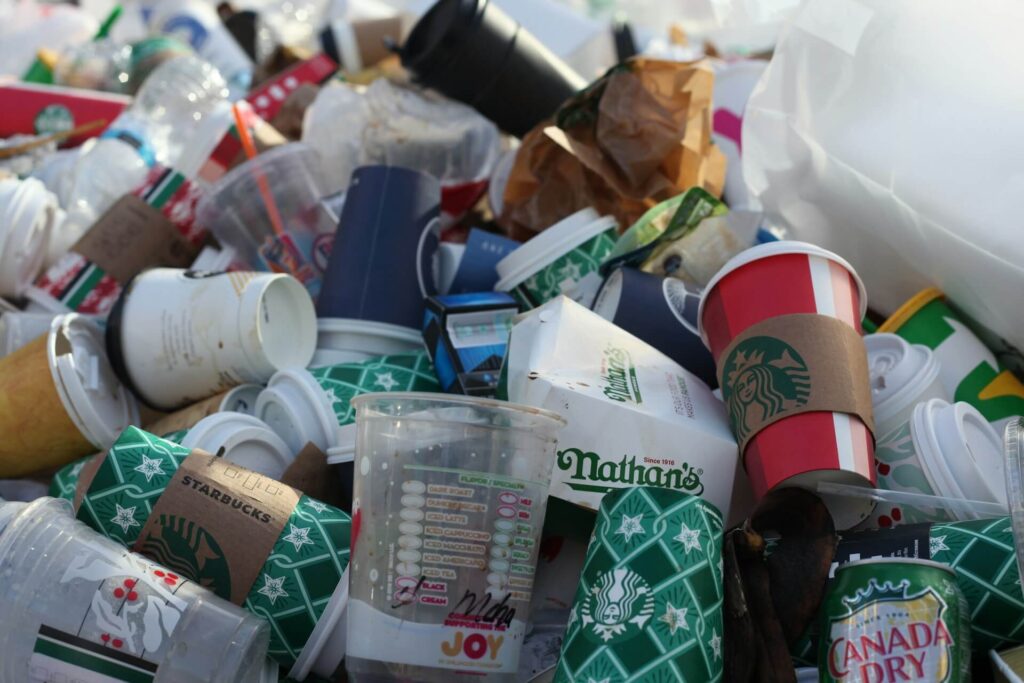
Traditionally, packaging has accounted for a major portion of the global plastic waste that fills landfills across the world, and is thus a huge source of plastic pollution. However, this seems to be changing as the sustainable plastic packaging market is expected to grow dramatically in the coming years.
The Sustainable Plastic Packaging Market Set to Rise Over the Next Decade
Over the next decade, the sustainable plastic packaging market is predicted to rise to new heights. While the market was valued at around $100 million as of 2025, this is expected to rise to around $220 million by 2035. As a result, the market is projected to grow at a compound annual growth rate (CAGR) of 8.2% over the forecasting period.
It’s moving beyond just being a niche option for companies that prioritize eco-friendliness and becoming a major part of sustainability strategies for many organizations.
In addition to eco-friendly product packaging for brands, some shipping companies are even revolutionizing the standard shipping packages to be more sustainable, such as FedEx introducing reusable boxes for B2B shippers.
The Factors Driving This Demand
Many things are driving this growing demand for sustainable plastic packaging. First, many economies have strict government regulations that mandate recycled content and ban single-use plastics, which leaves the door open for sustainable plastic packaging to take over.
Next, many companies have sustainability commitments (such as being net-zero), and using sustainable packaging is a popular way for these businesses to meet these pledges. These commitments are often good for a company’s bottom line, as well, as nearly 90% of ecommerce businesses report positive business impacts from their sustainability initiatives.
There have also been huge technological advancements in biology-based polymers (such as PHA and PLA), which may improve the cost and performance of eco-friendly and sustainable packaging compared to the past.
Finally, consumers increasingly want to work with brands that prioritize eco-friendliness and have verifiable sustainability claims. Not only that, but they’re often willing to pay more for products from them. In fact, more than 80% of consumers are willing to buy sustainably-made or sourced items, even if they cost more.
Specifically, these consumers are willing to pay 9.7% more for items that meet certain sustainability criteria, like being made with eco-friendly materials or being produced in a supply chain that has a low carbon footprint.
Possible Growth Constraints
While there are several growth drivers, there are also a few things that could hold the market back from such explosive growth. First, despite sustainable materials becoming more budget-friendly over time, it’s still about 20 to 50% more expensive to use plant-based plastics compared to traditional options.
Some companies are willing to splurge on these costs, but companies in more price-sensitive industries may not be able to.
Another potential constraint is the inconsistent recycling and waste collection infrastructure between regions. Some countries have systems that work incredibly well, while others may have a lack of a formal recycling system altogether.
Also, while some consumers love sustainability, others are skeptical about eco-friendliness claims and may not be willing to pay a premium to buy these types of items. This is why being able to verify your sustainability claims is so important, as it gives customers the comfort and peace of mind that you’re not greenwashing them.
Industry Demand
While a variety of industries use sustainable plastic packaging, the Food & Beverage industry dominates the space and is the largest consumer of this type of packaging. In fact, this end-use industry makes up an estimated 42% of the total market.
The next largest consumer in the market is Ecommerce & Logistics (With an estimated 20% share of the market), followed by Personal Care & Cosmetics (18%), Pharmaceutical (12%), and Retail & Consumer Goods (8%).
Regional Dynamics
In addition to being used in a variety of industries, several countries and regions around the world also use sustainable plastic packaging. The Asia-Pacific region leads the way, with a 38% estimated share of the market, largely driven by rapid ecommerce expansion and a regulatory push against single-use plastics in areas like Southeast Asia, China, and India.
Next is North America at 28%, thanks to the many corporate sustainability commitments in Canada and the USA, and several state-level regulations on recycled content and single-use plastics, such as in California, Colorado, and others.
Rounding out the top three is Europe at 24%, driven by the region’s Circular Economy Action Plan and Single-Use Plastics Directive. Following Europe is Latin America, as well as the Middle East & Africa, which make up 6% and 4% of the market, respectively.
While there are no guarantees that the market will reach the projected $220 million by 2035, it should see plenty of growth over the next decade as companies increasingly turn to sustainable measures to attract new customers, comply with rules, and help the environment.