

Each year, there are new ecommerce trends that shape the industry, and 2026 is no different. Whether it’s AI, personalization, social commerce, or sustainability, these trends highlight what matters in the industry and what’s important for companies to focus on.
For ecommerce brands to succeed, they need to not only know these trends but also be prepared to act on them. With that in mind, this guide goes over some of the top ecommerce trends that you need to be aware of in 2026.
The Continued Rise of AI Product Search and Discovery
One of the biggest ecommerce trends of 2026 is the continued rise of AI being used to search for, discover, and compare products. While some people still jump over to a search engine to research products manually, many now rely on AI to do the job for them.
In fact, a recent survey by Deloitte found that 33% of surveyed shoppers plan to use AI in their shopping journey, compared to only 15% back in 2024. And of all the possible use cases for AI in shopping, the most popular is using it to compare prices and find the best deals.
Also, research shows that shopping searches in ChatGPT went from 7.8% of total searches in December 2024, up to 9.8% of all searches by June 2025. This 25% category gain means that shopping searches are the biggest mover on ChatGPT over that time period, even more than using it for messaging, coding, entertainment, finance, or therapy.
This growth should continue in 2026, as AI becomes better and better at understanding what people want and making context-aware suggestions based on your behavior, the time of year, location, and more.
Making Sure Your Products Appear in AI Results
Of course, as the usage of AI for discovering and researching products grows, ecommerce brands need to do all they can to ensure their products appear in these results. While there’s no foolproof strategy to guarantee your products show up, some things you can do to boost your chances include:
- Ensuring the content on your pages and in your product descriptions uses natural language, answers common questions, and provides plenty of detail about your product or service.
- Using high-quality images, videos, and visuals that give both human shoppers and AI agents a good understanding of what you’re offering.
- Collecting and showing off customer reviews, testimonials, or user-generated content (UGC) that highlights your products. This not only builds trust but also helps AI understand what your product is used for and the benefits it provides.
- Boosting the performance of your site with fast loading times, a clear layout, and straightforward navigation, as the page experience you offer is important to both humans and AI.
Lower Tolerance for Slow or Unintuitive Sites and Stores
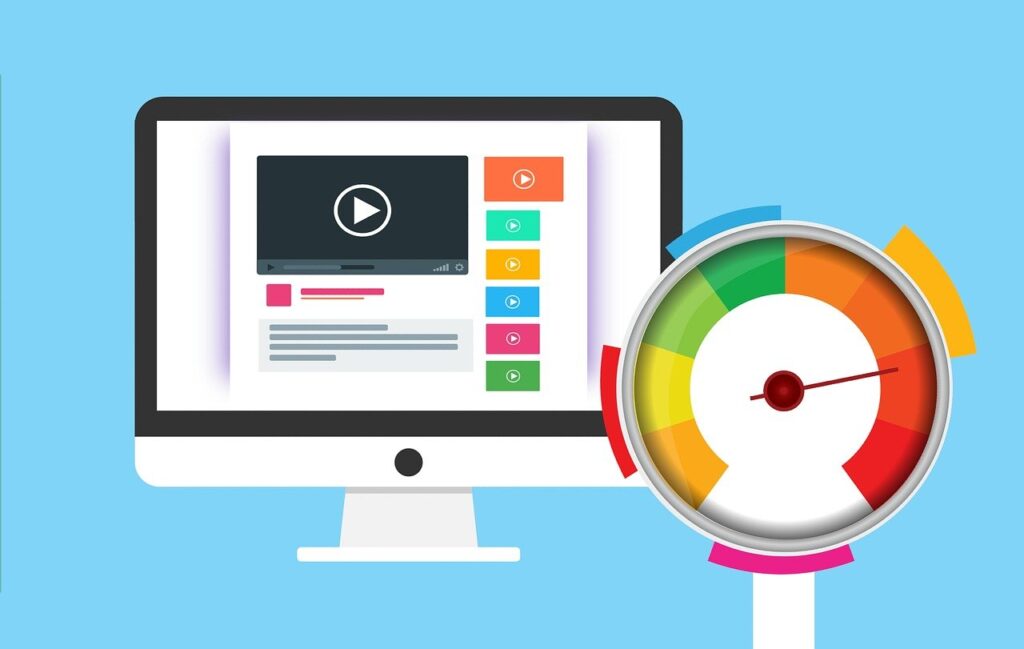
On the topic of site performance, another major ecommerce shift that may take place in 2026 is a lower tolerance for sites or stores that offer a subpar user experience. People are already quick to leave a website if it doesn’t load rapidly or perform well.
In fact, nearly half of all users expect a site to load in two seconds or less, and 53% of mobile users will leave a site if it takes over three seconds to load. Also, something as seemingly minuscule as a one-second page delay can cut conversions by 7%.
There’s no doubt that customer expectations are growing, and with so many companies out there competing for their business, these consumers won’t wait for your site to load when there are countless other options that offer them instant access to the products they want.
Similar to a site that’s slow to load, a site that’s clunky, unintuitive, or complicated to navigate is also sure to drive potential customers away. To ensure your website or store doesn’t fall victim to this lower tolerance for slow sites, take time to improve your site speed by:
- Choosing a high-quality and reputable hosting provider that offers fast response time and solid performance.
- Optimizing the media on your site, as large images, graphics, and videos are often a major reason why sites load slowly.
- Minimizing the use of external plugins or scripts and not overdoing it. While these can offer additional functionality or features on your site, they may also hurt performance.
A Greater Focus On Post-Purchase Experience
While attracting new customers is important to grow and scale any ecommerce business, retaining them may be even more crucial. This is because it may cost as much as five to 10 times more to acquire a new customer than it does to sell to existing customers. Not only that, but repeat buyers may spend 67% more on average than new ones.
Some people may stick around solely based on your pricing or product quality, but it’s often what you do after a sale is made that keeps people coming back to your brand.
As a result, you need to optimize your post-purchase experience to help turn those first-time customers into loyal repeat buyers rather than those who only buy from you once. Thankfully, there are several things you can do to improve your post-purchase experience, including:
- Offering a loyalty program that offers points, tiered rewards, freebies, early access to new products, or other benefits.
- Providing proactive and timely shipping updates and realistic delivery estimates to keep customers in the loop about when their items are arriving.
- Carefully packaging items and shipping them securely so they arrive to your customers in great shape.
- Sending personalized follow-up emails to ask about how customers are enjoying the product, give some tips and recommendations, and give next-order incentives.
- Offering exclusive perks or discounts that are only for customers.
Personalization Matters More Than Ever
Personalization is another crucial trend to be aware of in ecommerce. Customers want to feel like you value them, understand them, recognize them, and they seek a genuine connection that feels intentional, and not just like they’re another number or sale to your company.
Not only do 39% of consumers expect brands to personalize the online shopping experience, but 45% of them say they’re more likely to shop on an ecommerce site that offers personalization vs. one that doesn’t.
Also, most consumers are willing to spend more on brands that offer personalized experiences, and this personalization can include making product suggestions or recommendations, remembering preferences, referencing past interactions, and even using the customer’s name where possible.
However, personalization is progressing and moving beyond just these basic methods to things like dynamic pricing, different checkout flows for different people, or even landing pages that are specific to certain traffic sources.
Also, many companies may begin using AI and other technology to turn personalization from reactive to proactive, through predictive intent and anticipating customer needs in real-time.
Agentic Commerce Capabilities Grow
In addition to using AI to simply research, compare, and discover products, more people will complete entire transactions within AI chats. ChatGPT already lets people purchase products from some merchants right in the chat, and these agentic commerce capabilities should only grow in 2026 and beyond.
In fact, recent research forecasts that agentic commerce may be responsible for as much as 15 to 25% of total US ecommerce sales by 2030. Also, the same research projects that the market size of agentic commerce in the US alone may reach anywhere from $300 billion to $500 billion by 2030.
The Importance of Trust in Agentic Commerce Adoption
However, there’s still a long way to go for agentic commerce to reach those marks, and a major holdup is trust.
For example, recent research found that only 14% of respondents trust AI to place orders on their behalf. People trust AI to handle certain tasks like comparing prices (65%) and helping them find certain items online and in-store (59%), but seem to be fearful of letting it handle everything.
But if agentic AI begins to become more trusted among the general public for handling transactions from start to finish, we could see usage skyrocket.
While it remains to be seen just how large agentic AI grows, there’s a good chance AI has at least some kind of role in many online purchases going forward.
Social Commerce is Taking Off
While people have been discovering products on social media for a long time, they’re now often able to purchase them right in their favorite apps. This offers a seamless experience for consumers that lets them discover and buy products without leaving their platform of choice.
Several platforms support social commerce, such as Facebook and Instagram, but it’s the recent launch of TikTok Shop and how it’s able to combine entertainment and shopping that’s helping to lead the charge for social commerce.
Since launching in 2023, TikTok Shop has increased sales rapidly, from $1.5 billion in 2023, up to nearly $16 billion in 2025. By 2027, this is expected to rise to over $28.5 billion.
But whatever the platform or medium that people are buying on, the social commerce market is set to explode. According to forecasts, revenue for the social commerce market is set to increase from $699 billion in 2024 to over $1 trillion by 2028.
To take advantage of this growth in social commerce, ecommerce brands need to make profiles shoppable, be active on social media, create shoppable posts, tell authentic stories in their posts, and engage with their audience.
Also, make sure to prioritize platforms that make sense for your target audience. For example, it makes sense to prioritize TikTok if you have a younger target audience, Instagram if you often sell to young adults or Millennials, and potentially Facebook if your audience is a little older.
Mobile-First Ecommerce Experiences Are Crucial

While smartphones are great for communication and entertainment, they’re also quickly turning into many people’s primary shopping tool. It’s a convenient and accessible way to shop from anywhere, as customers can make purchases in only a few taps on the screen.
Statistics show that 70% of online retail visits and orders are made on mobile devices, and recent projections highlight that the mobile commerce market is expected to reach just shy of $2.5 trillion in 2026 and rise to over $5 trillion by 2034.
Optimizing Your Ecommerce Store for Mobile Customers
This growth means more and more people are likely going to be browsing your store on their phones or tablets. As a result, your business needs to ensure you offer a high-quality mobile experience that’s frictionless and straightforward. To do this, you need to:
- Ensure your site is responsive and mobile-friendly, so it looks good on every device.
- Simplify the filtering and sorting options to ensure people can quickly find what they’re looking for without the process being too complicated.
- Make sure your images and videos are optimized and sized correctly for mobile devices.
- Design your pages to be “thumb-friendly”. This ensures that all important buttons and menus are easily reachable by a customer’s thumb when they’re browsing your site. If important buttons are too far, it can be uncomfortable to stretch, or the customer may have to actually change how they’re gripping the device to browse your store.
- Ensure all of your buttons are large and easy to tap, to prevent customers from accidentally hitting the wrong button or going to the wrong menu.
Sustainability Matters to Consumers
Sustainability and eco-friendliness are at the forefront of many customers’ minds, and thus, it needs to be something you prioritize in 2026. It’s an important driver of purchasing decisions, as more than 80% of consumers are willing to buy sustainably-made or sourced goods, even if they cost more.
In fact, they’re willing to pay an average of 9.7% more for items that meet certain criteria, such as being locally sourced, made from recycled or eco-friendly materials, or produced in a supply chain with a low carbon footprint.
As a result, your ecommerce business should identify ways to boost your sustainability in 2026, whether it’s:
- Optimizing your delivery with software to plan efficient routes and consolidate deliveries.
- Participating in carbon offsetting, which is all about funding projects that reduce greenhouse gas emissions as a way to compensate for your own emissions.
- Ensuring your warehouse or office is energy-efficient in terms of the lighting, appliances, and other factors.
- Using paperless policies, like offering only digital receipts and invoices.
- Eliminating single-use plastics and shipping in recyclable, biodegradable, or compostable packages.
The Growing Importance of Free Shipping

Speaking of shipping, it’s key to provide the shipping options that customers desire. And heading into 2026, that seems to be free shipping. It’s no longer just a perk that customers are very excited about, but something that many of them expect from ecommerce brands.
In fact, according to a recent report, 73.9% of online shoppers said that free shipping was the shipping and delivery option that mattered the most when deciding where to purchase from. As a result, offering free shipping to customers is a major sales driver.
That being said, shipping speed is not too far behind in the report, at 58.9%. As a result, your business needs to find the balance between offering free and fast shipping. For most companies, offering multiple shipping options is best, so the customer can choose what they prefer.
Of course, it depends on what you sell, as well. While a company selling electronics or clothing can offer free shipping that takes a little longer, a business selling flowers online will need to offer rapid delivery at a premium so the flowers are still fresh when they arrive.
AI-Driven Logistics
In 2026, many ecommerce companies will turn to or continue focusing more heavily on using AI-driven logistics. This is when a company implements solutions like AI and machine learning to automate and optimize many tasks and duties across the supply chain.
According to projections, the global AI in logistics and supply chain market is expected to reach nearly $200 billion by 2034, up from just over $20 billion in 2024. This means that the industry is expected to grow rapidly, at a compound annual growth rate (CAGR) of over 25%.
Implementing AI within your companies logistics can reduce costs, boost efficiency, provide more visibility and transparency, help improve your decision-making with data, and so much more.
The exact way that AI is used throughout the supply chain varies, but some options include using it to optimize routes, forecast demand to ensure your inventory levels are correct, automate your warehouse, manage your fleet of vehicles, or provide customer support.
While predicting the future is difficult, especially in a dynamic and fast-moving industry like ecommerce, these are the trends that could shape the space in 2026 and beyond. Being aware of these trends and knowing what your business can do to capitalize on them is crucial for your ecommerce brand to succeed going forward into the new year.