
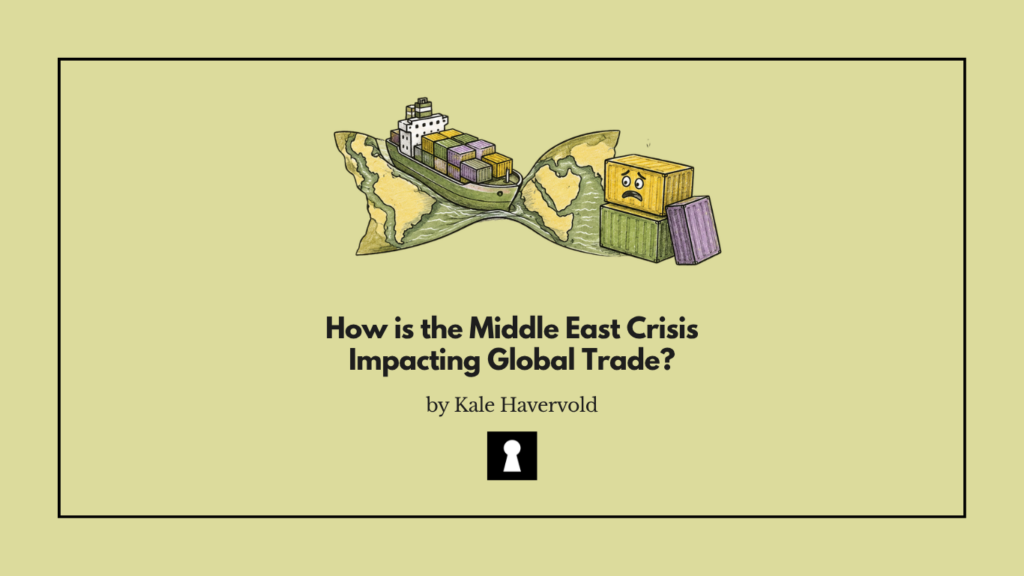
The recent crisis in the Middle East has been devastating for businesses and sellers across the globe, thanks to everything from delays, route closures, cost increases, and port congestion. This ongoing and ever-evolving crisis is all but forcing ecommerce sellers to rethink and readjust their shipping strategies.
How is the Middle East Crisis Impacting Global Trade?
There are various ways that the crisis in the Middle East is impacting global trade and the sellers and buyers who participate in it. A Middle East crisis update from DHL goes over a few of the biggest, such as reduced air freight capacity.
While this capacity issue may not be quite as bad as the early days of the crisis, security incidents and other issues can still lead to schedules and routing changes at any time.
Also, the Strait of Hormuz, one of the world’s most important trade chokepoints, is currently closed to commercial traffic, leading to massive delays and diversions. Even beyond this, there’s plenty of port congestion across the Middle East, which may lead to shipment delays up to 12 days in some cases.
While road connections are functioning, things like border congestion and regulatory changes are leading to plenty of strain due to the increased demand for these routes, as air and sea routes are often being interrupted or slowed down dramatically.
Essentially, the crisis has either closed or constricted many of the most popular and efficient trade routes in the area, slowing many shipments and expanding delivery timelines.
The Financial Costs of the Middle East Crisis on Ecommerce Sellers
As you could imagine, these issues lead to several costs for sellers trying to continue operations during these difficult times. First, there’s the obvious financial costs. Lower capacity and more congestion may lead to couriers and carriers raising prices as there’s more demand for cargo space than supply. And if companies want space on alternate routes, that may not come cheap.
Also, as ships and other delivery vehicles need to get rerouted frequently, this can also increase costs for businesses. Something else that’s also leading to much higher operating costs for just about every company is things like rate increases and fuel and/or logistics surcharges.
Because the crisis has led to unpredictable, high, and volatile gas prices, many companies, carriers, and platforms are imposing these charges on companies, making it even more expensive to operate in an already-difficult situation. In addition to negatively impacting companies, the higher fuel costs are also hurting consumer spending.
However, these fuel and logistic surcharges aren’t reserved only for those operating in the Middle East, as many companies have implemented them in other parts of the world. For example, Amazon recently added a fuel and logistics surcharge for sellers in the USA and other regions.
While this crisis is taking place, sellers need to be prepared for more (or increasing) surcharges from carriers, insurers, and other partners or services. This may involve increasing prices to cover them, negotiating a better rate, or finding other ways to save on shipping, such as optimizing packaging.
The Costs Extend Beyond Finances
While the financial cost of this crisis on businesses may be staggering at times, the costs go beyond just finances. These shipping delays and other issues may also hurt a company’s reputation. While many consumers are understanding of the circumstances, some may be upset and leave poor reviews or ratings when their item doesn’t get there as quickly as they’d like.
Also, companies left waiting on certain raw materials to arrive so they can create or build their products may be stuck with a ton of downtime if delays occur, which wastes valuable time, resources, money, and possibly even materials.
Ways Businesses Can Respond to These Disruptions
While some companies may take a “wait and see” approach to these shipping delays, disruptions, and other issues, it’s often a better idea to take action and take steps to safeguard your business from these disruptions.
First, consider diversifying your shipping relationships. If you work with one carrier, and they experience widespread issues or impose a huge new fee or surcharge, you’re stuck dealing with it. If you have multiple partners, you can have more flexibility and work with the ones that make the most financial sense at the time.
You can also be more flexible with your delivery timelines and factor in extended delivery windows to give your customers more realistic expectations. It’s always better to underpromise and overdeliver than it is to overpromise and underdeliver. Also, make sure to clearly communicate any shipping or delivery changes with customers as soon as possible.
Finally, to reduce even more headaches, always double or triple-check your shipping documents. It’s hard enough to hit delivery timeline goals during a crisis, but this is made much more difficult if there are errors or incomplete documents.
Frequent route changes, diversions, and having to pass through different countries require clean, accurate, and complete documentation. If not, you run the risk of items being held or returned, which may be incredibly costly with the higher fuel and logistics costs during crises.
Our Take
Protect Your Supply Chain and Business
Cross-border ecommerce sellers of all shapes and sizes need to be doing all they can to protect their businesses during the current crisis. While you can’t avoid the cost hikes, delays, and other interruptions, and the customer frustration that may follow them, you can find ways to minimize these issues and reduce how much they impact you vs. other organizations.
There’s no telling how long this crisis may last, so now’s not the time to wait for it to end and for all of this to blow over.
As a result, businesses should consider taking action by evaluating their current freight options, baking in higher fuel costs into product prices, evaluating any upstream dependences that are at risk, and diversify your sourcing and/or shipping if possible.