
For the first three years of the EU’s new digital regulation regime, Brussels behaved like a regulator that had just passed the most ambitious tech legislation in history and was figuring out how to use it.
There were investigations, compliance conversations, demands for changes to business models, and behind-the-scenes pressure described as “focus on compliance over headline-grabbing sanctions.” Apple and Meta made changes. The Commission watched. Everyone waited to see how serious this was going to get.
It got serious.
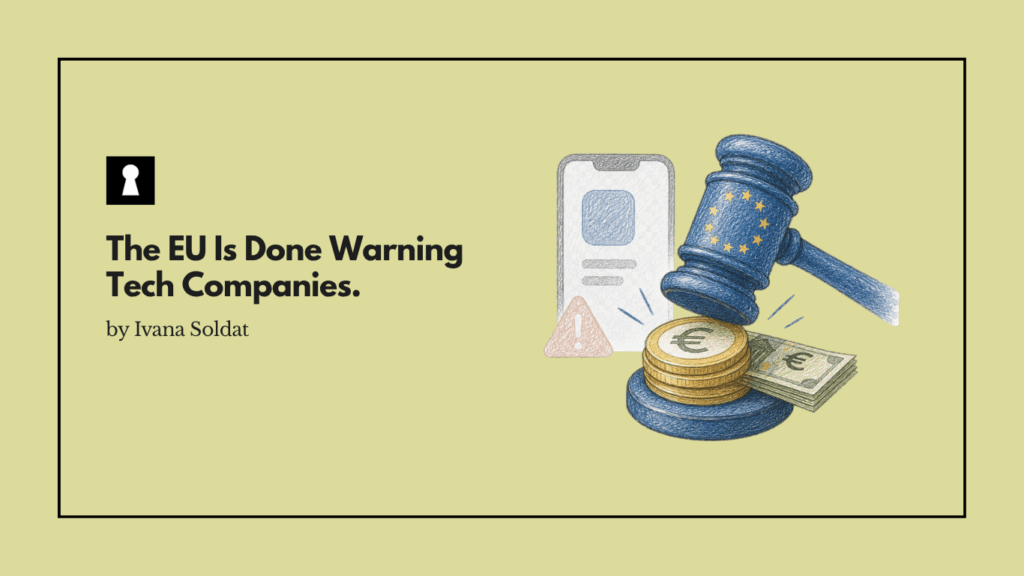
The European Commission has signaled that 2026 is the year enforcement shifts from persuasion to penalty. Officials in Brussels told the Financial Times the Commission is probing new areas of potential enforcement that could spark new clashes with US technology giants. The legislative tools are the Digital Markets Act, which targets anti-competitive behaviour by online gatekeepers, and the Digital Services Act, which requires platforms to police illegal content and protect users from harm.
The fines already issued tell the story. Meta was fined €200 million for DMA violations, currently under appeal. Apple was fined €500 million for App Store anti-steering violations, a sum Apple called “unprecedented.” X was fined €120 million under the DSA for transparency violations. Those numbers will get bigger, gatekeepers found in violation of the DMA and failing to remedy non-compliance within six months can face fines of 4% to 20% of global annual turnover. The existing fines are the floor, not the ceiling.
What This Means for Ecommerce Specifically
The DMA and DSA enforcement push is being covered primarily as a Big Tech story. The ecommerce implications run deeper.
Amazon is designated as a DMA gatekeeper through its marketplace and advertising businesses, subject to obligations around self-preferencing, data use, and how it treats third-party sellers. If Amazon’s own products receive preferential placement over third-party sellers using the same platform, that is precisely the behaviour the DMA prohibits, and the Commission has shown it will act.
Temu and Shein are under active DSA scrutiny for marketplace safety. The DSA requires Very Large Online Platforms with over 45 million EU monthly users to conduct risk assessments and take down illegal or unsafe products. Temu was fined €200 million under the DSA for unsafe products earlier in 2026. That case is a template for how the Commission intends to use the DSA against ecommerce marketplaces that cannot consistently ensure the safety and legality of what is sold through them.
New investigations into Meta’s WhatsApp potentially blocking rival AI providers, and into Google’s use of online content for AI training, matter for ecommerce because they touch the advertising and discovery infrastructure most online retailers depend on.
The Geopolitical Dimension
The enforcement escalation is not happening in a political vacuum. Commission estimates put potential DMA and DSA fines against Apple, Google, Meta, Amazon, and Microsoft collectively above €100 billion. In response, the Trump administration has threatened tariff packages on European goods worth up to $200 billion, framing EU digital regulation as unfair treatment of American companies.
The Commission has continued enforcement anyway. DSA workshops have reportedly moved behind closed doors as company pressure increased. The team heading DSA enforcement described their work as “more adversarial” than before.
The geopolitical friction this creates for any ecommerce business operating across the Atlantic is regulatory uncertainty at the infrastructure level, the platforms powering digital advertising, cloud hosting, payment processing, and marketplace distribution are simultaneously under investigation in the EU and shielded by the US government.
The Compliance Bill Is Being Passed Down the Chain
The compliance costs of DMA and DSA enforcement do not stay with the platforms. They flow downstream in the form of higher fees, changed terms, restricted functionality, and new operational requirements on the merchants, advertisers, and developers who depend on the platforms. The Meta advertising changes driven by DMA compliance already altered how EU-targeted ads are bought and measured.
The Apple App Store changes affect every app-based commerce business selling to European consumers. The Temu DSA investigation has produced marketplace-wide product safety requirements affecting every seller on the platform.
The fines land on the platforms. The compliance costs land on everyone who uses them.
Our Take
Brussels Is Not Bluffing and the Bills Are Getting Larger
The EU’s DMA and DSA enforcement escalation is the most consequential regulatory development in digital commerce this year, and it is getting less coverage in ecommerce media than it deserves because the named defendants are platform giants rather than merchants.
The practical effect on any business selling digitally in Europe is significant: the platforms they advertise on, sell through, and build on are simultaneously being forced to change their operating models and absorbing compliance costs that will flow downstream. The Commission has demonstrated it will fine companies that do not comply, that the fines are large enough to matter even to trillion-dollar companies, and that US government pressure will not stop it.
But the question is not whether EU digital regulation affects them, rather whether they have mapped which of their platform dependencies are subject to ongoing enforcement actions and what happens to their operations if those platforms have to change how they work.