
The question posted in a recent ecommerce thread is one that a meaningful number of small brand operators are sitting with right now, often without having articulated it this cleanly.
The founder sells electronics, bootstraps the business, and has built something that genuinely works on warm channels: membership programs, niche marketplaces, curated platforms where the audience already trusts the intermediary. Conversion rate from those channels: 1 to 3 percent.
Then they turned on paid social. The ads performed beautifully on every metric that ad platforms measure. Click-through rates over 10 percent. Cost per click under $1. Visitors arriving, spending time on site, reading the about page, joining the email list. Converting at close to zero.
The instinct in this situation is to fix something. Better trust badges. More reviews. A redesigned checkout. More social proof above the fold. The original poster had already built all of that: customer videos, transparent pricing, founder story, guarantees, external press coverage, blog features, YouTube reviews. None of it closed the gap.
The thread’s best responses converged on a diagnosis that reframes the problem entirely.
The Platform Is the Trust, Not the Brand
The most clarifying observation came from an ecommerce growth operator who pointed out something that seems obvious once stated but is easy to miss when you are inside the problem: the warm channels convert not because those buyers trust the brand, but because they trust the platform that introduced the brand. A loyalty program member is trusting the loyalty program. A niche marketplace buyer is trusting the marketplace. The brand is borrowing trust it has not yet earned for itself.
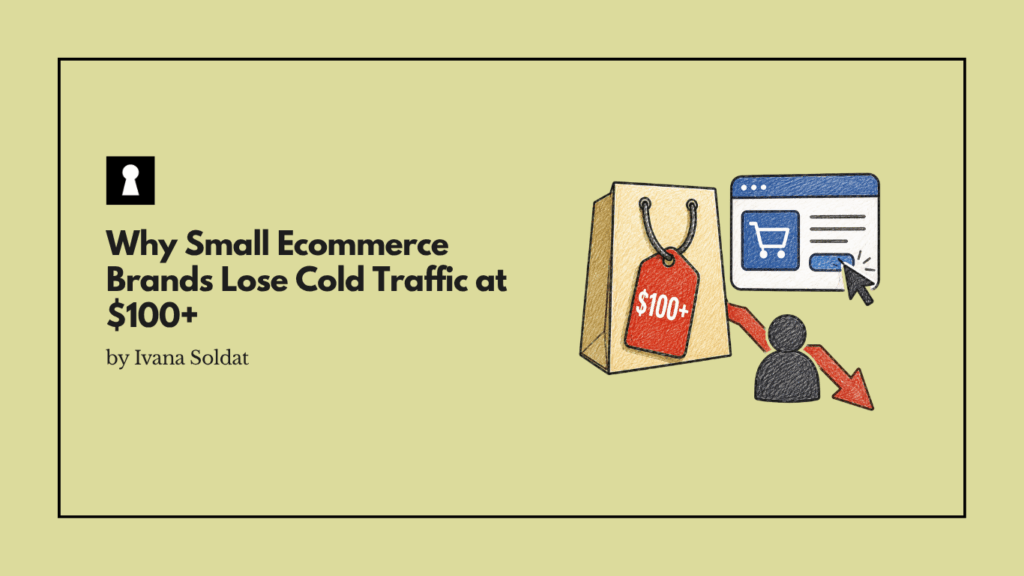
Cold paid social removes that borrowed trust entirely. A stranger clicks an ad, arrives at an unknown brand’s website, and is asked to hand over more than $100 for an electronics product from a company they have never encountered. No amount of trust badges or guarantees fully closes that gap in a single session, because the gap is not about the site. It is about the absence of a prior relationship.
The reframe: stop judging cold paid social on first-click purchases. For a considered purchase at this price point, cold traffic is an introduction, not a checkout. The job of the first visit is to capture the person and earn a second and third touchpoint, not to close them immediately.
The Metric You Are Probably Using Is Wrong
This reframe has a practical implication for how you measure cold campaign performance. If you judge them on last-click purchases reported by the ad platform, cold prospecting will almost always look like it is failing even when it is quietly feeding sales that later show up as email-attributed or direct traffic.
The person who clicked a Facebook ad, visited the site, joined the email list, received a nurture sequence over two weeks, and then bought from an email, the ad platform credits that to email, not to the cold campaign that started the relationship.
A more accurate measurement model treats the email capture as the conversion event for cold traffic at this price point. The meaningful metric becomes cost per email captured, combined with a blended Marketing Efficiency Ratio: total net sales divided by total ad spend, across all channels, rather than last-click attribution per campaign. By that measure, the cold campaigns might be performing far better than they appear.
The Single Biggest Unforced Error: Customers Who Love the Product and Are Not Saying So
The most actionable part of the thread addressed something the original poster had already noticed but had not fully solved: customers who email unprompted to say they love the product, that they are recommending it, that they bought it as a gift and then do not leave a review when an automated request goes out later.
The diagnosis: the automation is too cold and arrives too late. A customer who emails to say they love it is warm at that exact moment. The window is open. An automated review request sent three days later is a colder, different interaction. The approach the thread recommended: reply personally to those exact emails while the customer is still glowing, ask directly in that reply with a one-tap link, and ask for a photo or a short video rather than just a star rating. Offer something small in return.
The gift buyer angle is particularly valuable and particularly wasted in most brand operations. The person who buys a product as a gift typically never leaves a review. But the person who received it, who opened it, who had an emotional reaction to it, might. A follow-up sequence specifically targeting gift purchases, asking the buyer to share the link with the recipient and encourage a review from them, is a workflow most brands have never built.
The Email Sequence Is Probably Too Short
For a $100-plus electronics purchase from an unknown brand, several commenters pointed to the same issue with email nurture sequences: they move too quickly to a purchase call to action. A 2 to 3 email sequence that arrives at a buy-now prompt within a week is optimized for low-consideration impulse purchases.
For a considered purchase, a 5 to 7 email sequence that leads with education, brand story, social proof, and answers to specific objections before making the ask tends to convert meaningfully better. The people joining the email list from cold traffic are signaling interest and asking for more time. The sequence should give them that time.
The Press Coverage Is Probably Buried
One practical observation from the thread: brands that have earned external coverage, blog features, YouTube reviews, third-party mentions, tend to bury that evidence where cautious buyers never find it.
For a cold visitor considering a $100-plus purchase from an unfamiliar brand, a YouTube video made by someone other than the brand is exactly the kind of corroborated, multiple-source signal that moves the needle. That coverage should live near the buying decision, not on an about page that most cold visitors never reach.
The One Disagreement Worth Noting
Not every response agreed on everything. One commenter pushed back on the conventional wisdom that putting a founder’s face on an ecommerce store always helps: for a product-focused brand selling to mainstream consumers, founder-as-face can sometimes make a store feel smaller and less established rather than more trustworthy.
The effect seems to depend on the brand, the price point, and the audience. That dissent is a useful reminder that the generic advice most growth content offers, more face time, more founder story, more personal brand, is not universal.
Our Take
Cold Traffic Needs More Touchpoints, Not More Trust Badges
The Reddit thread is useful not just for the founder who posted it but for anyone running a small or newer ecommerce brand with a considered-purchase product and limited budget.
The core insight, that cold traffic at a high price point is an introduction event, not a checkout event, and should be measured accordingly, is one that most small brand operators have not fully internalized, because the ad platforms make it easy to measure everything on last-click and hard to see the relationship that built the sale.
The practical upshot is more actionable than most trust-conversion advice: reply personally to the customers already telling you they love the product, ask in that moment, and build the retargeting and email infrastructure that gives cold visitors the second and third touches they need before spending $100 with a brand they just met.
The ad is doing its job. The sequence after it is the part that needs to be longer.