
Everyone in e-commerce is watching the wrong race.
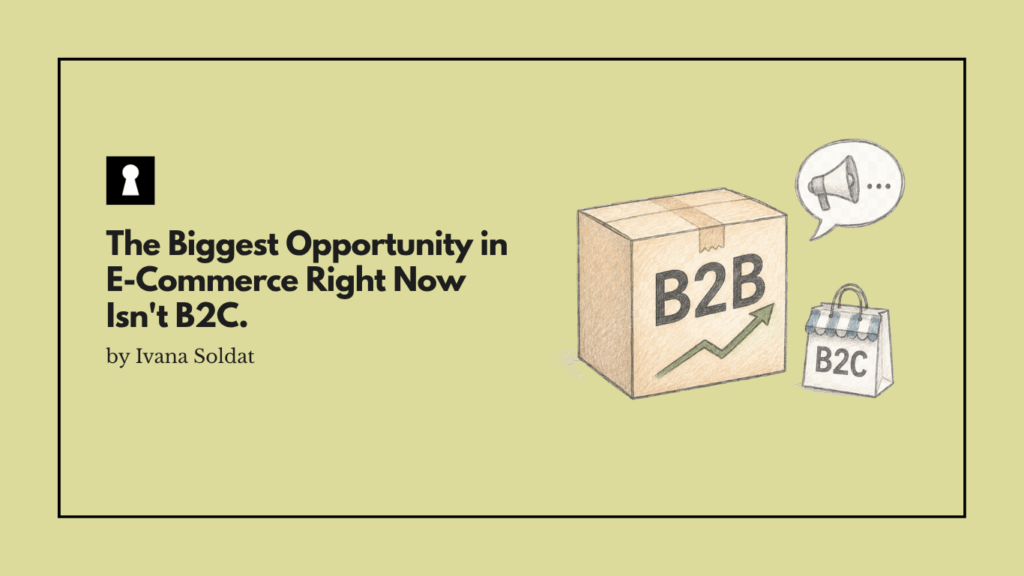
While the industry obsesses over which influencer platform is eating which demographic, and whether quick commerce can get delivery times below eight minutes, the largest structural shift in digital commerce is happening in spreadsheets, procurement portals, and B2B buyer journeys that never make headlines. B2B e-commerce is projected to reach $36 trillion by 2027, growing at a 14.5% compound annual rate.
The Sales Rep Is Being Quietly Phased Out
The most telling signal in the data isn’t the revenue number. It’s the behavior change underneath it. According to figures compiled from Gartner and Statista research, 61% of B2B buyers now actively choose a purchasing journey that involves no sales representative at all. Not because they can’t access one, because they don’t want one.
Since 2020, more than 90% of B2B organizations have shifted to virtual sales models, and the proportion of B2B revenue flowing through digital and e-commerce channels has grown from 32% in 2020. That’s not a trend line. That’s a near-complete structural transformation of how business purchasing works, compressed into five years.
The holdouts are notable and geographically specific: South Korea and Japan still show strong preference for face-to-face business dealings, at 13% and 15% respectively. But they are explicit exceptions in a global dataset that overwhelmingly points the same direction.
The Generation Nobody Expected to Drive B2B
Here’s the number that should reframe how people think about B2B buying: 73% of B2B buyers are members of Generation Z. The generation that grew up on one-click checkout, same-day delivery, and product discovery via a 15-second video is now sitting in procurement roles, signing off on enterprise software contracts, and making six- and seven-figure purchasing decisions.
And they have expectations shaped entirely by their consumer experience. They want the B2B buying process to feel like buying something on their phone on a Sunday afternoon, frictionless, fast, self-directed, and digitally rich. The companies that can deliver that experience are winning their business. The ones still relying on relationship selling, PDF catalogues, and quarterly check-in calls from account managers are losing it, often without knowing why.
The stakes of getting this right are significant: three out of four B2B buyers say they are ready to switch suppliers entirely for a more convenient and efficient online buying experience.
The High-Ticket Digital Deal Is Now Normal
One more number worth sitting with: the share of B2B decision-makers willing to execute transactions of $10 million or more entirely through digital channels has grown by 83%.
The old assumption, that digital commerce handles the small stuff while big deals happen in person, over dinners, through relationship networks, is being dismantled by the buyers themselves. Enterprise procurement is going online, and it’s taking the large contracts with it.
Our Take
B2B Buyers Don’t Want a Relationship. They Want a Better Interface.
The gap between where B2B e-commerce actually is and where the industry’s attention is focused is one of the stranger disconnects in digital commerce right now. A $36 trillion market growing at 14.5% annually, where the majority of buyers are digitally native, three quarters will switch suppliers for a better UX, and the sales rep is being actively cut out of the process, that is not a niche opportunity. That is the opportunity.
The brands, platforms, and agencies still treating B2B as a slower, less interesting cousin of consumer e-commerce are going to find out the hard way that the buyers moved on while everyone was arguing about TikTok Shop.