
Before reading the numbers from Visa’s Stay Secure Survey on Nigeria, it helps to understand what kind of market Nigeria is in digital commerce. It is not a developing market catching up to more mature ecommerce economies. It is a market that skipped several stages entirely, moved to mobile-first and social-first commerce before most of the infrastructure that Western markets built first even arrived, and built a consumer culture around digital transactions out of practical necessity as much as choice.
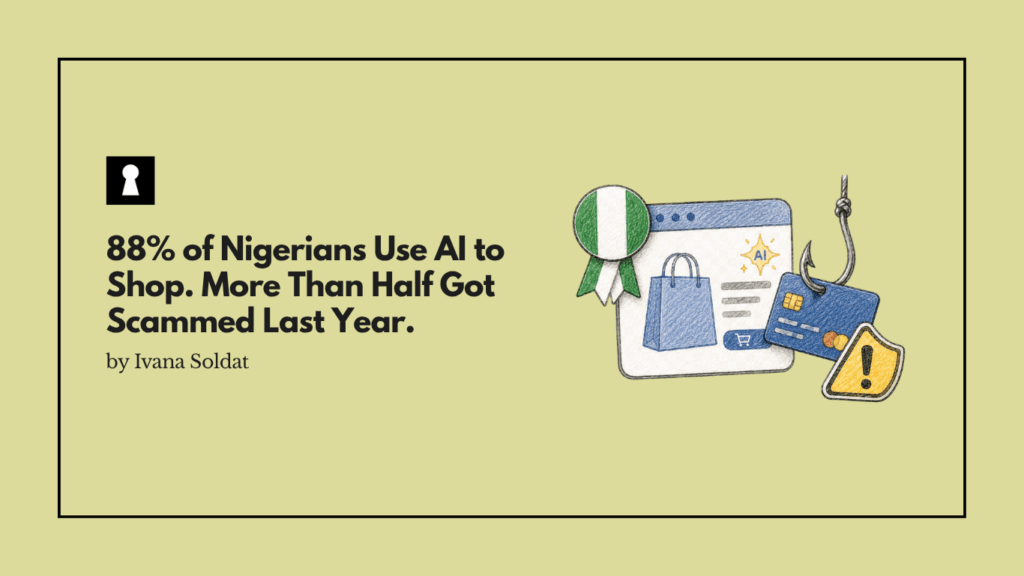
88% of Nigerian respondents said they use AI specifically to find the best prices or deals. Over 72% use it to compare options across brands and retailers. Irene Auma, Senior Director of Risk at Visa Sub-Saharan Africa, was direct about the interpretation: “That is not experimentation. That is habitual behaviour.”
The comparable AI shopping adoption figure for US consumers sits at 30 to 45%. The country where most ecommerce industry coverage assumes the least sophistication is running one of the most AI-integrated consumer shopping behaviours on the planet.
The Social Commerce Boom and the Fraud That Came With It
Over 82% of Nigerians have bought directly through social media, according to the survey. And 78% say they discover new brands through social media, meaning the shopping journey begins there before it ends anywhere. This is the social commerce penetration that TikTok Shop, Instagram Shopping, and every other platform building shoppable content has been working toward in Western markets for years. In Nigeria, it is already the default mode.
The problem that comes with it is documented clearly in the same survey. Among Nigerians who experienced a financial scam in the past year, 57% said social media was the channel where it happened. A fake storefront on Instagram is indistinguishable from a real one to most users. A product post that looks organic but leads to a fraudulent payment page exploits the same trust that legitimate social commerce depends on.
The raw scam penetration figure is striking: more than half of Nigerian respondents reported being victims of a financial scam in the past 12 months. That is not a marginal fraud problem. That is a systemic one.
The Paradox That Is Not Actually a Paradox
Over 96% of Nigerians surveyed said they trust digital payments to some degree. Nearly 74% said they mostly or completely trust them. This sits alongside one of the highest fraud victimization rates of any market in the survey.
Auma’s explanation is the right one: people are distinguishing between a bad experience and a broken system. A consumer who gets scammed on Instagram and then disputes the charge through their bank, gets a refund, and moves on has experienced fraud and experienced the recourse mechanism working. Their trust in digital payments is not damaged by an Instagram scam. Their confidence in the payment rail remains intact because the rail protected them when the storefront did not.
This is a meaningful distinction for anyone building ecommerce infrastructure in African markets. The trust is in the payment system, not in every individual channel or merchant using it. That means payment security is a conversion feature, not just a compliance requirement. The 39% of Nigerians who said seeing a familiar, trusted logo at checkout makes them feel more secure are responding to exactly this.
What Nigerian Consumers Want
The survey is specific about what would increase confidence. 64% said real-time alerts when something looks suspicious would make them feel more secure. 54% said paying with biometrics instead of a password would increase their confidence. These map directly onto the specific vulnerabilities in social commerce, where a consumer cannot independently verify a merchant’s legitimacy but does have a device with biometric authentication built in.
The appetite for emerging payment methods is also notable. 66% would consider crypto payments. Nearly 50% are open to AI payment agents making purchases on their behalf. Only 6% said they have no intention of using any new or emerging payment method, one of the lowest opt-out rates across all 17 markets in the survey.
That openness to agentic commerce is particularly relevant to the fraud conversation. An AI agent shopping autonomously on a consumer’s behalf cannot exercise the judgment a cautious human buyer might when something looks slightly off. The fraud surface area expands as the human is removed from the transaction loop.
Who Is Responsible?
49% of Nigerian respondents said banks or financial institutions are primarily responsible for protecting consumers from online fraud. 35% said government or regulators. 30% said payment providers like Visa. No single answer commanded a majority.
Auma’s response: “All three are correct, and none can do it alone.” What the survey framing does not fully capture is the fourth actor: the social platforms themselves. If 57% of fraud victims were hit on social media, the platforms hosting those fraudulent storefronts and payment flows are a meaningful part of the responsibility chain.
The Japan NPA-Mercari-Rakuten data sharing agreement we covered this week is one model for how platforms get formally integrated into fraud enforcement. Nigeria’s regulatory framework does not yet have an equivalent, and the gap shows in the scam victimization rate.
Our Take
96% Trust, 57% Scammed, and the Market Is Still Growing
The Nigeria data is a compressed version of a tension that exists across every high-growth digital commerce market: adoption moves faster than protection, and the consumers most enthusiastic about new payment technologies are often the most exposed to the fraud that follows those technologies into the market. What makes Nigeria distinctive is the scale of both sides of that tension simultaneously.
88% AI shopping adoption and 57% fraud victimization in the same consumer base is not a sign of a market doing something wrong. It is a sign of a market moving fast through a transition that slower markets are still only beginning.
The infrastructure question, whether payment security, regulatory frameworks, and platform accountability can keep pace with that adoption speed, is the one that determines whether Nigeria becomes a model for digital commerce in emerging markets or a cautionary tale about what happens when trust outpaces protection.