
For the better part of a decade, Google Search served as the unquestioned gravity well of direct-to-consumer paid media. That legibility is now fracturing. Retail media networks have gotten dramatically better at self-serve tooling, audience fidelity, and closed-loop attribution, prompting a massive capital rotation.
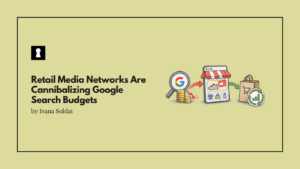
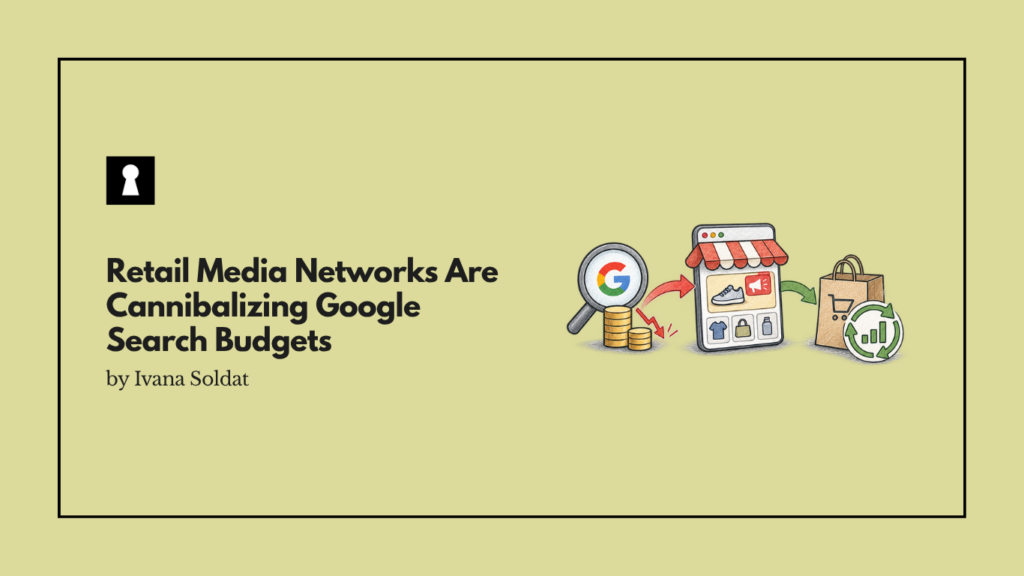
According to early 2026 industry forecasts, U.S. retail media ad spending is projected to surpass $67 billion by the end of the year, growing at roughly twice the rate of total digital advertising. A meaningful portion of that growth is coming directly from DTC brand budgets that previously lived inside Google Shopping and Performance Max campaigns.
Google Performance Max Has Created An Unacceptable Attribution Black Box
The migration away from Google is not a rejection of search intent, but a revolt against opaque automation.
Google’s shift toward the Privacy Sandbox and the prolonged uncertainty around third-party cookie deprecation have left performance marketers in a persistent state of attribution anxiety. Performance Max now controls a large share of Google Shopping inventory, creating a severe signal-to-noise problem.
Growth leads consistently report an inability to determine which creative, audience, or placement is actually driving conversions. When a platform refuses to provide granular data, brands will inevitably move their capital to environments that do.
Retail Media Networks Offer Purchase Verified Audiences That Actually Convert
Retail media networks provide something Google currently cannot. They offer purchase-verified audiences matched against actual transaction data.
When a brand runs a sponsored product or display campaign inside Amazon DSP or Walmart Connect, the attribution loop closes at the point of purchase within the same walled garden. Amazon DSP grants access to a shopper graph built on purchase history and in-market signals from one of the world’s largest e-commerce datasets.
For brands that sell through retail channels alongside their DTC storefronts, this is a full-funnel argument, not just a media efficiency play.
Lower Funnel Conversion Share Is Bleeding From Search To Retail Walls
While Meta retains dominance in upper-funnel awareness and custom audience retargeting, it is losing conversion-stage share primarily to retail media. Historically, DTC brands leaned on Google Shopping as a lower-funnel closer. That dynamic is reversing.
Walmart Connect expanded its self-serve display capabilities in 2025, lowering the entry point for brands that previously faced prohibitive managed-service minimums.
Target Roundel and Instacart Ads are similarly capturing consumable and CPG-adjacent DTC budgets by proving direct sales impact rather than vague engagement metrics.
Creative Frameworks Must Evolve Or Retail Media Spend Will Be Wasted
Creative execution for retail media remains a discipline that most DTC brand studios have not fully built.
Sponsored product and sponsored brand placements inside Amazon and Walmart are search-adjacent environments. In these spaces, product imagery, pricing, review counts, and title copy do the heavy lifting for conversion.
The narrative and emotional resonance frameworks that DTC brands developed for Meta do not translate directly into retail media placements. Brands that simply port their social creative into retail networks will see their return on ad spend collapse.
Incrementality Testing Is No Longer Optional For Retail Media Budgets
The rush toward retail media is not without its own pitfalls. Measured, an incrementality testing platform, published research arguing that a significant share of retail media attributed conversions overlap with organic sales that would have occurred without ad exposure.
This finding has circulated widely among growth leads, adding urgency to the conversation around incrementality testing. It must become a baseline requirement rather than an advanced tactic. If a retail media network cannot prove it is generating new demand rather than just taxing existing demand, the budget should be reallocated.
Our Take
Retailers are Selling the Only Verifiable Truth in Digital Advertising
The DTC industry’s migration to retail media is a rational response to Google’s deliberate obfuscation of performance data. However, brands must not blindly trade one walled garden for another without demanding rigorous incrementality proof.
Retail media networks are eager to take your search budget, but their attribution models are designed to maximize their own reported yield, not your actual profitability.
Audit your retail media conversions aggressively, or you will simply be funding a retailer’s organic sales under the guise of paid acquisition.