
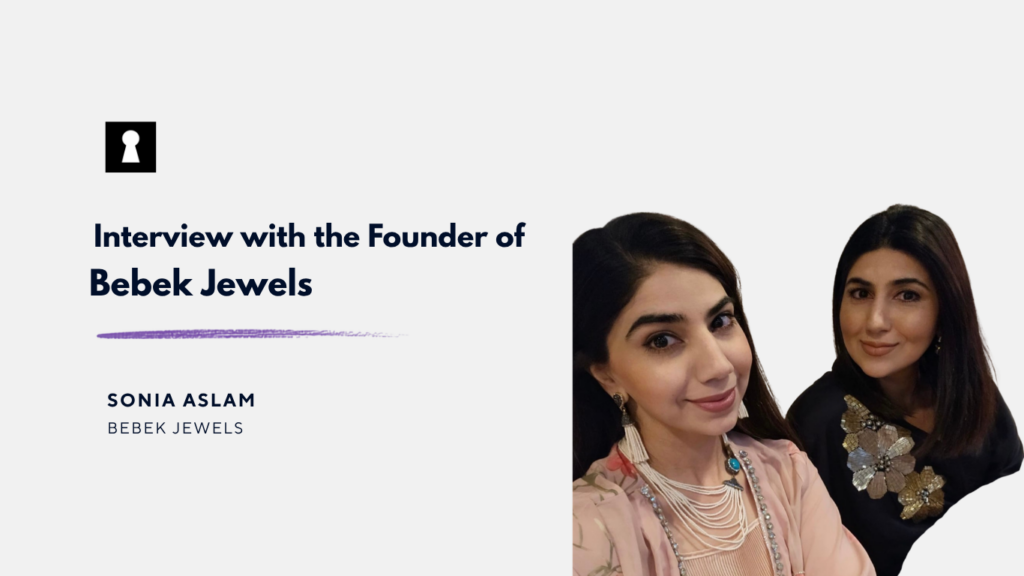
Today I sat down with Sonia Aslam from Bebek Jewels.
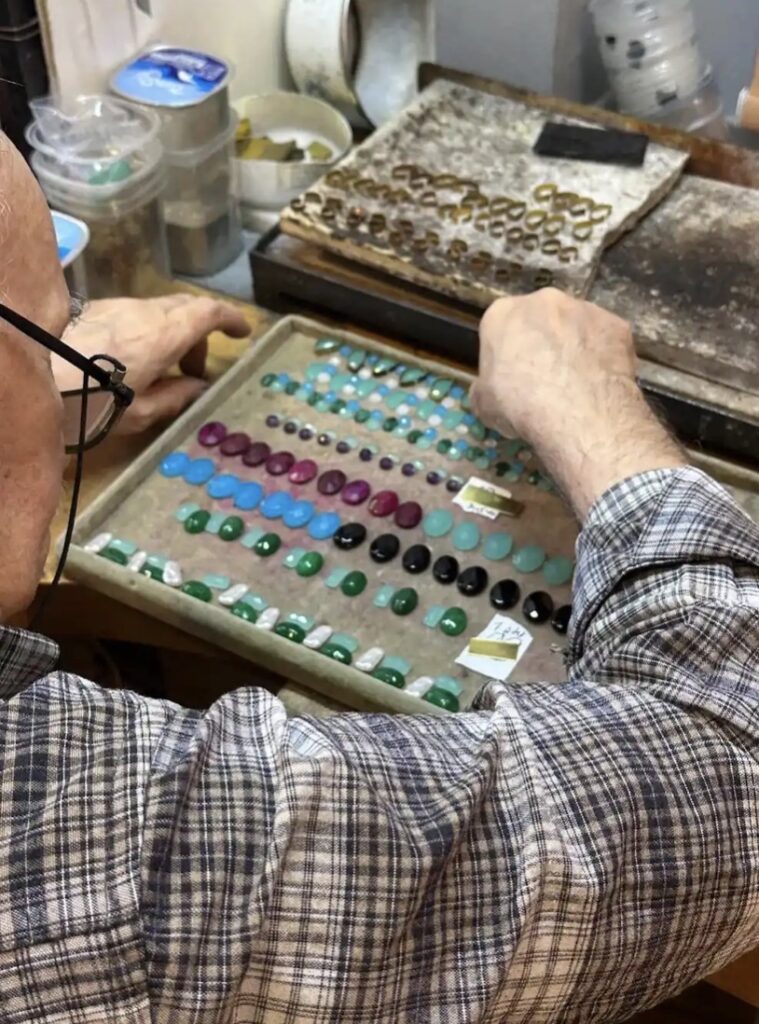
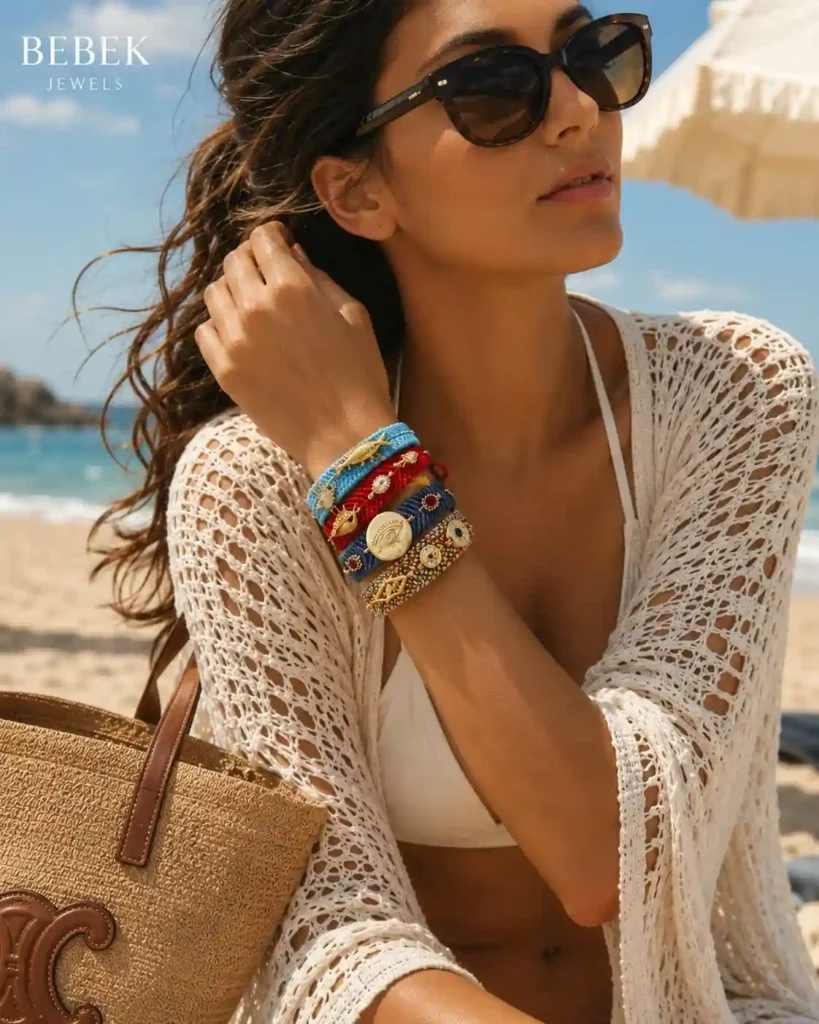
Bebek Jewels did not start from a business plan. It started on a trip to Istanbul, when Sonia Aslam and her sister and business partner, Sehrish, came across jewelry that looked different from everything else they had seen: artisan-made, gold-plated pieces featuring semi-precious gemstones, recycled brass and a level of craftsmanship that stood out even in a city known for beautiful design.
Sonia, who describes herself as “the most introverted extrovert,” was a stay-at-home mom in Maryland and not someone who usually took business risks. But something about the jewelry made her want to bring it to a wider audience. She asked Sehrish, who had an entrepreneurial background, if she wanted to build something together. That became Bebek Jewels, a sustainable jewelry brand based in Maryland and shipping worldwide.
Finding the Product in Istanbul
Tauras, Chief Editor of EcomWatch: Could you introduce yourself and the business? Where are you from, what does Bebek Jewels do, when did you start it and where is it based?
Sonia Aslam, Co-Founder of Bebek Jewels: Bebek Jewels basically started because I am like the most introverted extrovert. I don’t really take risks very often. I was a stay-at-home mom for the longest time and I live in Maryland.
My sister and I, she is actually co-owner of the brand, were on vacation in Istanbul and just doing personal shopping. We came across jewelry that I consider some of the most beautiful jewelry I had seen. In Turkey, in Istanbul, you see a lot of nice things, but this particular type of jewelry really stood out: quality, design, all that good stuff.
Something in me just said, maybe I should share this with the rest of the world and do this as a business. That is totally not my style. But I asked my sister, would you want to go in with me? We both love fashion, we love jewelry, and she had an entrepreneurial background, so that is kind of how it started.
We talked to the artisans in charge and they said yes, they do wholesale. It just became what we do. The sustainable part just happened because the quality was already good. They were using recycled brass, gold plating, artisan-made pieces, semi-precious gemstones and ethical sourcing. It all worked.
Standing Out in a Crowded Jewelry Category
Tauras: Jewelry is a very crowded category, especially in ecommerce. How do you manage to stand out?
Sonia: Standing out is difficult, obviously. That is where having celebrities wear your pieces helps you gain credibility and get in people’s faces.
When the pandemic started, a lot of people were sitting at home with nothing to do, and there were people who had money and wanted to shop. We placed an ad in Condé Nast Traveler. From that, we got sales and people recognizing us worldwide. You gain credibility, even if it is an ad.
Then we went on Wolf & Badger, which is a luxury platform for independent brands. Their flagship store is in England, and they also opened in New York and L.A. It is a platform for independent brands to sell to an affluent market. If you get selected, you are vetted, so instantly there was trust.
From that, we shipped worldwide because people trusted them. They could also offer incentives, like spend $250 and get free international shipping. That helped get us into the hands of customers all over the world.
Cold DMs, Celebrities and Rejection
Tauras: You mentioned celebrities and influencers. A lot of entrepreneurs hear that and think, I would love a celebrity to wear my product, but how do you actually make that happen?
Sonia: If you have a lot of money to throw away, sure, you can go to managers and pay a hefty amount. We did not have that budget because we wanted to keep prices as lean as possible so it would not affect our customers.
So what I did was literally cold-message, DM or email. A lot of times on Instagram pages you will see an email, so it is a shot in the dark. There are so many times people will not respond or they will disregard you. But I did that.
I tried to reach out to celebrities that I felt would align well with my product, or someone I could see myself in. My sister and I are South Asian Americans, and our brand really promotes inclusivity in fashion. The first person we reached out to was Richa Moorjani. She is a wonderful actor on Netflix series and movies.
You have to be your authentic self. Tell them about yourself, what you are doing, why you are doing it and what your product represents. Then say, it would be such an honor for you to wear our piece and style it.
The bigger the celebrity, the harder it is because they are getting flooded with emails. But you will be surprised. Sometimes people do want to give you a chance, or they do like the product.
I do that all the time. I do that with buyers on LinkedIn. There are jewelry buyers for big department stores, and I will send them a message request and tell them who I am. I will say I would love to send a line sheet or samples. Often they ignore it, but what is the worst that is going to happen?
If you know of anyone or any opportunity, you should pitch your product. Not in a salesy way, but authentically. You never know who knows who. Always try to make an effort and do not get discouraged. It is really hard to feel invisible, like no one is paying attention, but it is all part of the process.
Leaving Wolf & Badger
Tauras: You were part of Wolf & Badger, but after getting experience and exposure, you decided to focus more on direct-to-consumer. Why?
Sonia: Jewelry is so competitive. Wolf & Badger worked for us during the pandemic because there were more people shopping. We also pivoted into face masks because everybody needed face masks. We started making them out of silk Iznik scarves from Istanbul, and those did amazing.
But once social distancing stopped, we were kind of drowned out. There were so many other people on the platform. The subscription fees were heavy, and then you give a percentage of your sales too. So we said, okay, we have learned so much from it. We learned how to interact with people, how to ship internationally and how to manage that side of the business.
At that point, we figured it was best for us to do this mainly on our own website so we did not have to split everything with anyone else.
Markets Still Matter
Tauras: You mentioned a few growth channels already: magazine ads, Wolf & Badger and markets. What else has worked for bringing traffic and new customers?
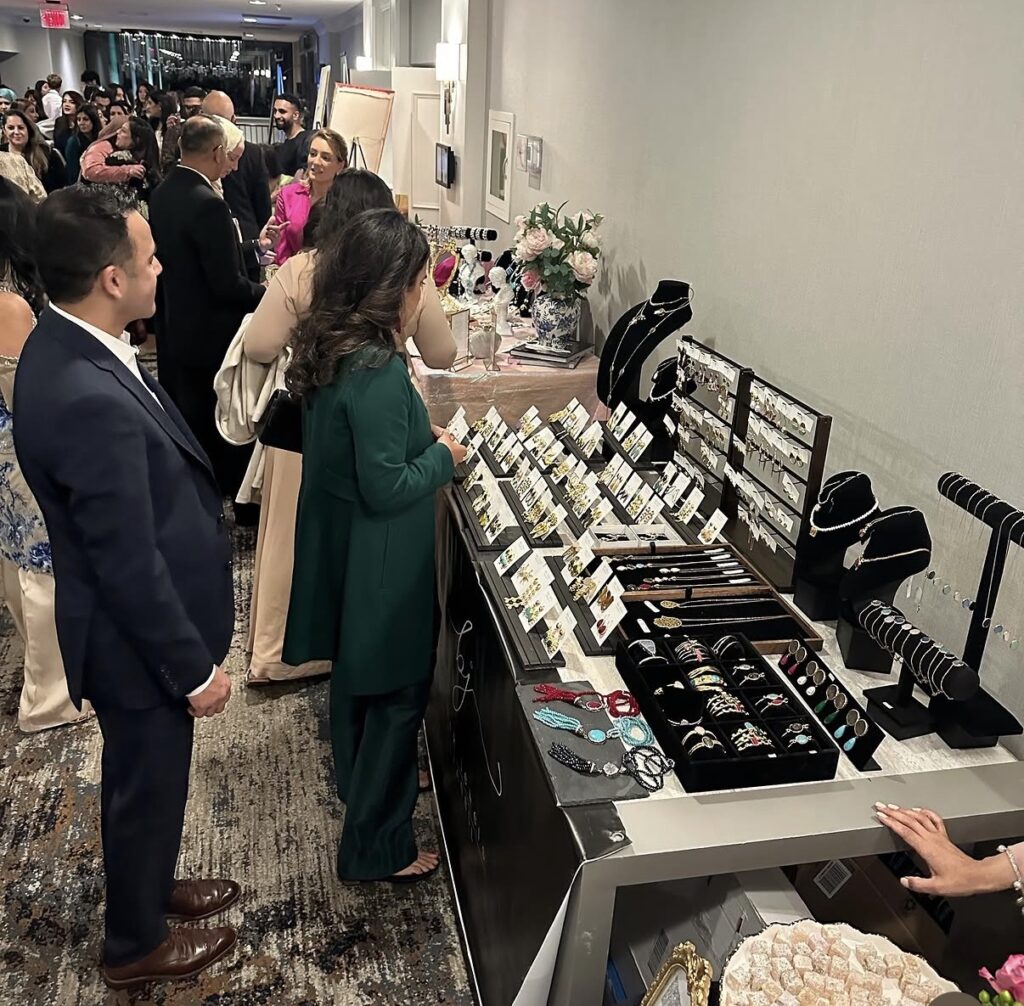
Sonia: Markets are really good for getting our products sold because women are able to physically look at the pieces.
Online, people are scrolling and scrolling. They might search Google and go to the brand they recognize. Maybe my website shows up on the third page and people might not even see me. But at a market, if I have done my homework and it is the right crowd, women can touch the pieces, pick them up and wear them.
It does not matter so much who your brand is. If they like the product, you are in front of them. They can feel it, they can wear it, and it is sold.
But you have to strategize. What is the crowd going to be? How many people do they expect? What other vendors will be there? Do they align with your product and what you represent? A lot of times markets charge a lot of money, so you have to do the math and ask whether it makes sense profit-wise.
If you do your homework and go to the right market, markets are amazing.
The Paid Ads Problem
Tauras: What about paid ads? Are they working for you?
Sonia: Paid ads are tricky. I have hired a lot of people, and I did not realize getting into this business how hard SEO would be. Your copy has to compete and be attractive, and there are so many layers.
We have not really cracked the code. Paid ads can be very costly. To really stand out, you can spend thousands in a month, and it does not necessarily mean it will convert into sales. For us, it has not been that lucrative. It is very challenging.
International Orders and the Fear of Customs
Tauras: You mentioned an Australian customer who convinced you to ship internationally. According to our research, you have sold to 13 different countries. Is there anything specific in your strategy to reach international customers?
Sonia: The bulk of our international orders were through Wolf & Badger because they were offering free shipping. Now our international customers have reduced. Our major customer is in the U.S. The majority of our international sales came through Wolf & Badger because of their credibility.
Tauras: So free shipping locally is a big mover, and if you could offer free shipping internationally, that could help too?
Sonia: The customs and duties really scare me. I do not want to surprise the customer. They pay one thing and think they are fine, and then something gets stuck at customs and they have to pay again.
We work through Shopify and they are pretty good about these things, but I get nervous. I am sure if I offered something better internationally, it would help, but there are so many different rules. Some countries charge tariffs twice, which is crazy.
My worst nightmare is for something to get stuck, and then the customer was already hesitant ordering from us because they might not know us, and then they think they got scammed.
The Hardest Part: Staying Resilient
Tauras: What has been the hardest thing about building Bebek Jewels?
Sonia: The hardest thing is to stay resilient.
There were many times where you put in this hard work and you are waiting, waiting, waiting, or hearing no’s and rejections. You are trying to reach this person, or acquire reviews, which is so important for an online business. For a small brand, you have to have reviews because that is pretty much what gives people confidence. But how do you get a review when no one wants to buy your product without reviews? You end up going in circles.
There are a lot of times where you feel bogged down. You feel like, why am I doing this? Is this wasting my time? And you are not getting paid for all that time. When you are working for someone else, you are getting paid for every minute. In your own business, you have to really be passionate.
It is also hard not to look at other people and ask, why is that working for them and not me? But you have to stick with it and pivot.
When we were on Wolf & Badger and saw the jewelry moving, we also looked at what everyone else was doing. That is when we pivoted into face masks. We started making face masks from silk Istanbul scarves, and they did really well.
We were actually in the Royal Ontario Museum. Someone from the museum discovered our face masks. They were doing an exhibition on face masks around the world, and that is where our first bulk wholesale order came from. They said they wanted a bulk order and wanted to put our mask, among others, on display.
That is why you have to constantly learn. When I go to a market and see other vendors, I do not act like I have achieved something great. I am thankful, but I have such a long way to go. I act like a student and ask others what worked for them. When you are constantly trying to learn from others, you gain more knowledge through their experiences.
Our biggest challenge now is SEO. We are trying to crack it, but the algorithm on Google constantly changes. Whatever you learn, you then have to do something totally different to stay relevant and stay in front of people.
What’s Next for Bebek Jewels
Tauras: You mentioned that you feel the journey is just starting. What is next?
Sonia: Most likely trade shows. There are some really lucrative trade show opportunities in New York, Nashville and Vegas. Hopefully I will enter that space, because that is where a lot of buyers come: department stores and others.
Ideally, maybe a buyer from Nordstrom or somewhere like that would come and pick us up. Who knows, maybe one day we will have our own store. A lot of people ask me at markets, when are you opening your store? Do you have a store? So that could be in the future. Let’s see.
Conclusion
What stands out most from talking to Sonia is how much of Bebek Jewels has been built through persistence.
The business started with two sisters finding a product they loved in Istanbul. But everything after that required learning from scratch: Instagram, website building, marketing, SEO, markets, wholesale, press, international shipping and cold outreach.
Sonia’s story is also a reminder that growth does not come from one channel. Bebek Jewels has grown through a mix of magazine placements, celebrity outreach, Wolf & Badger, in-person markets, wholesale relationships, discounts, free U.S. shipping and constant experimentation.
You can find out more about Bebek Jewels here:
www.bebekjewels.com
https://www.instagram.com/bebekjewels
https://www.facebook.com/bebekjewels
If you’re building an ecommerce brand and want more stories like this one, subscribe to the EcomWatch newsletter for weekly reporting and founder interviews from across the industry.