
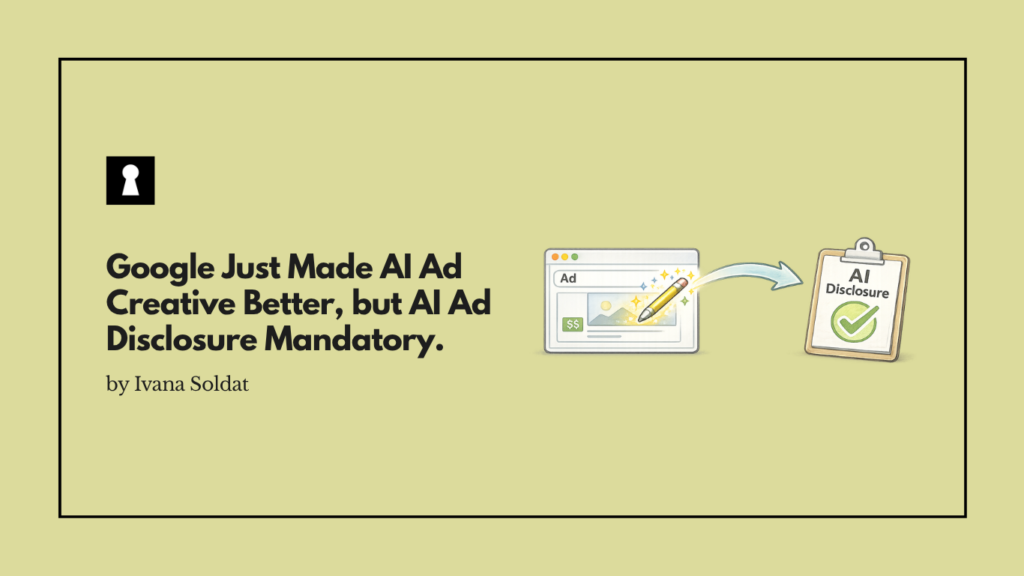
The timing of Google’s latest update to its AI image generation tool is worth noting. The new feature, spotted this week by advertiser Arpan Banerjee, allows advertisers to upload a reference image when generating AI creative inside Google Ads.
You describe what you want in text, upload a product photo or style reference, and the AI generates imagery in a similar visual direction. It is the practical fix for the most common complaint about AI-generated ad creative: it looks generic and does not match the brand’s visual identity.
It is a useful feature. It is also arriving in a month when the rules governing AI-generated ad creative have changed more significantly than in any previous period.
What Every Platform Now Requires
The convergence of AI disclosure rules across platforms in mid-2026 is not coincidental. It reflects a combination of regulatory pressure from the EU AI Act, legislative action in multiple US states, and platform-level decisions to get ahead of regulatory requirements before they are imposed. The practical result is that any ecommerce brand running paid advertising on Google, Meta, or TikTok now operates under mandatory AI disclosure frameworks that did not exist six months ago.
At Meta, AI disclosure is mandatory on Facebook and Instagram ads. If your creative team uses Background Generation, Image Generation, or Add Animation inside Meta Ads Manager, your ads now carry an automatic “AI info” label. The same applies if you are using third-party AI tools like Adobe Photoshop’s generative fill, DALL-E, or Canva AI. Meta detects those via industry-standard C2PA metadata and labels the content accordingly. Undisclosed AI content is now an active reason for ad rejection.
At Google, in July 2026, the platform introduced a way for advertisers to add text or visual labels directly within image and video ad creatives that were generated or modified using AI, rolling the AI label setting out gradually across the month. Google frames the feature as a way to help advertisers comply with emerging AI-transparency regulations, specifically referencing disclosure requirements in the European Union, India, and New York.
At TikTok, AI content policies require disclosure within the first two seconds of video content featuring AI-generated product demonstrations, and sellers on TikTok Shop must disclose when product images or videos contain AI-generated elements.
The EU AI Act’s Article 50 transparency obligations, which took effect on August 2, require platforms with significant EU user bases to ensure AI-generated content is labeled. New York passed a law in June requiring disclosure when AI-generated synthetic people appear in commercial advertising distributed in the state.
The C2PA Standard That Is Making Enforcement Possible
The reason platforms can now enforce AI disclosure automatically is a technical standard called C2PA, developed by the Coalition for Content Provenance and Authenticity, whose members include Adobe, Google, Meta, Microsoft, and Sony. C2PA embeds machine-readable metadata into content files at the moment of creation, recording when and how AI tools were used to generate or modify the content.
When a designer uses Adobe Photoshop’s generative fill to replace a background in a product image and uploads it to Meta Ads Manager, Meta’s C2PA detection reads the embedded metadata and knows the image contains AI-generated elements. The disclosure label is applied automatically. This technical infrastructure is what makes the current wave of disclosure requirements enforceable in a way that previous voluntary disclosure frameworks were not.
C2PA is developing a technical standard for embedding AI provenance metadata in content. Major platforms including Meta and Google are implementing C2PA detection. As this standard matures, platforms may require it for all AI-generated advertising content.
For ecommerce brands, the practical implication is that AI creative tools used to generate or significantly modify product images are leaving a traceable metadata record, and the platforms receiving that creative are reading it and acting on it. Undisclosed AI content is no longer something you can avoid disclosing by simply not mentioning it. The file itself tells the platform what happened to it.
The Tool and the Rule Are Now in the Same Interface
The Google feature released this week is the clearest example of how major platforms are responding to this regulatory moment. Google is simultaneously building better AI image generation into Ads Manager and implementing the disclosure labeling required by regulators. The reference image upload feature makes AI creative more useful and more on-brand. The AI label setting makes AI creative more compliant. Both live in the same interface.
This integration matters because it removes the excuse of accidental non-disclosure. If you generate an image using Google’s tools inside Google Ads, Google applies the disclosure. If you generate an image using a third-party tool and upload it, Google’s C2PA detection reads the metadata and applies the disclosure. The practical takeaway is that this is an enabling control, not a blanket compliance solution. It gives advertisers a sanctioned mechanism to disclose AI-generated creative, but the responsibility for meeting the underlying laws remains with the advertiser.
What Ecommerce Brands Need to Audit Right Now
The convergence of better AI tools and stricter disclosure rules creates a straightforward checklist for any ecommerce brand running paid advertising.
Know which of your current ad assets contain AI-generated or AI-modified elements. This includes not just images generated from scratch but product photos where backgrounds have been removed or replaced, AI-generated models rather than photographed ones, and lifestyle images assembled using generative tools. The C2PA metadata in those files already knows. The platforms will find it.
Understand which disclosure rules apply to your specific ad placements. Google’s commercial ad requirement differs from its election ad requirement. Meta’s mandatory “AI info” label treats background removal as lower-tier than full image generation. TikTok’s rules differ again. The EU AI Act applies to large platforms reaching EU users. The New York synthetic performer disclosure applies to ads showing AI-generated people in New York-distributed advertising.
Brief your creative team and your media buyers. Your designers and media buyers need to understand that AI-generated ad assets now carry a disclosure label. This should be part of your standard creative briefing process, not a surprise they discover when a client asks about it. Watch your ad rejection patterns too. If you are seeing increased rejections without clear cause, AI content detection could be a factor.
Our Take
The AI Tools Got Better and the Rules Got Stricter in the Same Month
The Google reference image upload feature is a genuinely useful addition to an AI creative tool that was already well-integrated into the ad buying workflow. It is also arriving in a month where the regulatory and platform policy environment around AI-generated advertising has tightened more than in any previous comparable period.
The brands that will navigate 2026 best are the ones that treat AI creative tools and AI disclosure compliance as a single workflow rather than two separate concerns handled by different teams. The tools are in the same interface as the disclosure controls.
The platforms are enforcing both. The brands that have not yet briefed their creative and media teams on what their AI-generated assets are doing in the disclosure metadata layer are going to find out through ad rejections what they should have learned through policy review.