
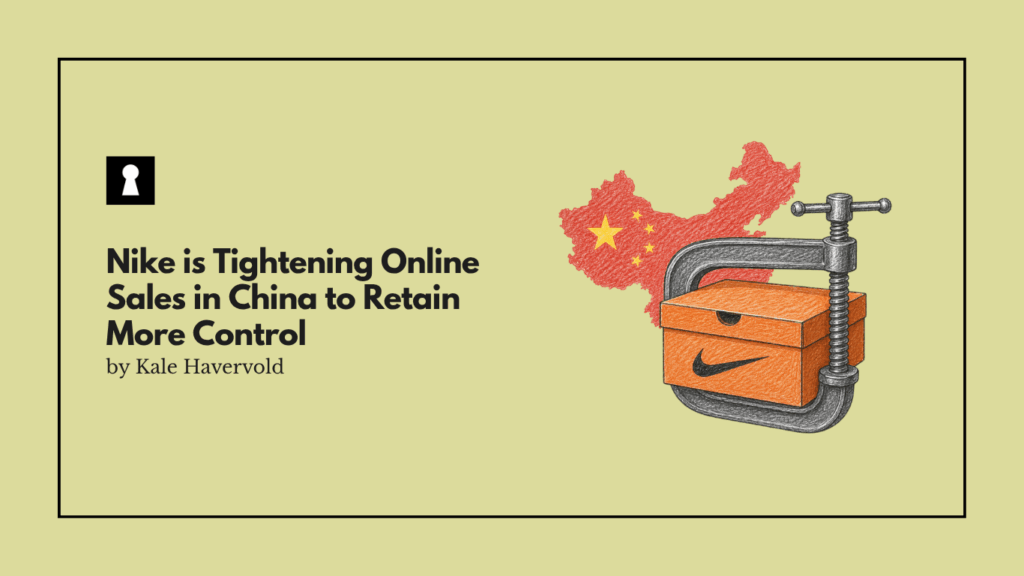
Despite China being among the largest markets for Nike, the sportswear brand is planning to limit online sales of its products in China to its own website and app, as well as a few branded storefronts. Nike is doing this to not only reduce market fragmentation, but also build up consumer confidence, turn Nike sales in China around, and have better control over prices.
This move is expected to impact several large retailers in China, and highlights the importance of controlling your brand and the customer experience you offer as a retail company.
Many Key Chinese Retailers Are About to Stop Selling Nike Online
Beginning in January 2027, Nike is planning to tighten online sales in China by no longer allowing several key Chinese sportswear retailers to sell its items online. Instead, many of these companies will shift to selling Nike clothing and shoes in-store, instead.
While the company isn’t ceasing the sale of its products online in China, it aims to have much more control over it going forward. Instead of a fragmented market that sees a variety of companies sell Nike online, the company will only sell online through its own app and website, as well as several Nike-branded online storefronts on Tmall, JD.com, and Douyin.
Despite China being a major market for Nike, sales have struggled there recently. In fact, sales in Greater China fell 17% on a constant-currency basis in the fourth quarter, which is even lower than the 10% they declined the previous quarter. This drop may be due to the rising popularity of foreign brands like On and Hoka, as well as domestic brands like Li-Ning and Anta.
Nike Aims to Rebuild Trust With Chinese Consumers and Maintain More Control of the Brand
The move is being made for a couple of reasons. First, Nike wants to rebuild trust with Chinese consumers.
Speaking about this, the vice president and Greater China general manager at Nike, Cathy Sparks, said that “Our marketplace has become so fragmented and cluttered. What consumers want is an experience that’s premium, true to the brand, trustworthy, and certainly connected between digital and physical”.
Next, Nike wants to be selling its products at full price. With the company painting itself as a premium brand, it likely hurts its identity and reputation to have its products discounted, which many Chinese brands are likely doing to stay competitive.
Chinese consumers have been spending less in general amidst broad economic slowdowns, and even outside China, Chinese ecommerce exports are struggling. With customers spending less, there’s often intense competition among Chinese retailers, which often leads to discounting to prop up sales and price wars as companies fight for customers.
Nike clearly wants to avoid having its products heavily discounted by these retailers, for fear it will erode the brand and lead to it developing a less premium reputation among Chinese consumers.
The Impacts of the Move Are Widespread Throughout Chinese Retail
The decision by Nike is impacting several retailers directly, as most of the company’s 16 store partners in China, which operate thousands of stores in total, will have to stop selling Nike online.
In response to the news, many top sportswear brands in China fell in early trading, such as Topsports falling by 23% and Pou Sheng falling by 10%.
Even outside of stock performance, these companies are sure to be negatively impacted by the move by Nike, as Topsports generates 22% of its revenue from the online sale of Nike products, compared to 15% for Pou Sheng.
Our Take
The Importance of Controlling Brand and Customer Experience
This move by Nike serves as a lesson to other ecommerce companies about the importance of controlling both your brand and the customer experience you offer.
While selling through multiple stores and retailers expands your reach, it also gives you less control over things like your pricing, branding, and the purchase experience that customers have when buying your items.
You have to trust that these third-party retailers will maintain your brand voice and identity, while also taking steps to avoid eroding customer trust.
Now, this doesn’t mean every brand should pull their items from third-party retailers for fear of brand erosion or poor customer experience, but it means you should be aware of how your brand and products are being represented by others to ensure this representation lines up with what you want.