This is only the latest in a long string of issues between France and low-cost ecommerce platforms like Temu and Shein, and the issues aren’t exclusive to France, as other countries like Germany are also having issues with the platforms.
In an effort to slow down the massive growth and expansion of fast fashion, France recently adopted an anti-fast-fashion law that’s set to come into effect in September. The law will see a financial penalty applied to certain mass-produced textile products, in the name of environmental protection.
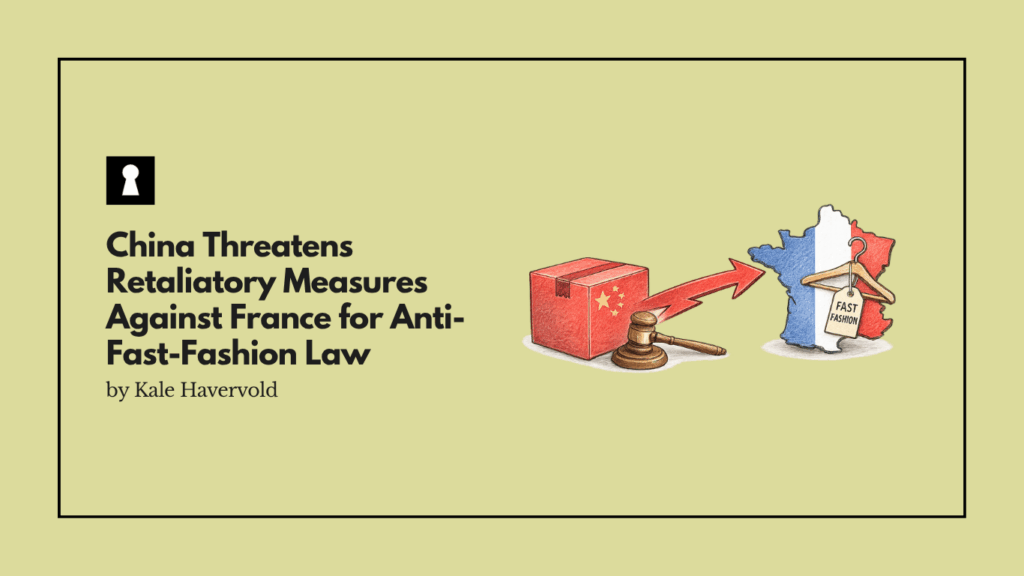
China is not happy about this decision, finds the actions discriminatory, and has vowed to take retaliatory measures if there’s any violation of Chinese companies’ rights and interests. While the situation is ongoing, it could lead to major changes and adjustments in the ecommerce space.
China Upset About France’s New Anti-Fast-Fashion Law
After France adopted a new law that aims to keep the growth of ultra-fast fashion in check, China isn’t pleased with the decision. For those unfamiliar, ultra-fast fashion is when companies sell high volumes of low-quality clothing at very low prices and contribute to the massive amount of pollution generated by the textile industry.
While many companies operate in this space, some of the most popular and largest are Chinese platforms like Temu and Shein.
Speaking about this new French law, a spokesperson for China’s Ministry of Commerce said the law “under the guise of setting so-called standards for ‘environmental protection’ and ‘sustainability,’ in fact implements exclusionary measures.”
They also added that the law is “suspected of violating the World Trade Organisation’s principle of non-discrimination and of constituting a trade barrier against China,”.
Finally, the spokesperson called for France to rectify these practices that they call “discriminatory”, and said that “necessary retaliatory measures” may be taken if the interests and rights of Chinese companies are violated.
It remains to be seen what these measures are, but it seems that China is ready to stand up and fight for its fast-fashion platforms.
A Closer Look at the Law
This anti-fast-fashion law was officially passed by the French Parliament at the end of June and is set to go into effect on September 1st. The goal of the law is to slow down the growth of fast-fashion retailers and platforms by imposing financial penalties on them.
These penalties will apply to several mass-produced textile products and will begin at between €0.25 and €6 per product this year, eventually scaling up to a maximum of €20 per piece of clothing, capped at half of the pre-tax price of the item.
In addition to the financial penalty, this law will also ban advertising for low-cost and mass-produced clothing brands, including working with social media influencers to market the items.
Speaking about the new law, Serge Papin, Minister for Small Enterprises, said that “What is at stake today is not just clothes, but the societal model we want to defend,”. He added that “The industry targeted by this bill is one that floods our markets with disposable fashion, with clothes worn only a few weeks before being thrown away”.
Not The First Problem Between France and China
This is far from the first run-in between France and low-cost Chinese online shopping platforms. In fact, France has had a long history with the likes of Shein, Temu, and other similar platforms.
For example, it fined Shein €22.5 million for issues revolving around product information, order confirmations, and returns. Back around a year ago, France levied a €40 million fine on Shein, but for deceptive business practices this time.
France’s issues with China and other countries extend beyond just clothing, as most imported products entering France don’t meet EU rules.
Finally, other parts of Europe have also had issues with these platforms. For example, research shows that Chinese discount platforms like Temu and Shein are draining €2.4 billion in economic value from Germany each year.
Our Take
Ecommerce Merchants Globally Need to Prepare for What’s to Come
While the new law hasn’t come into effect yet, and China hasn’t officially retaliated, ecommerce sellers across the world need to be prepared for what may happen in the industry.
If some major low-cost suppliers incur penalties and need to increase prices to cover them, it may lead to changing production costs for global brands. Sourcing low-cost inventory may also open up brands to penalties or more eco-audits in some cases.
In addition to that, the move by France may encourage other Western markets to move ahead with similar laws and rules that target fast fashion.
Also, if giants like Temu and Shein adjust their pricing in response to this new law, that sends ripples throughout the industry and changes pricing benchmarks for all sellers globally. Finally, if trade tensions rise, there’s a chance for retaliatory measures, which could make everything from shipping to manufacturing more expensive or complex for brands.