
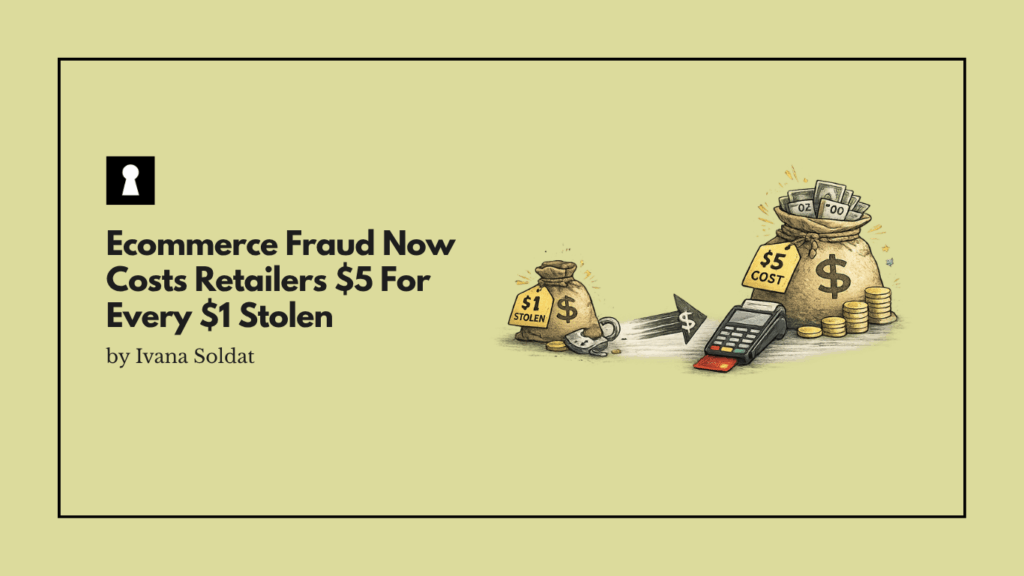
A stolen dollar does not cost merchants one dollar anymore. It costs them chargebacks, investigations, manual reviews, customer service time, compliance headaches, operational cleanup and, sometimes, the customer relationship.
According to the 2026 LexisNexis True Cost of Fraud Study for Retail and Ecommerce in North America, the total cost of fraud has now passed $5 for every $1 of direct fraud loss in both the United States and Canada.
In the U.S., the figure is about $5.13. In Canada, it is about $5.23.
That is the ecommerce equivalent of finding a leak in the ceiling and realizing the real bill is not the bucket. It is the mold, the drywall, the insurance claim and the angry tenant downstairs.
The Fraud Problem Is Now A Customer Experience Problem
The awkward part is that fighting fraud is starting to create its own damage.
The study says more than half of U.S. merchants reported increased customer churn linked to anti-fraud measures. In plain English: some shoppers are walking away because security checks are making the buying process feel too annoying, too slow or too suspicious.
That puts merchants in a nasty bind. Let too much fraud through, and losses balloon. Tighten controls too aggressively, and good customers get blocked, delayed or interrogated at checkout like they are trying to smuggle diamonds through customs.
For ecommerce brands obsessed with conversion rates, that is the nightmare. The fraud tool that saves a transaction from risk but kills the relationship.
AI Agents Are Joining The Checkout Line
The study also points to a newer concern: agentic commerce, where AI-powered agents shop or transact on behalf of consumers.
That may sound futuristic, but retailers are already watching it closely. If bots can browse, compare and buy for people, fraudsters can also use similar systems to automate abuse, test stolen credentials, manipulate promotions or create more believable fake behavior.
More than two-thirds of U.S. merchants in the study said they are concerned about fraud risks tied to AI-agent transactions.
Translation: ecommerce fraud is not just “someone used a stolen card” anymore. It is becoming a multi-channel, multi-payment, AI-assisted mess that touches login, checkout, returns, loyalty programs and customer support.
The Old Fraud Playbook Is Looking Tired
LexisNexis says merchants with more mature, layered fraud prevention strategies are seeing stronger outcomes. That means the winners are not simply adding more friction everywhere. They are trying to spot risk earlier, use better identity signals and separate suspicious behavior from normal customer weirdness.
Because normal customer weirdness is real. People mistype addresses. They use VPNs. They ship gifts to different locations. They forget passwords. They buy expensive things at 2 a.m. Ecommerce is messy, and treating every unusual shopper like a criminal is a very fast way to turn security into self-sabotage.
The future of fraud prevention is smarter doors.
Our Take
The Most Expensive Fraud Tool Is The One That Scares Off Real Buyers
Fraud is becoming one of ecommerce’s ugliest hidden taxes, but the bigger danger is that brands panic and make checkout feel like airport security with a shopping cart. Yes, merchants need stronger fraud prevention, especially as AI agents enter the buying journey.
But if the customer has to prove they are not a criminal just to buy a hoodie, the fraudster is not the only person stealing revenue. Sometimes the fraud stack does it too.