
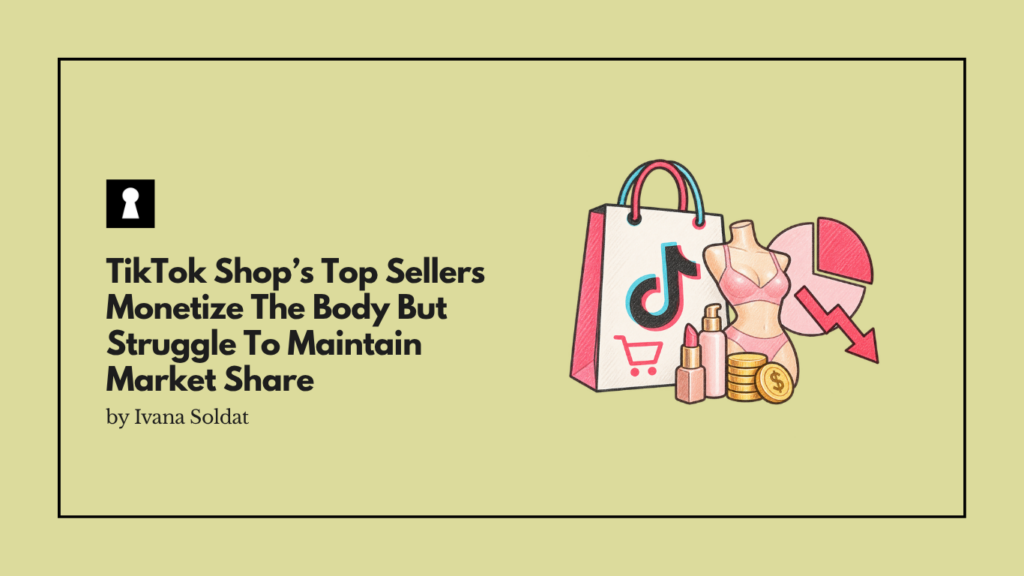
TikTok Shop rewards a fundamentally different product assortment than traditional general online stores. According to the October 2026 Marketplace Pulse study, over two-thirds of revenue from top-selling products comes from items applied to, consumed by, or worn on the body. Beauty alone accounts for close to 30 percent of revenue within this leading-product set.
This demand pattern is not accidental; it is a direct function of the medium. Products whose transformative effects can be visually demonstrated on camera have a natural, high-converting fit with short-form video shopping. Copying a traditional Amazon catalog into TikTok Shop often fails because it copies the inventory without copying the visual demand driver.
The Forty Dollar Median Price Point Defines The Viral Sweet Spot
The study identifies that the median price of a top-selling product is approximately $40.
This specific price point is highly strategic. It sits firmly outside the realm of cheap, low-quality trinkets, yet remains well below the threshold of expensive purchases that require lengthy comparison, extensive research, or high consumer trust.
This $40 benchmark serves as a crucial reference point for testing assortments. The practical question for any brand is whether the product’s value proposition can be explained and demonstrated convincingly within the 15 to 60 seconds of content that sells it.
Rapid Seller Turnover Exposes The Fragility Of Viral Success
Perhaps the most critical warning for brands is the velocity of market share shifts. When comparing 30-day activity with cumulative results, the data exposes fast movement in seller rankings, with Marketplace Pulse noting faster leadership turnover on TikTok Shop than on other major marketplaces it tracks.
A viral month may propel a new shop to the top of the charts, but this ranking observation does not guarantee sustained business health. It highlights a brutal reality: an attention-grabbing product and a durable sales engine are entirely separate problems. Brands that rely solely on a single viral hit without a repeatable creator recruitment process will quickly be displaced by the next algorithmic darling.
Content Volume Correlates With Sales But Does Not Guarantee Profitability
The research confirms that followers, published video volume, and catalog depth each correlate with sales success.
TikTok’s existing affiliate program provides a concrete mechanism for this: merchants recruit video creators, allow them to promote products, and pay commissions on generated sales.
However, the public data does not disclose the exact weighting of these factors, meaning the assumption that “more videos automatically equals more sales” is an oversimplification. More importantly, these creator commission payments are a massive, often underestimated line item in the unit economics of converting an audience into customers. A high seller rank is evidence of top-line sales activity, not a complete or profitable business model.
Our Take
Algorithmic Virality is Not a Sustainable Brand Moat
The Marketplace Pulse data provides a clear blueprint for what works on TikTok Shop: visually demonstrable, body-focused products priced around $40.
However, founders must not mistake a high leaderboard ranking for long-term viability. The rapid turnover of top sellers proves that the platform’s algorithm is ruthlessly efficient at cycling through novelty.
To survive, merchants must treat TikTok Shop not as a magic bullet for instant revenue, but as a highly specific media channel that requires a disciplined, repeatable creator affiliate strategy and rigorous margin management after creator payouts and discounts are applied.