
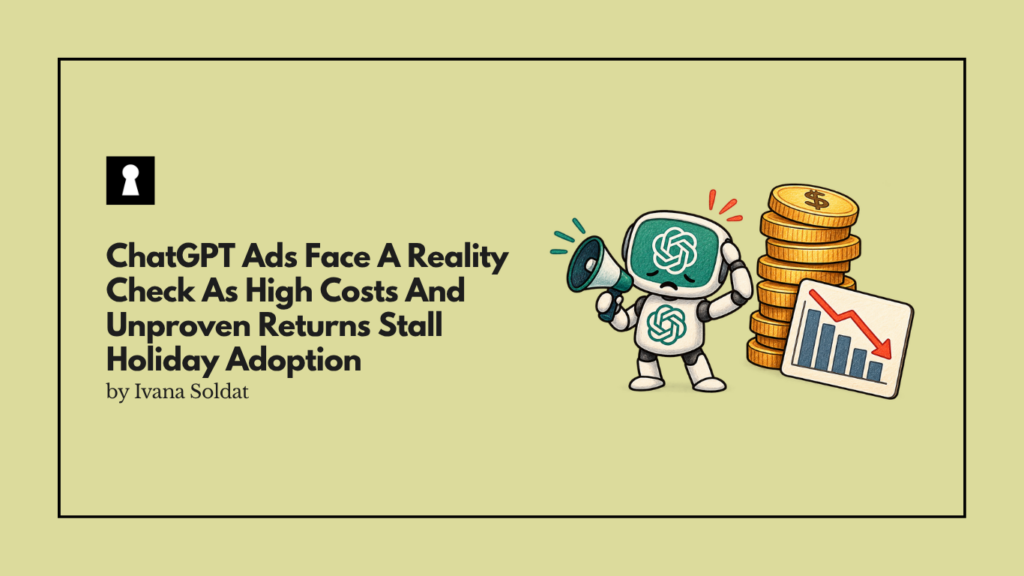
The fundamental barrier to AI search advertising adoption is simple math.
According to Terence Einhorn, VP at the measurement firm Measured, the equivalent cost-per-click on ChatGPT is currently around six times higher than on Google. For performance marketers operating on strict return on ad spend (ROAS) targets, this massive premium is impossible to justify without proven conversion data.
Einhorn noted that early testing results have generally been “pretty bad,” which is an expected outcome for a brand-new ad platform with no historical optimization data or mature bidding algorithms.
The Targeting Void Undermines The High-Intent Promise
OpenAI has positioned ChatGPT as a high-intent discovery engine, but the current advertising product lacks the foundational tools marketers rely on. Anders Bill, co-founder of Superfiliate, pointed out that brands cannot currently pay to specify their target shopper demographics the way they can on established digital ad platforms. Instead, sponsored product listings are simply injected into organic AI responses.
This lack of control means brands are paying a premium to blindly hope their product aligns with a user’s prompt, rather than actively steering their message to a qualified audience segment.
Large Brands Are Treating It As A Tax, Not A Growth Lever
While Sensor Tower data shows that over 1,400 unique advertisers ran campaigns on ChatGPT in August, representing an 8 percent month-over-month increase, the spend is heavily concentrated.
The largest advertisers are massive entities like Capital One, Expedia, and Cloudflare. For these corporations, spending on experimental AI ads is less about driving immediate, efficient e-commerce sales and more about paying a “innovation tax” to secure a foothold, gather proprietary data, and signal market presence.
Mid-market and direct-to-consumer brands, which lack the luxury of burning cash on speculative channels, are rightfully staying on the sidelines.
The Incrementality Illusion And The Catch-22 Of AI Advertising
Even when AI ads do generate a sale, measurement experts warn of the incrementality illusion. Einhorn highlighted that brands often end up serving ads to high-intent shoppers who were already going to purchase the product anyway. In these scenarios, the brand is merely subsidizing its own organic sales at a massively inflated cost-per-click.
This creates a classic catch-22: brands cannot afford to use the platform until they know it works, but they cannot know it works until they spend enough money on it to gather statistically significant data. During the high-stakes fourth quarter, risk aversion naturally wins out.
Our Take
Paying a Premium for Unproven Attention is a Strategy for the Wealthy, Not a Blueprint for Growth
The narrative that AI search will immediately disrupt the holiday advertising landscape is a myth propagated by platforms eager to monetize their user base.
ChatGPT’s current ad offering is a blunt instrument: it is too expensive, too untargeted, and too unproven to warrant a meaningful shift in holiday budgets. Smart marketers will allocate a microscopic “learning budget” to understand how generative engine optimization works, but they will not gamble their Q4 survival on it.
Until OpenAI can offer transparent targeting, verifiable incrementality, and competitive pricing, ChatGPT ads will remain a novelty for tech giants, not a growth lever for ecommerce.