
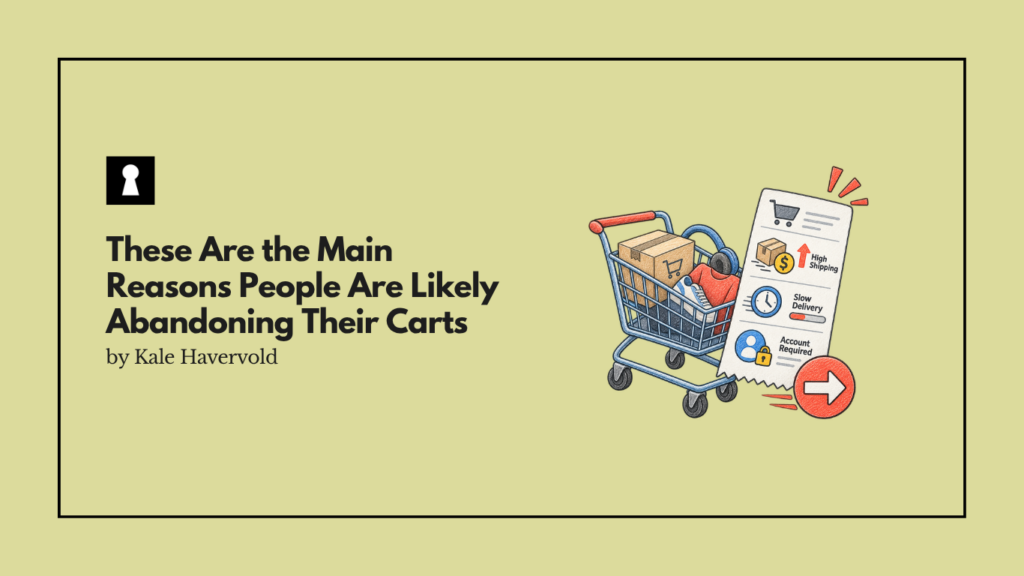
Your online store’s checkout is the last hurdle you need a potential buyer to jump over in order to convert from a site visitor to a customer. Unfortunately, according to new data, many ecommerce checkouts introduce new sources of friction that end up driving potential buyers the other way.
Whether this is a poor mobile experience, unexpected costs, or a complex checkout process, these last-minute sources of friction can turn a sure sale into an abandoned cart. Ecommerce sellers need to know these friction sources and ensure they eliminate them within their own checkout experiences.
Mobile Friction Negatively Impacts Most Checkouts
With mobile devices being the most popular method for shopping online, ecommerce brands must offer a smooth and responsive mobile experience. However, new analysis found that 63.2% of checkouts showed significant friction and usability issues for mobile users.
This analysis comes from research done by CartDNA, which examined Shopify checkout performance across multiple friction categories in the USA, UK, and Europe to learn where many shoppers are most likely to abandon their purchases.
In addition to most checkouts being subpar on mobile, shoppers using mobile devices experienced 13% more checkout friction than their counterparts shopping on a desktop computer.
So despite mobile shopping taking off in recent years, it seems that many companies are lagging behind when it comes to modernizing the mobile experience they offer. This opens up a huge opportunity for brands who want to prioritize mobile customers, as they may be able to pick up the conversions that other brands lost.
Many Checkouts Present Unexpected Costs Too Late
Unexpected costs are another major source of checkout friction, as 39.2% of checkouts presented either unexpected costs of unclear delivery information late in the checkout. If brands wait until too late in the process to tell customers about costs like service fees, extra taxes, or shipping rates, it’s often incredibly frustrating.
Not only can this introduce budget stress and may lead to potential customers feeling deceived, but it also wastes their time. Instead, sellers should make an effort to be upfront and honest about all of their costs. Customers will respect the honesty and know what they’re getting into price-wise before they hit the checkout.
Nearly a Quarter of Checkouts Are Unnecessarily Complex
Just shy of a quarter of checkouts (23.46% to be exact) had unnecessary steps or form friction that added to the time and effort required to check out. Most customers want a checkout process that’s smooth, simple, and seamless, not one that’s bloated with extra options, checkboxes, menus, and forms.
A complicated checkout process is one of the worst ecommerce mistakes a brand can make, and you’d be surprised how much of a positive impact a few small changes can have. Simply removing the bloat and focusing on what actually needs to be included in your checkout can go a long way.
Several Checkouts Lacked Relevant Payment Methods
Surprisingly, 21.7% of checkouts failed to support relevant payment methods for their target market. Many shoppers have a preferred payment method when shopping online, and if you don’t support their favorite, they’ll go somewhere that does.
This lines up with previous research that states that 21% of shoppers have abandoned a cart because the retailer didn’t offer their preferred payment method. As a result, sellers need to ensure they accept a range of payment options, especially those that are popular in their region.
While most sellers will support things like credit card payments, companies looking to satisfy more potential customers should also consider supporting digital wallets like Apple Pay or Google Pay, platforms like PayPal, and Buy Now, Pay Later (BNPL) services like Klarna.
Trust is a Major Concern for Nearly a Fifth of All Checkouts
Trust was also a concern for many checkouts, as 19% of them showed weak trust or reassurance signals. When someone shops online, they want to feel comfortable and safe buying from you, and not worried that you’re going to scam them or deliver a subpar product.
If your site doesn’t appear professional, and your checkout lacks things like trust badges or security seals, some customers may hesitate to enter their payment details.
For their peace of mind, make sure to include logos of trusted card groups or platforms, icons that show their data is safe (such as SSL or a secure checkout guarantee), and other reassuring badges or icons to ease any worries they may have.
Our Take
Optimizing Your Checkout to Boost Conversions
With so many potential issues and points of friction during the checkout process, all ecommerce sellers need to ensure they’re optimizing their checkout. Even a single point of friction or issue may be enough to drive away a large number of customers.
To learn more about the quality of your checkout experience and see where people are leaving, consider checking the funnel drop-off rates, time spent per step, customer support tickets, and other metrics. These help you learn which checkout step loses the most customers, which are most confusing, and which customers reach out to support about.
Once you know the problem areas, you can improve them by eliminating unnecessary bloat, speeding up the process, and taking other measures to ensure your checkout is as smooth as possible.