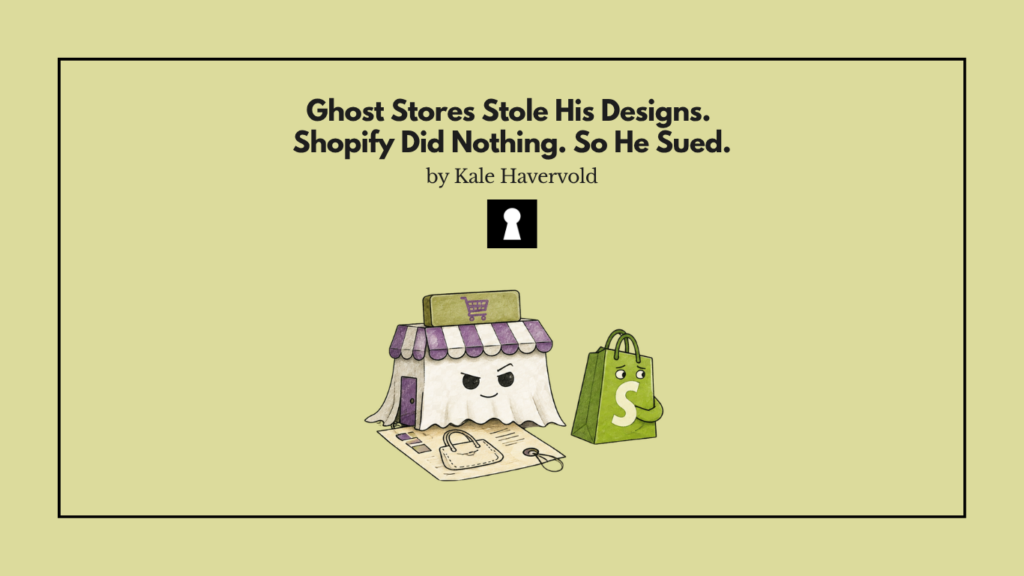
After realizing his hard work had been stolen by several ghost stores, a 20-year-old designer has sued Shopify in Australia after the company allegedly failed to take down the stores.
While the sites appear to be taken down now, this designer’s experience serves as a cautionary tale to all ecommerce sellers about the major issue that ghost stores can cause.
Post Designer Suing Shopify in Australia
While Shopify is often popular amongst its merchants and is the most-used platform for online stores, thanks to features like letting sellers manage their store directly in AI chats and countless others, there are certainly times when sellers are frustrated with the platform.
Perhaps the most recent example of that is when a 20-year-old poster designer sued the company in Australia. Ryan Billington, who owns and runs the online store radialposters.com, took legal action against the company after alleging that it failed to remove ghost stores that copied his site design and stole many of his products.
For those unfamiliar, a ghost store is a term with a few meanings, but the most common usage refers to a fake online shop that poses as an established business to trick shoppers into trusting it and buying products. When shoppers buy from these ghost stores, they often receive cheap and low-quality products in place of what they actually ordered, or may receive nothing at all.
While this may seem like a ton of work to set up this scam, many of these scammers use scrapers to pull images, product descriptions, and other content quickly and automatically. These illegitimate sellers may also often use legitimate product images that they stole to use in ads to attract buyers to their ghost store.
Details of the Issue
Billingtown said that two websites copied his work and website, and defrauded customers by only sending them electronic files of the designs they purchased, as opposed to actual posters. In total, Billington shared 3,929 instances of these sites copying his designs with Shopify, sent 45 infringement notices, and requested that the company take down the sites back in April.
According to court documents, Shopify never responded, so he decided to take legal action against the ecommerce giant in May. Court documents also list people who claim to be the operators of these two other websites, but Billington claims that these are false names.
While these stores have since been taken down, Billington said that it was both frustrating and stressful to try to get help from Shopify, and that even when he sent ownership evidence for his designs, he still only received what he called “legal template responses” and was essentially ignored.
The Growing Problem of Ghost Stores
This story serves as a cautionary tale to all sellers and ecommerce brands about the massive threat that ghost stores pose to legitimate businesses. While most online shoppers experience scams, scams like ghost stores are often quite sophisticated, and it’s easy for even savvy online shoppers to fall for them.
In addition to directly stealing sales and scamming customers, these ghost stores can ruin a legitimate brand’s reputation. Many buyers may never know they purchased from a ghost store, and when they receive a low-quality product instead of what they ordered, or get their funds stolen altogether, they may think the legitimate brand is responsible for it.
Dealing with these ghost stores may even lead to damaging consumer trust in online shopping and marketplaces in general. As a result, legitimate online companies suffer as many consumers become less comfortable with buying online for fear of being scammed or tricked.
The problem has become large enough that the Australian Competition & Consumer Commission (ACCC) stepped in back in 2025 and issued a warning about ghost stores that were imitating legitimate Australian businesses. In this notice, it was even said that many of these ghost stores appear to use Shopify to host and operate their websites.
As these ghost stores continue to pop up, and if platforms continue to fail to remove them until they face heavy pressure, it wouldn’t be surprising to see more consumers and sellers fall victim to this scam in the coming months and years.