
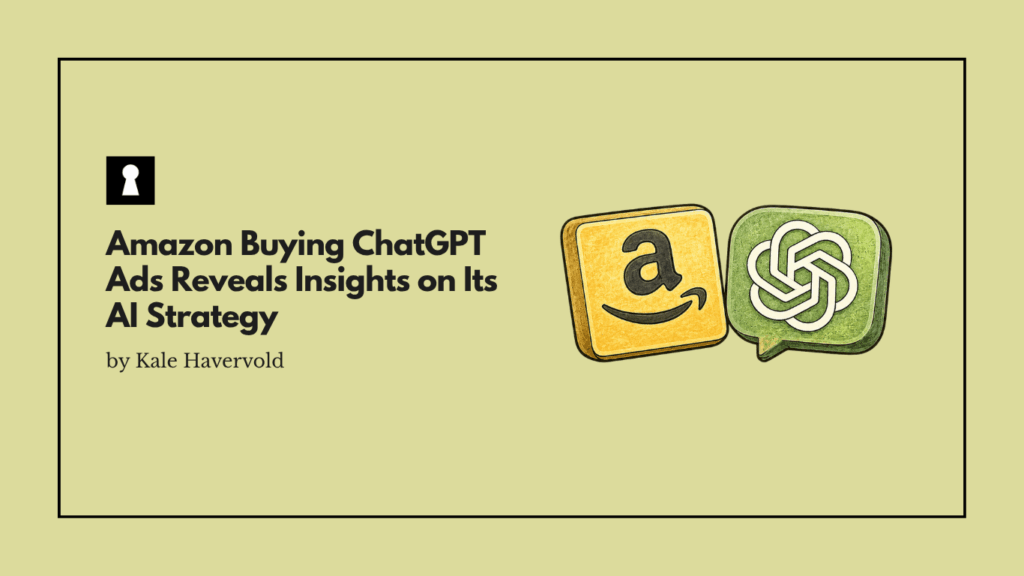
To reach the growing number of shoppers that use ChatGPT to ask shopping questions and research products, Amazon has decided to become one of the largest companies to buy ads on ChatGPT.
But despite using ChatGPT as a new marketing channel, Amazon has remained against allowing OpenAI and other AI companies and agents to scrape its website to aggregate product and pricing data.
Amazon Begins Buying Ads on ChatGPT
Amazon just began buying ads on ChatGPT, becoming among the largest companies to do so thus far. When someone uses ChatGPT for shopping-related tasks or questions, the platform will push paid Amazon content that matches their specific consumer intent.
For example, if someone asks a question about kitchen appliances, ChatGPT may suggest certain Amazon listings and products that fit the intent.
While they come up while people are using ChatGPT, these ads bring the users back to Amazon’s storefront, which ensures the company maintains full control of the customer experience, relationship, and transaction.
But It Doesn’t Want AI Aggregating Its Product Data
However, despite Amazon having no problem using ChatGPT as a marketing channel to reach the many people who use it for shopping, it has remained very against AI aggregating its own product data.
For example, back in 2025, Amazon sued and won in a court case against Perplexity, after the AI platform sought to use an AI agent to shop on behalf of human customers on Amazon. This is just one example of how Amazon is making it hard for AI agents and other systems to collect product data from the platform or access the site.
It’s not hard to see that this decision by Amazon is a bit of a strategic double standard. On one hand, the company is happy to pay OpenAI to get direct access to millions of ChatGPT users, but on the other, it’s actively preventing the company and others like it from scanning its own listings.
Now, this apprehension doesn’t extend to all things AI, and seems to be more about keeping product, pricing, and inventory data to itself than an unwillingness to use AI. For example, Amazon is clearly comfortable with AI as it uses it to help answer customer questions with its voice AI shopping assistant, and has even partnered with OpenAI itself.
Our Take
How This Move Influences the Future of Ads on ChatGPT and In General
With Amazon being one of the most well-known retailers to become a part of OpenAI’s advertising business, it has the potential to be a turning point for ads on ChatGPT. If other companies follow now that Amazon has begun buying ads, this could grow into a major business and source of revenue for OpenAI.
It’ll also be interesting to see if other company’s that follow Amazon into buying ChatGPT ads also maintain their data-access restrictions and prevent OpenAI from scraping their products.
The move also validates OpenAI’s advertising business and shows that the industry is evolving from AI simply being an experimental and exciting shopping feature to a technology that can serve as a valuable marketing channel for brands, both small and large.
Now, whether users want ChatGPT to be full of ads and have companies be able to pay for preferential placement in responses, that remains to be seen, but that seems to be where the industry may be heading.