
There is a gap between what brands think their customers want and what their customers are actually feeling when they make a purchase. Sarah Levinger has spent six years measuring that gap, and she has found it is almost always wider than the brand’s internal team believes, and almost always more expensive than they realize.
Levinger consults with direct-to-consumer brands on marketing psychology, specifically the application of behavioral science to advertising. Her process starts with reviews. Not to extract features or sentiment scores, but to identify the underlying emotional category driving each review. Why did this person buy? What need was being fulfilled? What feeling were they seeking or resolving?
“I would take thousands of reviews and categorize them into emotional categories,” she told the Practical Ecommerce podcast. “I could read a review and understand the emotion beneath it, which provided a direction for the marketing.”
The system has evolved. Reviews are short. Jennifer from Michigan says she loves the product and nothing more. Customer interviews generate longer transcripts with more emotional texture, and Levinger feeds those transcripts into AI for analysis. The AI identifies patterns in the emotional language that are too subtle or too numerous for a human reader to catch reliably across thousands of responses.
The Hop Tea That Was Selling Belonging as Sobriety
The brand was running ads focused on the non-alcoholic angle: this is a sober choice, this is what you drink when you are not drinking. The messaging was accurate. The product is non-alcoholic. But the reviews kept returning to a different emotional register entirely.
“The top emotion that kept popping up in their reviews was belonging,” Levinger said. “The brand sought to reduce alcohol consumption, a kind of achievement, but many consumers seemed to seek belonging. I still recall one of the reviews, which stated,
‘I want to thank this brand for giving me back a taste I thought I’d never have again.'”
More reviews kept saying the same thing in different ways: I had to give up alcohol, but I did not want to lose the experience. I missed the ritual. I missed being able to order something that felt like the thing my friends were drinking. The product was not just a health choice. It was a re-entry ticket to a social experience the customer had thought they had lost permanently.
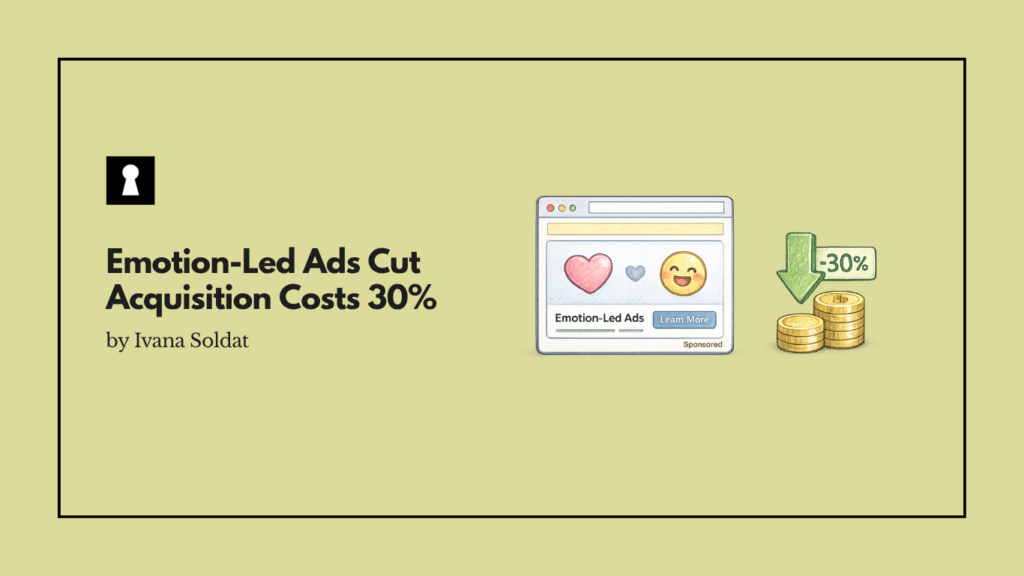
Levinger reoriented the advertising around that emotional reality. The new framing: “You can have your hops and drink them too, without the alcohol.” Not about sobriety. About getting back something you loved. The ads cut customer acquisition cost by 30% in the first two weeks.
Why Personalization Can Work Against You
The counterintuitive part of Levinger’s framework is her argument against heavy personalization. The conventional wisdom in ecommerce advertising has been moving toward increasingly granular audience segmentation: show different ads to different demographic groups, match messaging to individual characteristics, serve the most targeted possible version of the offer to each person.
Levinger pushes back on this. “We’ve gone too far with personalization in our landing pages, emails, ads, and all marketing. Personalization often increases ad costs because it targets a single group.”
Her reasoning is rooted in the underlying consistency of human emotional experience. The emotions that drive purchasing decisions, following behavioral scientist Will Leach’s model from “Marketing to Mindstates,” are common to humans across demographic lines. People buy because they want to belong, or achieve, or feel secure, or be stimulated. These emotional drivers are not segment-specific. They are human.
“Humans are pretty similar, regardless of background, ethnicity, or family structure,” she said. “The emotions beneath purchasing decisions are pretty similar.”
The implication for advertising spend is significant: an ad that speaks authentically to the right underlying emotion at broad reach will typically outperform a highly targeted ad that speaks to the wrong emotion within a narrow segment.
The Internal Team Problem
The gap Levinger has found is not just between brands and consumers. It is also inside the brand itself. She assembles the entire creative team, designers, videographers, strategists, media buyers, and asks them questions about their understanding of the customer, the product, and the purpose of advertising. The answers reveal a second gap, between what different members of the same team believe the brand is selling and what the consumer is actually buying.
A media buyer and a creative director at the same brand can have fundamentally different mental models of who the customer is and what moves them to purchase. Those different mental models produce advertising that is internally inconsistent, message by message, which dilutes the emotional clarity that drives conversion.
The Holiday Advertising Context
This is August, which means brands are finalizing their holiday advertising. The timing is relevant because the holiday consumer environment we have been documenting all month, such as cautious, price-sensitive, deliberately spending, is one where emotional clarity in advertising matters more than it does in a generous spending environment.
When 38% of US holiday shoppers say tighter budgets will have the biggest impact on their spending, the implication is that they are not going to buy things they can casually want. They are going to buy things they genuinely need or genuinely love. Belonging, security, and meaningful achievement tend to outperform novelty, stimulation, and aspiration when money is tight and every purchase is a deliberate choice.
A brand running ads about product features and functional benefits into a consumer primarily motivated by belonging or loss avoidance is not speaking to the emotion that will move the purchase decision. That mismatch is measurable in CAC.
Levinger’s hop tea result, 30% lower acquisition cost in two weeks from an emotional reframe, is the kind of improvement available to any brand whose advertising is speaking to the wrong feeling.
Our Take
You Are Probably Advertising the Wrong Emotion
Levinger’s framework is not new as a concept. What makes the conversation worth highlighting is the specific and replicable method: mine your reviews and customer transcripts for emotional category, not feature preference or sentiment score; check whether your advertising is speaking to that emotional category or to something different; and treat the gap as a CAC problem, because that is what it is.
The hop tea example is a 30% improvement from a two-week test. That is the kind of result that should prompt any ecommerce brand to spend an afternoon reading their reviews not for what customers say about the product but for what they are feeling when they write it.