
EcomWatch published two pieces on loyalty this week. The HyperFinity survey showed 52% of British shoppers are less loyal to retailers than three years ago, with 61% of loyalty programme members feeling no different from a regular customer. The Comarch report showed 64% of Gen Z consumers are using AI to hack loyalty programmes for maximum points. Both describe a loyalty landscape where traditional programmes are failing to create genuine attachment.
Joybuy’s Snap & Save is doing something different from both the failing traditional model and the AI-gaming model. It is using another retailer’s loyalty moment, the supermarket shop, as an acquisition trigger for its own platform.
How Snap & Save Actually Works
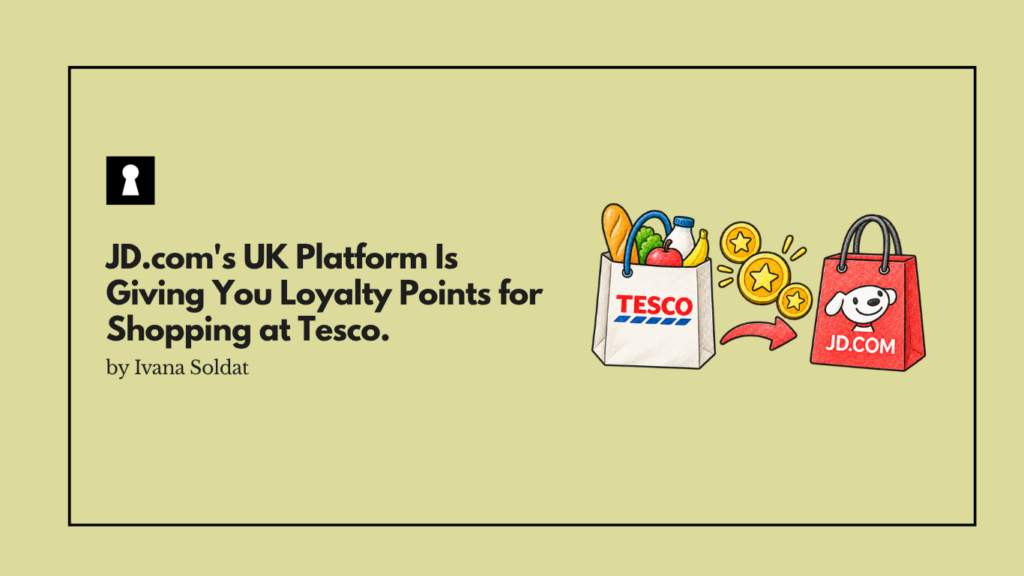
Joybuy Snap & Save allows users to upload eligible supermarket receipts and earn Joybuy Points worth up to 2% of their spending, capped at 100 points (£1) per receipt, up to five receipts per month. Points can be used to cover up to 50% of eligible Joybuy purchases. Eligible retailers include Tesco, Asda, Aldi, Lidl, Morrisons, and Waitrose.
The cashback ceiling, £5 per month in points from receipt uploads, is not particularly generous in isolation. The strategic value is not in the points economics. It is in the behaviour the mechanic creates and the data it collects.
The Customer Acquisition Logic
Consider the consumer who takes up Joybuy’s Snap & Save offer. They are a regular supermarket shopper at Tesco or Asda. They download the Joybuy app to access the receipt upload feature. They upload up to five receipts per month. They accumulate Joybuy Points. At some point, they use those points against a Joybuy purchase.
That is a customer acquisition funnel built entirely on the back of a competitor’s retail infrastructure. Tesco acquired the shopper. Tesco processed the transaction. Tesco issued the receipt. Joybuy scanned the receipt, awarded points, and converted a Tesco shopper into a Joybuy trialist, without paying for advertising, without winning a price comparison, and without the shopper needing any prior awareness of Joybuy.
The data dimension is equally significant. The receipt upload feature gives Joybuy visibility into the shopping behaviour of UK consumers at competitor supermarkets, what categories they buy, how much they spend, how often they shop. For a platform that launched in the UK earlier this year and is building its understanding of the UK grocery market from scratch, competitor receipt data is a meaningful market research shortcut.
Why This Is Particularly Sharp for Joybuy Specifically
Joybuy is not a marketplace in the way that Temu or Amazon Marketplace are. It holds stock in its own UK warehouses and fulfils orders directly, giving more control over product quality and more consistent delivery times.
Joybuy launched with over 100,000 products, including a partnership with Morrisons to stock hundreds of own-label lines alongside major branded goods, and a Tesco Price Match scheme across selected products.
A platform that runs a Tesco Price Match scheme on selected products and also gives loyalty points for uploading Tesco receipts is positioning itself explicitly as a destination for price-sensitive Tesco shoppers. The Snap & Save mechanic recruits the shopper. The Price Match scheme closes the argument for switching.
This connects directly to the JD.com European logistics story EcomWatch covered earlier this month, where we documented that Joybuy has built over 60 European warehousing and delivery sites and is offering same-day delivery and installation in 30-plus European cities. Snap & Save is the customer acquisition strategy sitting on top of that operational infrastructure.
The Receipt Data That Regulators May Eventually Notice
The Snap & Save mechanic raises a question worth flagging. The receipt upload feature gives Joybuy access to detailed purchase data from competitor retailers’ transactions, what was bought, in what quantities, at what prices, at which store location.
Under GDPR, this is personal data. Joybuy’s privacy policy and terms of service determine how that data is used, stored, and whether it can be deployed for purposes beyond the points award. The FTC proposed enforcement policy on personalised pricing that we’ve covered this week explicitly includes purchase history as one of the data types that, when used to personalise pricing, may require disclosure. Receipt data collected from competitor transactions is a richer form of purchase history than anything a retailer collects through its own loyalty programme.
Whether UK regulators or the ICO treat competitor receipt scanning as a straightforward loyalty mechanic or as something requiring closer scrutiny is an open question. The precedent of similar receipt-scanning apps in the US suggests regulators have generally treated the practice as acceptable when clearly disclosed.
But the combination of receipt scanning with a platform that also runs pricing mechanics linked to competitor benchmarks is a configuration that has not been widely tested.
The Loyalty Landscape This Fits Into
This week’s loyalty coverage described two problems: traditional loyalty programmes failing to differentiate members, and Gen Z using AI to extract maximum value from programmes not designed to be gamed. Joybuy’s Snap & Save sidesteps both problems.
It is not trying to create a traditional loyalty relationship. It is trying to create a trial relationship, get a price-sensitive UK consumer to make their first Joybuy purchase by reducing its effective cost through points earned at a competitor. If that first purchase goes well, organic retention takes over. If it does not, Joybuy has still gathered receipt data and app engagement from a consumer who cost almost nothing to acquire.
Our Take
JD.com Is Using Tesco’s Receipts to Build Its UK Customer Base. Tesco Is Not Doing Anything About It.
Joybuy’s Snap & Save is the most creative customer acquisition mechanic in UK ecommerce this year and it has received almost no coverage. The concept, earn loyalty points on another platform’s transactions to fund purchases on ours, is not new in concept but is unusually well-executed here.
The combination with a Tesco Price Match scheme, a UK warehouse network with same-day delivery capability, and JD.com’s deep relationships with electronics and grocery manufacturers in China creates a platform that is quietly positioning itself for the price-sensitive UK consumer who shops at Tesco but might shop somewhere cheaper if the friction of switching were lower. Snap & Save is that friction reducer.
The question for established UK retailers watching JD.com’s UK rollout is not whether Joybuy’s product range or prices are competitive, they clearly are in some categories. It is whether a competitor that can access your customers’ purchase data through a receipt scanning app, match your prices on selected products, and deliver the same day from local warehouses should be treated as a niche entrant or a structural threat.