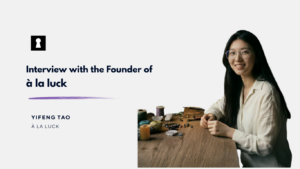

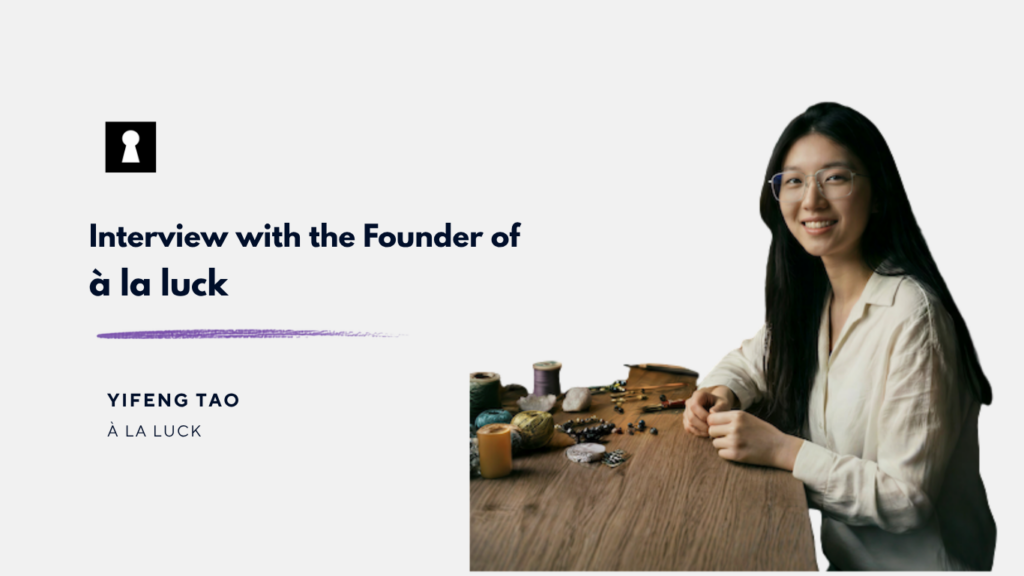
For à la luck founder Yifeng Tao, the value of jewelry has little to do with how rare, expensive or fashionable it appears. Working alone from her studio in Qingdao, China, Tao creates hand-knotted, edition-of-one talismans from natural stones, pieces intended not simply to be acquired, but to be lived with.
Every piece is made once. Materials are identified without romanticized trade names. And rather than manufacturing meaning around an object, Tao believes attachment develops gradually through wearing, caring for and living alongside it.
We spoke with Yifeng Tao about conscious consumption, the difference between rarity and emotional value, what independent makers can offer in an age of AI-driven discovery, and why the things we keep often become more valuable with time.
Ivana, writer at Ecomwatch: To begin, can you introduce yourself? Who are you, where are you based, and what first inspired you to create à la luck?
Yifeng Tao, the founder and maker behind à la luck: I’m Yifeng Tao, the founder and maker behind à la luck. I run the brand as a one-person studio in Qingdao, China, where I hand-knot edition-of-one natural-stone talismans.
Before à la luck, I spent about five years working in overseas marketing. I learned a great deal from it, but I wanted to build something where I could take responsibility for the entire chain.
I wanted to create pieces that treated the stone honestly while still leaving room for a very personal relationship between the object and the wearer. That became à la luck.
The idea of “edition-of-one” is central to à la luck. Why was creating truly individual pieces so important to you?
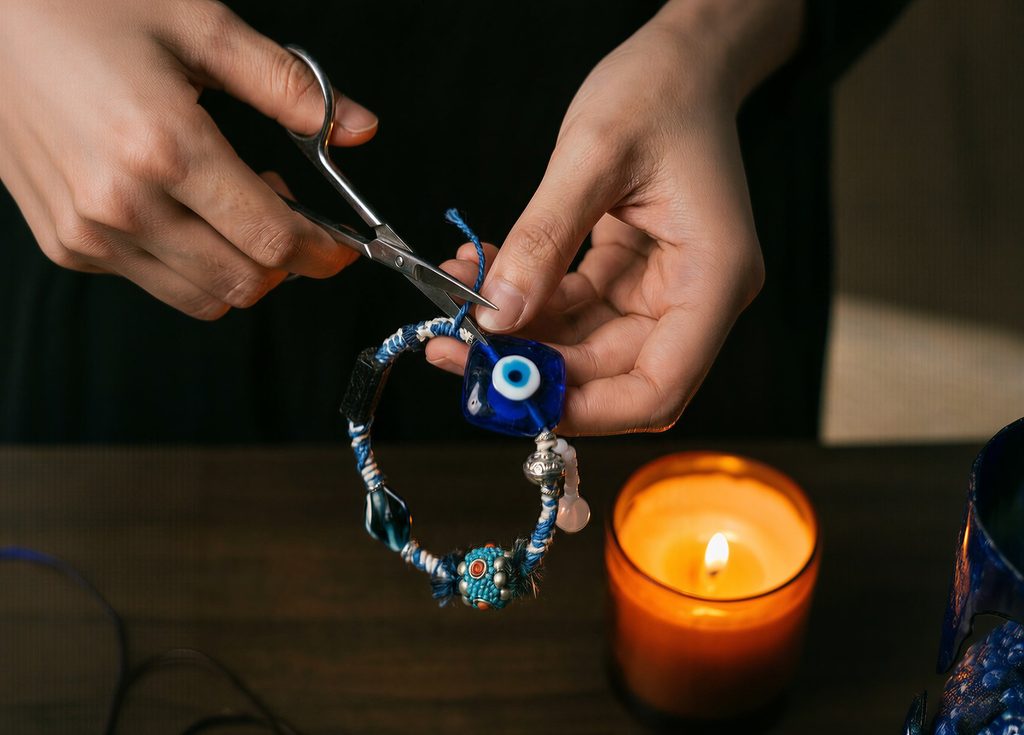
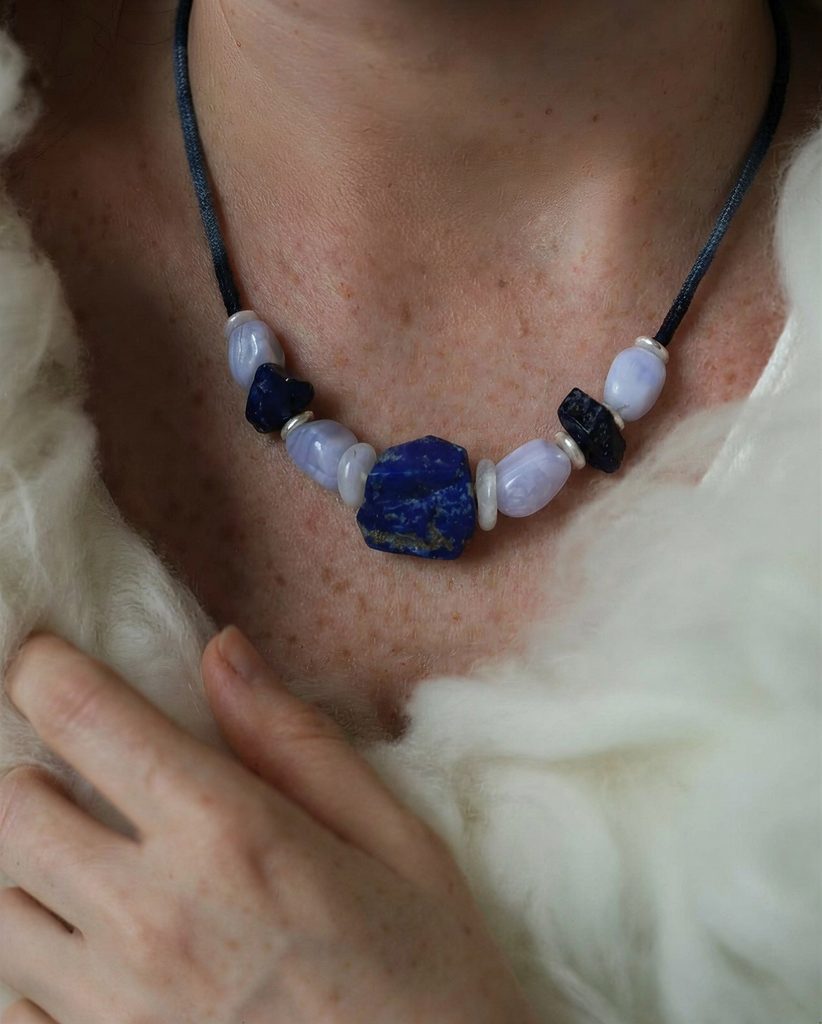
“Edition-of-one” began as a consequence of how I work, not as a scarcity strategy. Natural stones are already individual: their shape, inclusions, color, balance, and even awkwardness are different. When I knot by hand, I respond to the particular stone in front of me. The construction that holds one piece beautifully may not suit the next stone at all.
Repeating a design exactly would mean asking the material to behave like a standardized component. I would rather let its character guide the piece. So each talisman is made once, photographed once, and sent to one owner. There is no second copy.
I also think individuality matters emotionally. People are not interchangeable, and the objects they keep close to the body do not need to be interchangeable either. The aim is not simply to own something “rare,” but to recognize something that feels specifically right for you.
Is there one piece you’ve created that was particularly difficult to let go of?
The piece I think of first is also the one I never really had to say goodbye to.
It was the first talisman I made, in 2025: a bracelet built around a double-terminated Herkimer quartz point with small rainbow inclusions. I made it for my girlfriend.
At that time, I had enthusiasm but very little technique. The bracelet took three or four hours and several complete restarts. I was trying to find a way to secure the raw crystal without flattening or hiding what made it beautiful.
The finished piece was imperfect, but it held together, and she began wearing it almost immediately. She has worn it day and night for more than a year.
So I did give the piece away, but I still see it living its life.
That taught me something important very early: a talisman becomes more complete through wear. Its value is not only in the moment it leaves my hands. It grows through the time, memory and attachment that come afterwards.
Conscious consumption is becoming an increasingly important conversation. What does it mean to you personally, and how does that philosophy shape à la luck?
For me, conscious consumption means choosing with attention.
It does not have to mean buying nothing, and it is not a judgment about someone’s budget. It means understanding why you want an object, what it is made from, who made it and whether you can imagine keeping and using it beyond the initial excitement of the purchase.
At à la luck, that translates into practical decisions.
I make one of each piece rather than producing inventory in volume. I label materials as honestly as I can instead of choosing a more marketable name. Magnesite should be called Magnesite, for example, not “white turquoise.”
I also avoid designing around constant replacement or artificial urgency.
I would rather someone choose one talisman deliberately and wear it for years than collect ten pieces that remain in a drawer.
Conscious collecting is really about the quality of attention. A small wardrobe of meaningful objects can hold a great deal of life.
Have you noticed a change in what people want from jewelry? Are customers looking for something more personal or meaningful than they were a few years ago?
In my own conversations with customers, yes. I wouldn’t claim to speak for the whole jewelry market, but I notice people asking much more specific questions.
They want to know where a material comes from, whether its name is accurate, how the piece is constructed, why I chose that particular stone and what happens if something needs repair.
There is also a tension created by online shopping.
People can see an endless quantity of beautiful products within minutes, which makes visual novelty incredibly easy to find. But at the same time, that abundance can make everything feel strangely interchangeable.
I think many customers are looking for evidence that a real person made the object—and that this person made decisions that cannot simply be reduced to a trend.
Meaning cannot be added with a paragraph of marketing copy. It usually comes from specificity: a material with visible character, a process the customer can understand and a reason the piece belongs in that person’s life.
As an independent maker, how do you balance growing a business with protecting the intimacy and individuality that make the work special?
I try to grow the edges of the business without standardizing its center.
The center is one maker responding to one group of materials and creating one finished piece. I don’t want growth to change that.
The areas around the making can become more efficient and useful: clearer photography, better material education, smoother fulfillment, stronger care information and a website that helps the right person find and understand a piece.
Those systems can grow. The talisman itself does not need to become a repeated unit.
That changes how I define scale.
For à la luck, growth does not have to mean producing as many identical objects as possible. It can mean that more people encounter the work, understand the values behind it and eventually find the one piece that speaks to them.
That is a slower kind of growth, but it feels compatible with the reason I began.
AI is increasingly changing how people search for products and discover independent brands. How do you think that will affect small makers like à la luck?
I think AI-driven discovery creates both an opening and a risk for small makers.
The opening is that discovery may depend less on who can afford the largest advertising campaign. A small brand with clear product facts, genuine expertise and a distinct point of view has a chance to appear when someone asks a very specific question.
The risk is flattening.
If every independent brand is summarized as “handmade crystal jewelry,” then all the differences in material honesty, construction, philosophy and voice disappear.
Small makers therefore need to be unusually clear about what they do and provide evidence for it: detailed product pages, transparent material language, process images, useful educational content and independent editorial references.
My background in marketing makes me curious about this shift, but I don’t think the answer is to write for machines and forget people.
AI may introduce someone to à la luck, but trust still has to be earned when that person reaches the site. The story, images, facts and product all have to agree with one another.
For a very small brand, that coherence can become an advantage.
Looking back at what you have built so far, what has à la luck taught you personally about luck, attachment, value and the things we choose to keep?
It has made me think about luck less as a prize that falls from the sky and more as a moment of recognition.
Many objects pass in front of us, but occasionally one arrives when we are ready to notice it. The “luck” is partly the encounter and partly the attention we bring to it.
Attachment has also become more active in my mind.
We don’t value an object only because we possess it. We value it because we wear it, care for it, repair it, remember through it and allow it to accumulate signs of our life.
The first bracelet I made is more meaningful now than it was on the day I finished it because it carries more than a year of ordinary days.
Making à la luck has taught me that value does not sit entirely inside the material or the price. It develops in the relationship between the object and the person.
The things we keep are often the things that help us remember who we were, what we chose or what we were trying to hold onto at a certain time.
Finally, what can we expect from à la luck in the future?
I want to deepen the studio rather than turn it into a volume business.
That means continuing to make edition-of-one talismans while exploring a wider range of forms, including smaller, lighter pieces for daily wear and more complex singular works when the materials call for them.
The standards will remain the same: honest material descriptions, visible handwork and no exact repeats.
I also want à la luck to become a better place to learn.
Many people are curious about stones but encounter confusing names and exaggerated claims. I plan to keep expanding the Journal, material guides, care information and behind-the-scenes documentation so people can make informed choices even if they never buy anything.
The future I want is not “bigger at any cost.”
It is a studio with deeper knowledge, better communication and enough reach for the right people to find it.
Learn more about à la luck here:
https://www.instagram.com/a.la.luck