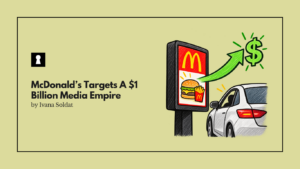

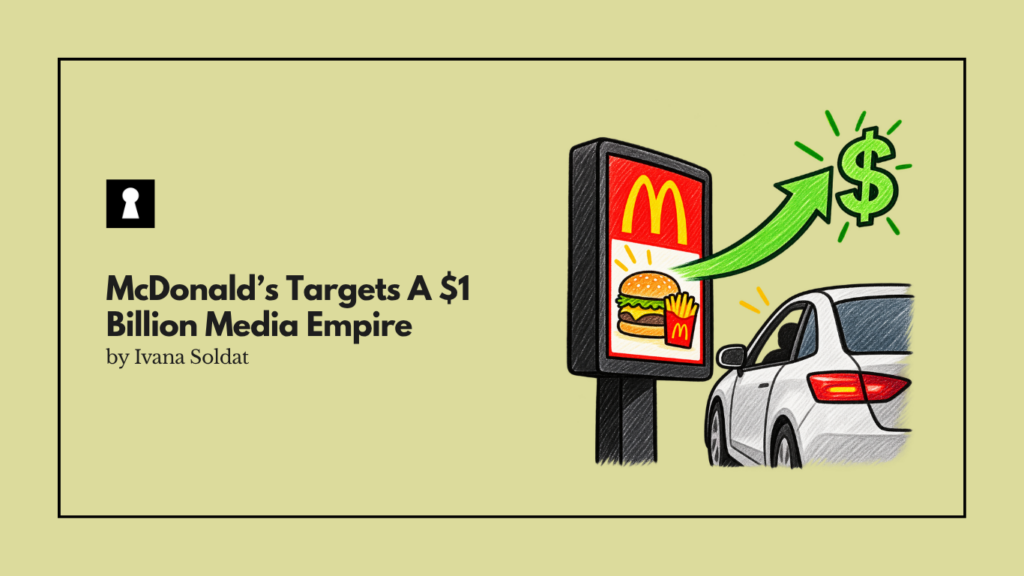
The era of the drive thru as a purely transactional space is ending. McDonald’s announced plans to transform its digital menu boards and in restaurant screens into a lucrative advertising network, capitalizing on the seconds customers spend waiting for their food.
Corporate Is Monetizing Captive Attention Rather Than Influencing Purchase Decisions
The current pilot places third party advertisements, such as those from insurer Geico, on drive thru menu boards only after customers have already placed their orders.
This strategic timing reveals that McDonald’s is not trying to influence the food purchase itself. Instead, it is monetizing captive attention during the fulfillment window. This mirrors the legacy model of gas pump television or airport terminal advertising, where audiences have no choice but to watch.
While McDonald’s claims this adds no disruption to the customer experience, extending the digital interaction post transaction is a deliberate play to extract maximum value from every second a car idles at the window.
The Exclusion Of Franchisees Signals An Inevitable Revenue Sharing Battle
The most telling detail of this rollout is that franchisees, who operate the vast majority of the approximately 14,000 U.S. locations, are entirely excluded from the current pilot.
Corporate is testing a high margin revenue stream that it intends to keep for itself, while franchisees bear the operational burden of the drive thru experience.
When a media network scales, the entity controlling the screens typically demands a cut of the revenue. Franchisees will inevitably push back against corporate capturing 100 percent of the ad revenue while they deal with the downstream effects of longer wait times and distracted customers.
This structural misalignment will become a major friction point as the network expands.
Loyalty Data Turns The Drive Thru Into A Targeted Digital Billboard
McDonald’s is not just selling generic screen space. The company boasts a loyalty program with more than 220 million members, which it actively mines to segment its customer base by behavior.
This allows the new media network to deliver highly targeted promotions and third party ads based on actual purchase history. This level of data integration is what separates modern retail media networks from traditional out of home advertising.
By connecting first party purchase data with drive thru screen real estate, McDonald’s can command premium ad rates that rival digital platforms like Amazon or Walmart.
The $1 Billion Goal Is A Hedge Against Rising Commodity Costs
Chief Financial Officer Ian Borden explicitly framed this media venture as a source of high margin revenue at a time when input costs like beef are climbing. The company also faces major capital expenditure commitments to upgrade its restaurant fleet over the coming decade.
Advertising revenue carries significantly higher margins than selling hamburgers, requiring no additional inventory, labor, or supply chain logistics. Reaching a $1 billion run rate in media sales would provide a crucial financial cushion, allowing the company to fund its physical infrastructure improvements without passing the entire cost burden onto the consumer through menu price hikes.
Our Take
Monetizing the Wait is a Clever Financial Maneuver, but it Treats the Customer as a Captive Commodity
McDonald’s foray into commerce media is a masterclass in extracting value from existing infrastructure. The company has realized that its most valuable asset is not just its real estate, but the undivided attention of millions of Americans waiting in their cars.
However, executives claiming this adds zero operational complexity are ignoring the reality of the franchise model. If McDonald’s wants to build a billion dollar media empire, it must eventually share that wealth with the franchisees who actually own the screens and manage the customer experience.
Until then, this is just corporate capturing rent on franchisee real estate.