
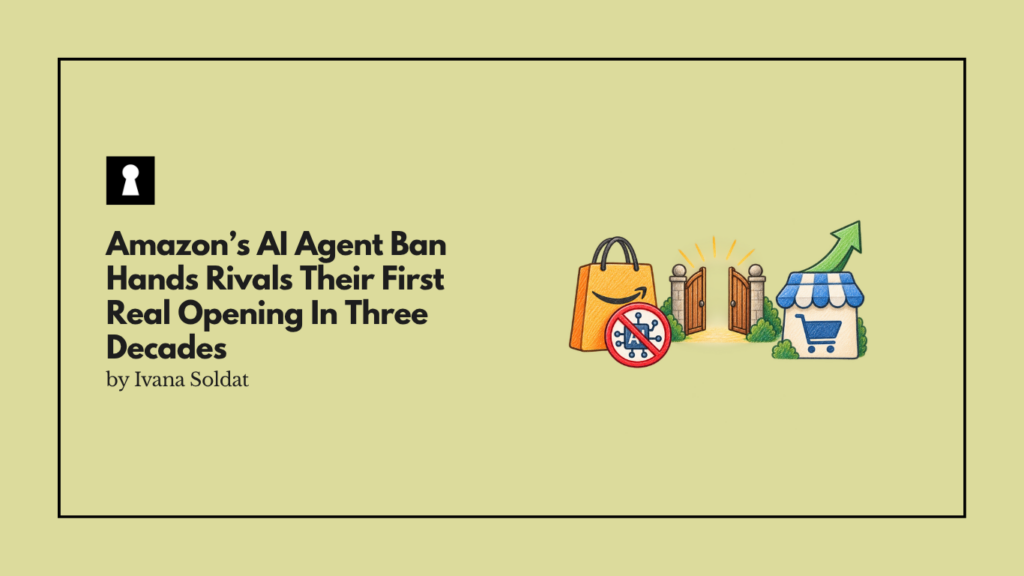
In a move that sent shockwaves through the agentic commerce sector, Amazon confirmed it cut off Meta’s new Muse personal AI agent from shopping on Amazon.com on behalf of users.
Users attempting to utilize these agents now encounter a blocked-access popup, with Amazon citing security and authorization concerns as the primary justification. While protecting user data and preventing unauthorized scraping are valid operational priorities, this blanket blockade treats all external AI agents as hostile threats rather than potential partners in the future of search and discovery.
Paul Graham Declares It The Biggest Startup Opportunity Since 1994
The reaction from the venture capital community was swift and unequivocal.
Y Combinator co-founder Paul Graham publicly criticized the decision, stating that Amazon banning agents is the first opportunity he has seen since the company was founded for a startup to create an Amazon competitor.
This sentiment was echoed by other prominent tech figures, including Elon Musk, who agreed that blocking AI agents would ultimately backfire. The logic is straightforward: if the dominant marketplace refuses to serve the interface through which future consumers will browse and buy, a vacuum is created for a new, AI-native retailer to fill.
Rivals Are Actively Weaponizing Amazon’s Closed Stance
While Amazon builds higher walls, its competitors are actively laying pipes.
Shopify, for instance, has positioned itself as the open alternative, ensuring that its Shop Pay infrastructure is ready to seamlessly process checkouts initiated by external AI agents. By embracing agentic commerce, platforms like Shopify are signaling to both developers and consumers that they are the friendly, interoperable infrastructure of the future.
This stark contrast in philosophy forces merchants to choose between Amazon’s captive, high-traffic but closed ecosystem, and an open web where their products can be discovered and purchased by any AI assistant.
The Long Term Cost Of Friction Over Security
Amazon’s dominance has historically been built on relentless friction reduction. By introducing a hard block on AI agents, the company is deliberately injecting friction into the shopping experience for a rapidly growing demographic of early-adopter consumers.
While this may protect short-term attribution metrics and keep ad revenue within its own walled garden, it risks alienating the very users who will define the next decade of ecommerce. If consumers find it easier to ask an AI agent to buy from a site that allows it, Amazon’s unparalleled logistics network may not be enough to retain them.
Our Take
Control of the Interface is the New Battleground, and Amazon just Surrendered the High Ground
Amazon’s decision to ban third-party AI shopping agents is a classic incumbent mistake: optimizing for control at the expense of evolution. By treating agentic commerce as a security threat rather than a paradigm shift, Amazon is inadvertently subsidizing the rise of its own disruptors.
Startups and rival platforms now have a clear, compelling narrative: they are the open, AI-friendly alternatives to a stagnant monopoly.
If Amazon does not soon pivot to a controlled, consensual model of agent integration, it will find that the very walls built to keep competitors out will ultimately trap it inside a shrinking market.