
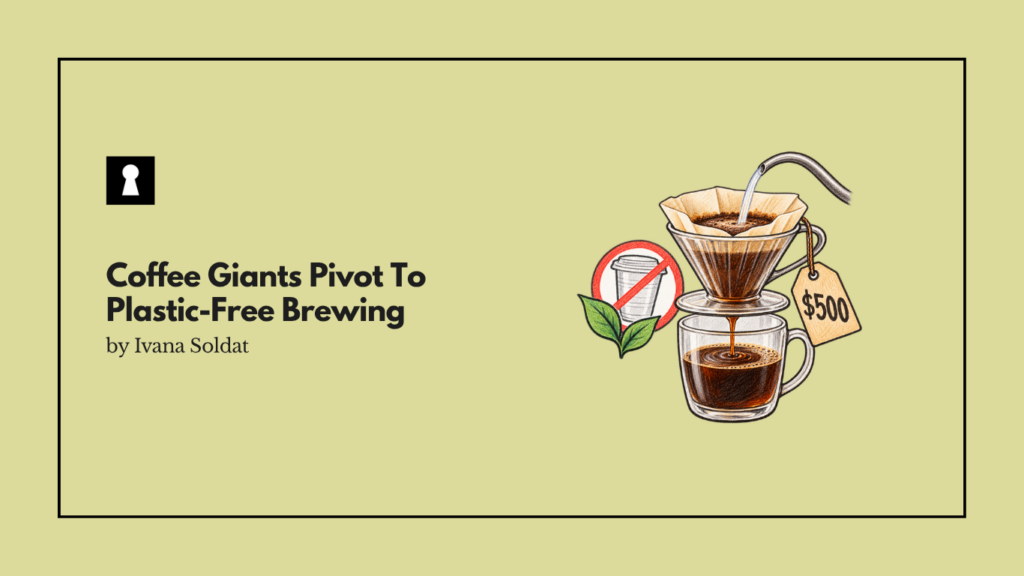
For decades, the single-serve coffee market has been defined by the convenience of plastic and aluminum pods. Now, a coordinated industry pivot is underway.
In June, Lavazza introduced its Tabli brewing system to the U.S., utilizing compressed, plastic-free coffee tabs. On September 22, home goods startup Caraway launched its first appliance: a drip coffee maker featuring a glass water reservoir, stainless steel showerhead, and reusable filter to ensure zero plastic contact with the water or grounds.
Following closely, Keurig opened limited-access pre-orders for the Keurig Alta on October 1, a machine that relies on pressed, plastic-free coffee grounds.
Executives frame this as a direct response to evolving consumer values. Neha Mallik, senior director of product management at Keurig, noted that plastic waste has historically been a primary reason certain consumers refused to enter the K-Cup ecosystem. The new mandate is clear: deliver barista-quality variety without the environmental guilt.
The Seven Figure Sell-Out Proves Premium Demand Is Real
The market has responded to these launches with overwhelming enthusiasm, proving that a viable, high-margin segment exists for sustainable brewing. Caraway’s coffee maker, priced at $495, sold out within a week of launching, generating more than seven figures in sales. Similarly, the Keurig Alta early-access bundle, priced at $499.99, saw its pre-orders sell out within days.
Even the more moderately priced Lavazza Tabli, at $129.99, is being heavily promoted at major cultural events like the U.S. Open to capture market share from legacy single-serve systems.
Consumers are voting with their wallets, but they are primarily voting for aesthetics, perceived health benefits, and environmental virtue, rather than pure brewing functionality.
The Hidden Carbon Cost Of Sustainable Premium Appliances
While eliminating brewing-path plastic successfully reduces microplastic ingestion and landfill waste, the broader environmental math is far more complex. The carbon footprint associated with mining, manufacturing, and shipping heavy glass and stainless steel appliances is significantly higher than that of injection-molded plastic.
By pricing these machines between $130 and $500, brands are leveraging “sustainability” as a marketing moat to justify massive price premiums. This effectively transforms an environmental imperative into a luxury status symbol.
The unspoken reality is that true sustainability should ideally be accessible, but the current market dynamics reward companies that turn eco-friendly materials into high-ticket lifestyle products.
Feature Creep And The Barista Expectation
The push for premium materials is compounded by escalating consumer expectations for functionality. During beta testing for the Keurig Alta, the most prominent feedback was not just about the absence of plastic, but a desire for built-in milk frothers and the ability to craft lattes and cappuccinos at home.
This feature creep drives research, development, and manufacturing costs even higher. It further cements these new brewing systems as premium lifestyle appliances rather than accessible, everyday commodities, widening the gap between eco-conscious consumers who can afford them and those who cannot.
Our Take
Your $500 Plastic-Free Coffee Maker Isn’t as Green as You Think
The industry pivot to plastic-free coffee makers is a smart, necessary response to legitimate consumer anxiety about microplastics and single-use waste. However, founders and product developers must be careful not to conflate “premium materials” with “holistic sustainability.”
Charging $500 for a glass and steel coffee maker solves a plastic problem but creates a carbon and accessibility problem.
The long-term winners in this category will not just be the brands that remove plastic from the brew path; they will be the ones that can transparently prove their entire supply chain, from raw material extraction to end-of-life recycling, actually reduces net environmental impact without pricing out the average consumer.