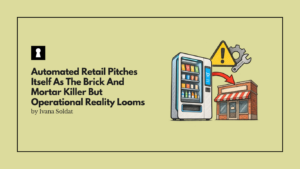

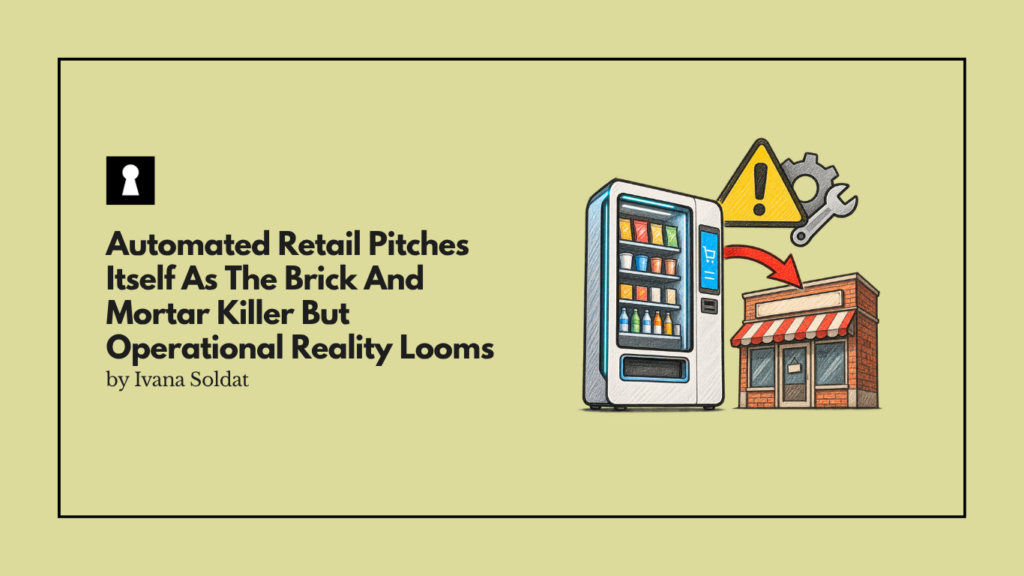
The narrative surrounding automated retail is shifting from simple convenience to strategic market penetration. Industry leaders are positioning smart kiosks and automated stores as a way for brands to add physical points of distribution, build awareness, and test new markets without the crippling overhead of opening a traditional brick-and-mortar location.
By bypassing the need for full-time staff, long-term commercial leases, and extensive build-outs, brands are being sold on the idea that they can achieve physical omnipresence on a fractional budget.
Venues See Passive Revenue While Brands See Cheap Distribution
The value proposition extends beyond the brands themselves to the landlords of high-traffic environments. For airports, hospitals, universities, hotels, and stadiums, automated retail is pitched as a mechanism to generate revenue from underused or dead space while providing visitors with immediate access to products.
The pitch to venue operators is essentially passive income: lease a few square feet to a kiosk operator, collect the rent or revenue share, and let the machine do the work. This symbiotic relationship sounds perfect on a keynote slide, but it relies entirely on the assumption that the machine will actually generate enough margin to cover its physical footprint.
The Operational Graveyard Of Unattended Retail
The event promises to address the unglamorous realities of launching and sustaining these programs, including product selection, payments, replenishment, maintenance, and customer support.
This is exactly where the automated retail dream usually dies. A smart vending machine is not a passive asset; it is a highly complex, distributed micro-warehouse that requires constant physical intervention.
Routing trucks to replenish inventory across dozens of fragmented locations, dispatching technicians to fix jammed payment terminals, and managing expired perishable goods in fresh food kiosks create a logistical nightmare that rapidly erodes the supposed cost savings of avoiding human labor.
Unit Economics Rarely Survive Contact With The Real World
The fundamental flaw in the automated retail pitch is the assumption that removing the cashier automatically results in profitability. The capital expenditure for advanced robotic kiosks and automated hot food systems is massive.
When you factor in the cost of specialized route logistics, high machine depreciation, and the inevitable shrinkage or vandalism that occurs in unattended environments, the unit economics frequently collapse.
Brands that use these machines merely as marketing billboards might justify the cost as customer acquisition, but operators expecting these units to function as standalone profit centers are often met with harsh financial reality.
Our Take
Physical Automation is Only as Profitable as the Supply Chain that Feeds it
The resurgence of interest in automated retail is a direct response to the skyrocketing costs of traditional physical retail and human labor.
However, founders and retail operators must look past the glossy keynote presentations and recognize that a kiosk is just a very expensive, highly visible supply chain node.
If your brand cannot solve the complex last-mile routing and maintenance economics required to keep a machine stocked and functional, your automated storefront will quickly become an out-of-order monument to bad unit economics.