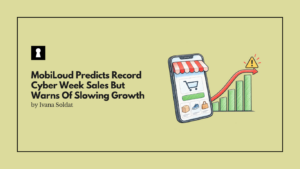

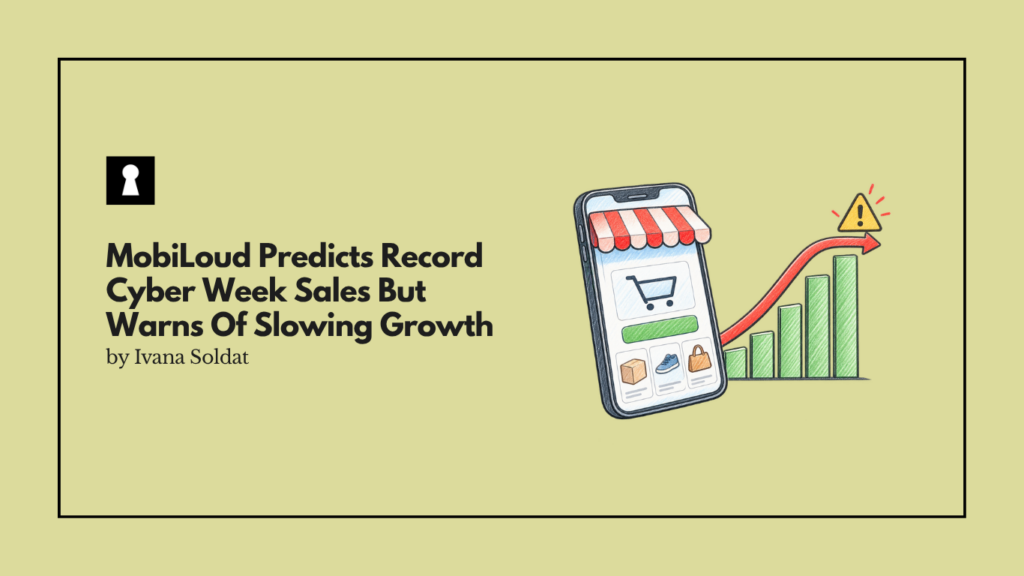
MobiLoud’s annual Black Friday and Cyber Monday (BFCM) report predicts that US consumers will spend $47.3 billion online over the five-day Cyber Week period in 2026.
While this sets a new nominal record, the projected 7 percent year-over-year growth represents a noticeable deceleration compared to the double-digit expansion seen in recent years. Andrew Buck, Head of Content at MobiLoud, notes that shoppers are feeling the pinch from stagnant wages and elevated living costs.
This macroeconomic reality suggests that while consumers will not entirely abandon the year’s biggest shopping event, their wallets are tightening, forcing brands to work significantly harder for every incremental dollar of revenue.
Mobile Commerce Crosses The Rubicon
The most critical operational takeaway from the forecast is the relentless march of mobile dominance. MobiLoud expects that 57.5 percent of all online holiday sales will occur on smartphones , up from 56.4 percent the previous year.
More strikingly, the data indicates that mobile transactions already surpassed the 60 percent threshold on Thanksgiving Day in 2025. This is not merely a shift in device preference; it is a fundamental change in consumer behavior.
Shoppers are increasingly comfortable completing high-value transactions on their phones, meaning that any brand with a subpar mobile web experience or a clunky checkout flow is actively leaving money on the table during peak traffic windows.
Shopify Merchants Outpacing The Broader Market
While the aggregate market growth is slowing, specific segments are accelerating. The report forecasts that Shopify merchants will generate $18.7 billion in sales over the BFCM weekend , representing a robust 28 percent year-over-year increase.
This outperformance follows a strong 32 percent growth trajectory for Shopify stores in the second quarter of 2026. This divergence highlights a broader trend where agile, direct-to-consumer brands are successfully capturing market share from legacy retailers by leveraging superior digital storefronts, targeted email and SMS marketing, and community-driven loyalty programs.
The Thanksgiving Day Shift Is Permanent
Thanksgiving Day itself is evolving into a major standalone ecommerce event, with sales expected to hit a new high of $6.8 billion.
The predominance of online shopping allows consumers to secure their holiday hauls from the comfort of their homes before the physical retail chaos begins.
For merchants, this means that the traditional “Cyber Monday” peak is flattening into a sustained, five-day marathon. Brands that front-load their promotional efforts and ensure their infrastructure can handle sustained, multi-day traffic spikes will capture the early-bird spend that weaker competitors miss.
Our Take
A Record Top-Line Number Means Nothing if the Cost of Acquiring that Revenue Destroys Your Margins
MobiLoud’s forecast of a record but slowing Cyber Week is a clear signal that the era of easy, rising-tide ecommerce growth is over.
The 7 percent growth projection, coupled with the continued migration to mobile, tells a story of a maturing market where consumers are highly selective.
The mandate is clear, stop obsessing over top-line vanity metrics and focus ruthlessly on mobile conversion rate optimization, first-party data collection, and post-purchase retention. If your mobile storefront is not frictionless, you are not just losing sales; you are funding your competitors’ growth.