
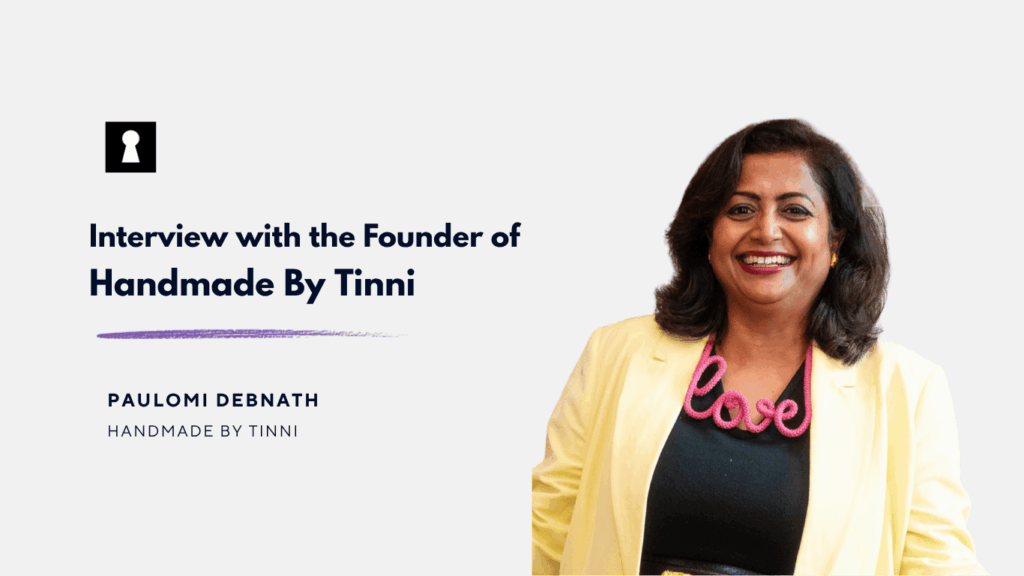
Paulomi Debnath has always been surrounded by colour.
Born and raised in Kolkata, India, and now based in London, the designer, known to most people as Tinni, grew up around vibrant textiles and traditional craftsmanship.
Those influences eventually became the foundation for Handmade By Tinni, the colourful jewellery and accessories brand she launched in 2020.
Today, her pieces are stocked by independent boutiques and museum shops across the UK, while the range has expanded from jewellery into accessories and home décor.
But behind the bright colours and intricate cotton-rope designs is the familiar reality of building an independent ecommerce brand: managing stock, finding customers, nurturing retailer relationships, producing content and figuring out where to focus limited time and resources.
We spoke to Paulomi about how Handmade By Tinni grew, what she has learned from selling both online and wholesale, and why some of her biggest opportunities have taken months, or even years, to materialise.
Introduction of Paulomi and her business
“My name is Paulomi Debnath, although most people know me as Tinni, and I’m the founder and designer behind Handmade By Tinni,” she says.
Born and brought up in Kolkata, Paulomi has called London home for the past 20 years.
Growing up surrounded by vibrant colours, textiles and traditional craftsmanship had a major influence on her creative style, something that remains visible throughout the brand today.
“At the heart of my brand is a simple belief: colour spreads joy,” she explains. “I wanted to create jewellery that gives people confidence, starts conversations and celebrates craftsmanship through bold colour and contemporary design.”
From the outset, cotton rope became central to her work.
The natural, tactile material is soft and lightweight, allowing Paulomi to create statement pieces without relying heavily on plastic or metal.
She officially launched Handmade By Tinni in 2020. Every piece is handcrafted in London using organic cotton rope, with the original jewellery range gradually expanding into earrings, headbands, accessories and home décor.
Today, the brand is stocked by independent boutiques and museum shops across the UK and also sells to customers and wholesale partners overseas.
Despite that growth, Paulomi says the original purpose hasn’t changed.
“To create colourful, handcrafted pieces that bring joy, celebrate individuality and make people smile the moment they wear them.”
You started Handmade By Tinni by creating jewellery. How did that idea turn into a full product range of necklaces, earrings, accessories and home pieces?
There wasn’t a carefully constructed category expansion plan behind it.
“For me, it has always been about creativity rather than categories,” Paulomi says. “I never sat down with a business plan that said, ‘First jewellery, then accessories, then home décor.’ I simply designed wherever my imagination took me.”
Paulomi describes herself as a rope-knotting artist.
Knotting is an ancient craft that has been used across cultures for centuries, both practically and decoratively. Her approach is to take those traditional techniques and reinterpret them through contemporary shapes and colours.
Ideas can come from almost anywhere: her Indian heritage, textiles, travel, nature, architecture or simply a combination of colours she notices during the day.
She also deliberately avoids designing simply to follow trends or fill an obvious gap in the collection.
“I create pieces that excite me creatively, and if they make me smile, I hope they’ll make someone else smile too.”
As her confidence with the craft developed, those same knotting techniques naturally moved beyond necklaces and into earrings, headbands, accessories and eventually home décor.
The categories may be different, but maintaining a recognisable identity across them is important.
“Whether someone sees one of my necklaces or a home piece, I want them to instantly recognise it as unmistakably Handmade By Tinni.”
What does building a sustainable handmade brand actually require behind the scenes?
For Paulomi, sustainability starts with materials, but it certainly doesn’t end there.
“People often see the finished product but not everything that goes into creating it,” she says.
Behind the scenes, running a sustainable handmade brand involves responsible sourcing, careful stock management, reducing waste and making considered decisions about how and what the business produces.
It also influences the way she thinks about product longevity.
Rather than constantly chasing fashion trends, Paulomi wants to create pieces customers can continue wearing for years.
“Because each piece is handmade, quality is incredibly important. I’d rather spend extra time making something properly than rush it out the door.”
Then there is the operational reality of being an independent founder.
On any given day, Paulomi might be designing a collection, packing wholesale orders, updating the website, answering customer enquiries, creating social media content or getting ready for a trade show.
“There is a lot of work that people never see.”
For Paulomi, building sustainably therefore also means creating a company capable of growing without sacrificing its values.
“It’s about building a business that supports craftsmanship, values quality over quantity and creates something I’m proud to stand behind.”
How do you decide when a design should become part of the core collection versus staying limited?
There isn’t a spreadsheet or formula deciding which products survive.
Instead, Paulomi combines her own instinct with what customers tell her.
Some pieces immediately feel as though they belong permanently within the Handmade By Tinni collection because they capture the elements she considers fundamental to the brand: joyful colour, sculptural knotting, comfort and timeless style.
Other pieces are deliberately more experimental.
They might be influenced by a particular season, a destination Paulomi has visited or simply a technique she wants to explore.
Limited collections give her the freedom to experiment without requiring every new idea to become a permanent SKU.
Sometimes, however, customers make the argument for her.
If people continue requesting a limited piece and the design still feels consistent with Handmade By Tinni, it can eventually become part of the core range.
But strong sales aren’t enough on their own.
“I never add something just because it sells well,” Paulomi explains. “It has to represent Handmade By Tinni and be a design I’ll still be proud of years from now.”
What have you learned from selling to boutiques that is different from selling direct-to-consumer online?
The same product can require two very different sales approaches.
When Paulomi sells directly to a customer, the purchase is often highly personal.
Someone might be attracted to a particular colour, design or story, while Paulomi has the opportunity to talk directly about the inspiration behind the piece.
Retail buyers approach the decision differently.
“They’re looking at the bigger picture,” she says. “They want products that are beautifully made, commercially viable, easy to merchandise and fit naturally within their own brand and customer base.”
Paulomi has also discovered how different one retailer can be from another.
Museum shops, independent boutiques and galleries each serve their own audiences and have different priorities.
That means listening to retailers can be just as important as selling to them.
Museum shops have been particularly interesting.
“In my experience, museum shops are especially interested in products with a strong founder story, genuine craftsmanship and an authentic connection to the maker.”
But product and story alone aren’t enough to build a successful wholesale channel.
Paulomi says good communication, reliability and consistency are essential to getting retailers to come back.
One of her museum stockists, for example, initially discovered Handmade By Tinni at Spring Fair.
The retailer didn’t necessarily turn that first conversation into an immediate transaction. An order came later, followed eventually by a repeat order.
It reinforced something Paulomi has learned repeatedly while growing the wholesale side of the company.
“Wholesale isn’t just about making a sale, it’s about building trust over time.”. “When retailers trust you, they’re far more likely to reorder, recommend you and become long-term partners.”
Have email newsletters or customer lists helped you build repeat customers?
“Absolutely.”
Social media may help Handmade By Tinni reach new customers, but Paulomi sees email as a channel for building a considerably deeper connection with the people who already know the brand.
Her newsletters aren’t simply a stream of sales messages.
She uses them to tell the stories behind collections, share inspiration from her travels, promote upcoming events and offer glimpses into her creative process.
There is an occasional exclusive offer too, but selling isn’t the only objective.
“It gives people a chance to get to know the person behind the brand rather than simply seeing another product for sale.”
That connection appears to contribute to repeat purchasing.
Paulomi has found that subscribers often want to follow the wider Handmade By Tinni journey. Over time, they become more familiar with both the person behind the business and the craftsmanship involved in creating each product.
For a small independent brand, she believes that community can be particularly powerful.
“Every subscriber has chosen to invite me into their inbox, and I never take that trust for granted.”
What has been your proudest moment since launching Handmade By Tinni?
“There have been a few moments that have made me stop and think, ‘This is really happening.’”
One of the first was becoming a supplier to the Barbican.
As someone who has long admired art, design and creativity, Paulomi says seeing her work accepted by the London cultural institution meant more than securing another stockist.
“It was validation that my work belonged in a space that celebrates great design and craftsmanship.”
It also changed her perception of what Handmade By Tinni could become.
“That gave me the confidence to believe there was a place for Handmade By Tinni beyond craft fairs and online marketplaces.”
Then came another defining moment: exhibiting at Spring Fair.
For a small business, attending the trade show required a significant financial and emotional investment.
But it altered the trajectory of Handmade By Tinni.
Paulomi met buyers from across the UK, developed new retailer relationships and began to see wholesale as a potentially significant part of the business.
Importantly, not every opportunity materialised immediately.
Some buyers ordered at the show. Others returned weeks or even months afterwards.
“It reminded me that people often buy when the timing is right for them, and that every conversation can plant the seed for a future opportunity.”
Still, Paulomi says her proudest achievement isn’t necessarily one stockist or trade show.
“I’m even prouder that I’ve built a brand that stays true to its values.”
What has been the hardest lesson so far?
Growth takes longer than you think.
“The biggest lesson has been learning that growth doesn’t happen overnight,” Paulomi says.
Like many creative founders, she initially assumed much of her success would come down to the quality of the product.
“In the early days, I thought success would come from creating beautiful products.”
It didn’t take long to discover everything else involved.
Running Handmade By Tinni meant simultaneously becoming a marketer, photographer, accountant, salesperson, website manager, packer and customer service department.
Another lesson was learning that an opportunity isn’t automatically a good opportunity.
Particularly at the beginning, saying yes to everything can be tempting.
Paulomi has become much more selective about where she invests her time and energy.
“Building a sustainable business isn’t about doing everything; it’s about doing the right things consistently.”
And possibly her most important lesson has been patience.
Some of the opportunities that ultimately proved most important to Handmade By Tinni arrived months, and sometimes years, after the first conversation.
“Relationships take time, and so does building a brand people trust.”
What is next for Handmade By Tinni?
Wholesale remains one of Paulomi’s biggest areas of focus.
She wants to continue expanding Handmade By Tinni through independent retailers, galleries and museum shops that appreciate craftsmanship, thoughtful design and founder-led brands.
“I’d love to see the brand in even more inspiring spaces.”
The product itself will continue evolving too.
Paulomi plans to experiment further with rope-knotting techniques and introduce new designs while maintaining the visual identity customers associate with Handmade By Tinni.
“Creativity will always be at the heart of what I do.”
She’s also increasingly interested in sharing the craft itself.
Through workshops, Paulomi wants to give more people the opportunity to experience rope knotting and make something themselves.
Whatever direction the business takes from here, she says the central idea remains remarkably simple.
“I want Handmade By Tinni to continue bringing colour, confidence and joy into people’s lives, one handcrafted piece at a time.”
It’s worth to mention that you can check out her pieces that are now stocked in the Camden Art Centre in London, Wolverhampton Art Gallery and National Museum of Liverpool (Walker Art Gallery).
If you aren’t able to check out her pieces in real life, you can also can check out Handmade By Tinni online on:
https://www.handmadebytinni.com
https://www.linkedin.com/company/handmade-by-tinni/
https://www.facebook.com/HandmadebyTinni
https://www.instagram.com/handmade.bytinni/