
This analysis incorporates data from trade publications and industry reports that may reflect the commercial interests of retail technology vendors promoting physical retail and community-driven commerce solutions.
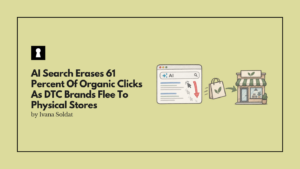
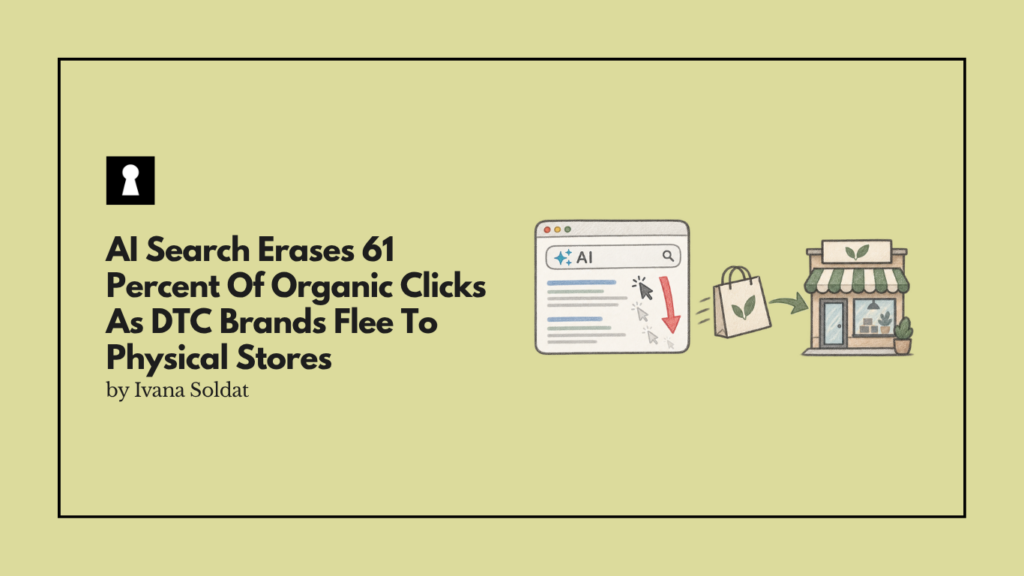
The economics of digital-only retail are collapsing under the weight of algorithmic intermediation. AI Overviews now appear on 48 percent of Google search results pages and cut organic click-through rates by up to 61 percent, gutting the performance marketing model that fueled a generation of direct-to-consumer exits.
Between 58.5 percent and 68 percent of Google searches in 2026 end without a single click to any website. Brands are responding to this existential threat by opening physical stores, transforming retail spaces from costly overhead into primary customer acquisition engines.
Customer Acquisition Costs Have Rendered Digital Arbitrage Unsustainable
Customer acquisition costs have risen 222 percent over the past eight years, leaving direct-to-consumer brands losing an average of $29 on every new customer acquired after accounting for marketing spend and returns.
The cheap social media arbitrage that once allowed startups to scale rapidly is gone. One in-house marketer recently described the current digital marketing environment as a Wild West, noting that traditional search engine ads and display campaigns are losing traction because consumers increasingly use language models for product discovery.
Companies are now forced to diversify their marketing mix to survive.
Digitally Native Brands Are Treating Stores As Primary Acquisition Channels
At least 12 digitally native brands opened permanent physical retail locations in 2025, including Bombas, Monos, VIVAIA, and Knix.
Gymshark has used selective store openings and community-led activations to ground its digital identity in physical space, while Warby Parker continues expanding its footprint into Target locations.
This is no longer an experimental brand-building exercise. It is a standard phase of brand maturation required to capture the 80 percent of shopping that still happens in physical stores according to recent industry data.
Human Interaction Solves The Trust Deficit Created By Algorithmic Shopping
Physical retail fills the trust gap that digital interfaces cannot bridge. More than half of consumers still want to see and touch products before buying, and 32 percent of shoppers actively seek personal service from retail staff.
A fashion brand founder with multiple brick-and-mortar locations noted that customers are actively looking for a human connection, wanting to touch, feel, and understand the products directly. This human element is becoming the primary differentiator in a market saturated with automated, AI-generated recommendations.
Community-Driven Retail Is The Only Viable Defense Against Platform Volatility
Armand Wilson, VP of categories and expansion at Whatnot, framed this shift in direct terms, stating that community-driven retail will continue to dominate because shoppers increasingly want connection, trust, and authenticity baked into their buying experience.
Brands that rely solely on third-party platforms for customer acquisition surrender their margins to algorithmic volatility. By building physical spaces that foster genuine community and peer-to-peer interaction, retailers create defensible moats that no search engine update can dismantle.
Our Take
Building a Physical Moat is the Only Reliable Hedge Against Digital Extinction
The direct-to-consumer revolution was built on the illusion that digital customer acquisition would remain perpetually cheap and scalable. AI search has shattered that illusion, intercepting consumer intent and rendering the traditional performance marketing playbook obsolete.
Brands rushing to open physical stores are not retreating to the past; they are adapting to a reality where human interaction and tangible experiences are the only reliable ways to command a premium. If your brand cannot justify the cost of a physical footprint, you do not have a brand; you have a fragile arbitrage operation waiting to be wiped out by the next algorithm update.