
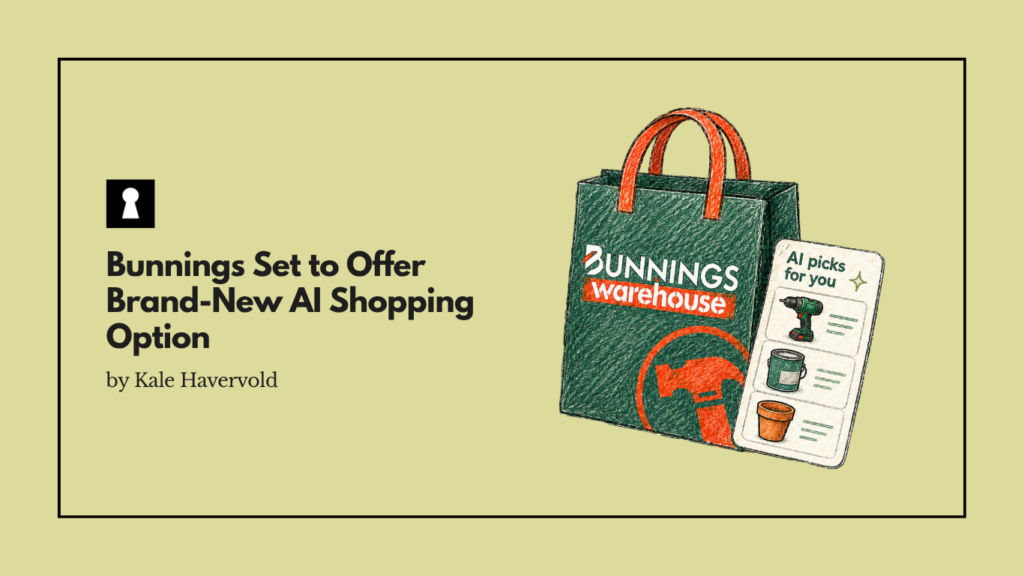
While selling through Google’s AI Mode is quite popular in the USA, in some parts of the world, like Australia, it hasn’t been nearly as common. However, one of the largest home improvement and outdoor living retailers in Australia, Bunnings, is set to become one of the first in the country to sell to customers through the mode.
This marks the latest move in the company’s growing embrace of AI and agentic commerce, which also includes an agentic assistant called Buddy.
Bunnings Aiming to Be One of the First Australian Retailers to Sell Through Google’s AI Mode
At the annual strategy day for Wesfarmers, the parent company of Bunnings, managing director Michael Schneider announced that Bunnings would begin selling through Google’s AI Mode within the next two weeks.
This means it’ll be one of the first Australian retailers to sell through this channel. While Google’s AI Mode has been most common in the USA, and Canada’s largest retailer has recently partnered with Google on AI Shopping, the capability hasn’t become too popular in Australia yet.
Specifically, Schneider said that once the capability launches, customers can “research products, select recommended items from our catalogue, and complete transactions directly through AI Mode across Google search, Chrome and the Google app.”
For example, if a Bunnings customer has a creaky door, a leaky faucet, or a broken doorknob, they can simply ask the AI for advice or what they need to do and buy to fix it.
This Builds on the Company’s Broad Embrace of AI and Agentic Commerce
This move is just the latest in Bunnings’ broader expansion into AI and agentic commerce. In fact, the rollout of agentic commerce was a key topic of conversation at the aforementioned strategy day. Back in February, Wesfarmers said it would back the technology, with assistance from both Microsoft and Google Cloud.
Well before this expansion into selling in AI Mode, Bunnings launched Buddy, an agentic assistant powered by Google Gemini, to help customers. Despite Buddy only being launched a few months ago, the AI assistant has already had a positive impact by driving larger basket sizes and helping with project planning.
In fact, Schneider said that Buddy “is already delivering strong engagement outcomes including more than doubling online conversion rates and increasing basket size through projects-based shopping behaviour.”
Beyond Buddy and selling in AI Mode, the plan is to also implement agentic commerce for OfficeWorks, as well as for Wesfarmers’ subscription membership program, OnePass.
So while this move to sell online through AI is a big step forward for the brand’s embrace of agentic commerce, it’s far from the company’s first foray into the space.
Shifts in Customer Behavior are Driving This Expansion
According to Leah Balter, one-time CIO of Bunnings and current executive general manager of OneDigital, this expansion into agentic technology was driven by customers’ behavioral shifts.
Specifically, she said that customers are shifting from traditional search to LLMs, and added that “It’s also changing in terms of how our customers are searching on our websites, so where you might have searched for a hammer, customers are now searching for, say, 20 words on average in terms of the product,”.
A major reason why many retailers are interested in adopting AI technology is that the customers using it are often either very engaged, or further along in their research and/or shopping journey, which may lead to better conversion rates and more sales.
While some people surely still aren’t comfortable with AI handling the shopping process for them, most customers are open to agentic commerce in some way. In fact, 77% of consumers are open to using certain agentic features while shopping, and 70% are already using AI to help them shop online in some way.
Our Take
Agentic Commerce Continues to Rise, and Needs to be a Priority
While agentic commerce and selling through AI is not new in the USA and many other regions, it’s quickly spreading and becoming popular in other parts of the world, like Australia. The sky is the limit for this technology, and brands globally need to be prepared for it, even if it’s not popular in your region yet.
While sellers shouldn’t abandon human searchers and traditional SEO, as more and more customers research products and find brands through AI chats and interfaces, companies need to ensure they’re showing up in these results.
For example, companies need to be optimizing their product content, structuring data well, and syncing inventory in real-time for agentic commerce to work and be effective.