
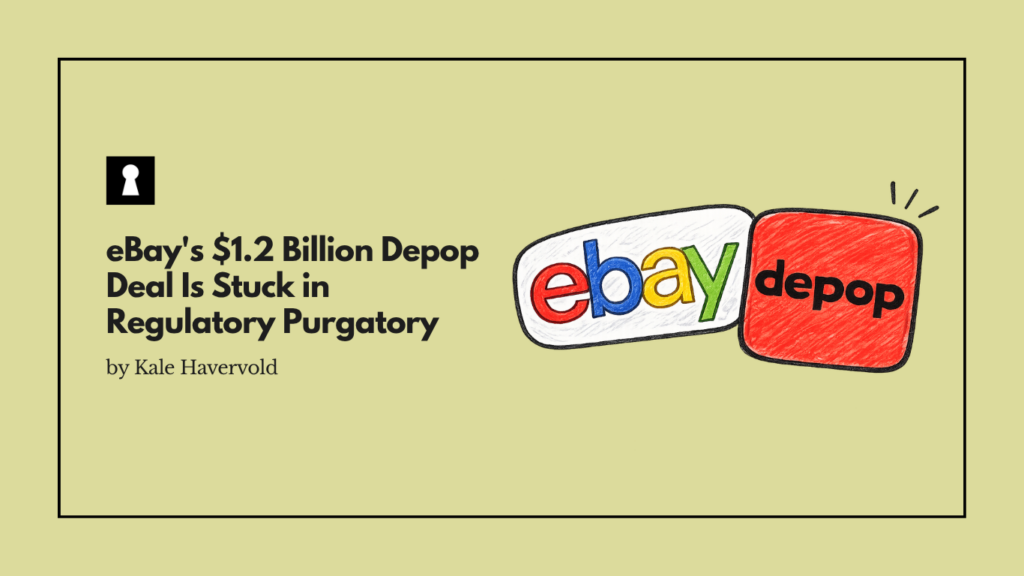
The deal cleared regulatory hurdles in the US and Germany without much fuss, but it’s sitting under review in both the UK and Australia. Regulators in both markets are examining whether handing eBay control of Depop would squeeze competition in the secondhand fashion space.
Depop operates a mobile-first pre-owned fashion marketplace and is predominantly active in the US, the UK, and Australia, which is precisely why those two countries are the ones asking difficult questions. The UK’s Competition and Markets Authority has already gone through a public comment phase, and neither regulator has shown any sign of rushing.
The Price Tag on Waiting
Etsy disclosed it entered into a letter agreement with eBay on May 21, 2026, setting out a tiered business disruption fee structure that scales up the longer the deal takes to close. Think of it as a late fee, except the numbers escalate fast.
If the deal falls apart after July 31, eBay could be on the hook for up to $136 million, payable within two business days. That’s a lot of vintage denim to shift to break even.
Why Depop Was Worth Chasing
Depop generated close to $1 billion in gross merchandise sales in 2025, counted 7 million active buyers, and topped 3 million active sellers. For eBay, it represented a direct pipeline into a younger demographic it has long struggled to reach on its own platform.
The resale fashion market has exploded over the last five years and shows no sign of cooling. Platforms like Vinted are growing fast across Europe, and eBay clearly decided that building from scratch wasn’t an option. Buying Depop was the shortcut, and now that shortcut has a toll booth.
The Tise Problem Nobody Is Talking About
eBay already owns Tise, a Norwegian secondhand fashion app it first backed through eBay Ventures in 2022 before fully acquiring in 2025 as part of its broader consumer-to-consumer pre-loved fashion strategy. Tise has recently been expanding into more global markets, adding fuel to competition concerns for regulators already scrutinising the Depop deal.
Owning two secondhand fashion platforms while trying to buy a third is exactly the kind of portfolio move antitrust watchdogs are paid to notice. If Tise keeps growing while the review drags on, eBay’s argument that Depop won’t tip the market becomes harder to make with a straight face.
Our Take
eBay Doesn’t Actually Need Depop. It Needs a Better Product.
Depop is a cool app. But buying cool is not the same as being cool, and eBay has been trying to purchase relevance with younger consumers for years without it sticking.
The real problem is that eBay’s core platform still feels like a car boot sale designed in 2003, and no amount of Depop branding fixes that. If regulators ultimately block this deal, it might accidentally be the push eBay needs to actually invest in its own product rather than outsource its identity to an acquisition. The $136 million breakup fee would sting, but the forced rethink might be worth more in the long run.